
Pruning
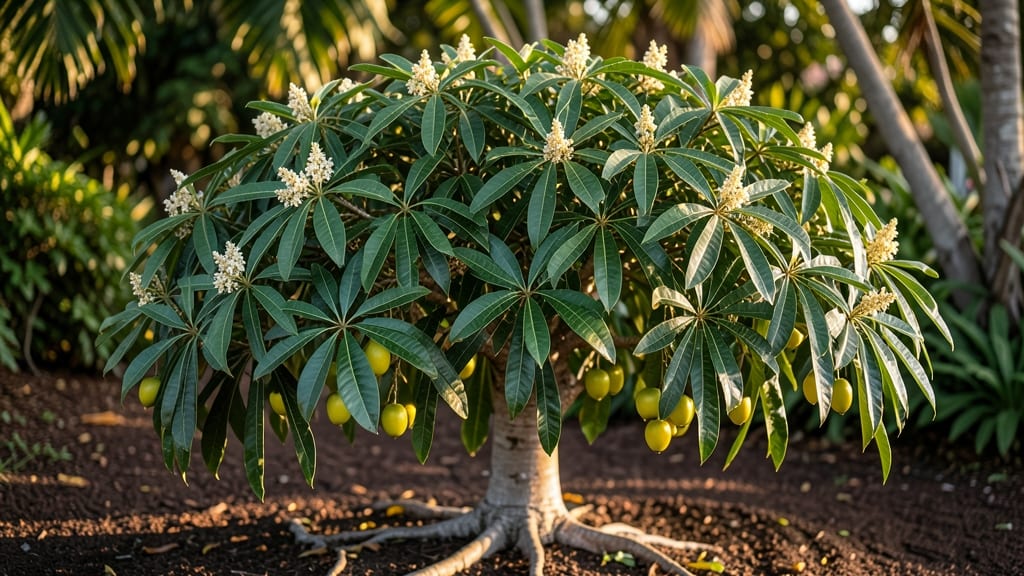
A 3-point leaf tree, scientifically known as Pittosporum tobira, features glossy, dark green leaves with three distinct pointed lobes, making it a popular choice for hedges, topiary designs, and ornamental landscaping. This hardy evergreen thrives in full sun to partial shade and adapts well to various soil conditions.
A 3-point leaf tree earns its name from those signature trifoliate leaves—each leaflet is elongated with a sharp point, creating a striking geometric pattern. 🌿 Native to East Asia, this adaptable shrub can grow 10-20 feet tall, making it versatile for both formal gardens and natural landscapes.
The small white flowers in spring add seasonal interest, followed by fragrant fruit that birds love. What sets it apart is its drought tolerance once established, though young plants appreciate regular watering to help root development.
For gardeners, the real magic happens in how easily this tree responds to pruning—whether shaping hedges or training into topiary forms. The glossy foliage stays vibrant year-round, providing year-long structure and texture.
I've found that even in urban environments with less-than-ideal soil, this tree remains resilient, making it a low-maintenance favorite for both beginners and experienced landscapers.
💡 In This Article
- Identifying the 3-Point Leaf Tree: Key Botanical Features
- Growing and Maintaining a Healthy 3-Point Leaf Tree
Identifying the 3-Point leaf tree: key botanical features
The 3-point leaf tree's most distinctive feature is its trifoliate leaves, where each leaf consists of three elongated, pointed lobes arranged symmetrically. These lobes typically measure 1-3 inches long and 0.5-1 inch wide, with a leathery texture that feels slightly waxy to the touch.
The deep green color remains vibrant year-round, though new growth may appear slightly lighter. 🌿 What makes them unique is how the central lobe often extends slightly longer than the side lobes, creating a natural focal point.
When examining the tree's growth habit, you'll notice its dense, bushy structure with a rounded canopy that can reach 10-20 feet tall and 8-12 feet wide when mature.
The bark starts smooth and grayish-brown on young trees but develops a more rugged texture with age, often showing horizontal lenticels (pores) that allow gas exchange. In spring, clusters of small, fragrant white flowers appear, followed by 0.5-inch orange-red berries that persist into winter, adding seasonal interest.
One key identification feature is the tree's response to pruning—it produces new growth readily from old wood, which helps maintain its shape. The leaves also exhibit a unique venation pattern with prominent midribs and secondary veins that create a delicate network.
This contrasts with similar trees like the Japanese holly (Ilex crenata), which has simple (non-compound) leaves and red berries only on female plants.
Seasonal changes offer additional clues: in winter, the leaves may develop a slight bronze tint in colder climates, while in summer, they maintain their glossy sheen even under intense sunlight.
The tree's hardiness (USDA zones 7-11) means it can handle frost down to 0°F once established, though young plants benefit from winter protection in colder regions.
For gardeners, the leaf arrangement is another telltale sign—alternate along the stems with a slight twist at each node. This spiral pattern helps distinguish it from other trifoliate plants like poison ivy, which has smooth-edged leaflets and grows as a vine rather than a tree.
The 3-point leaf tree's upright growth habit and dense branching make it ideal for creating natural privacy screens or structured hedges.
One fascinating botanical detail is how the leaves contain essential oils that give them a subtle aromatic quality when crushed—similar to many evergreens. This natural resistance to pests is part of what makes this tree so low-maintenance.
The combination of its geometric leaf pattern, seasonal flowers, and resilient growth makes it a standout feature in any landscape design.