
Shrubs
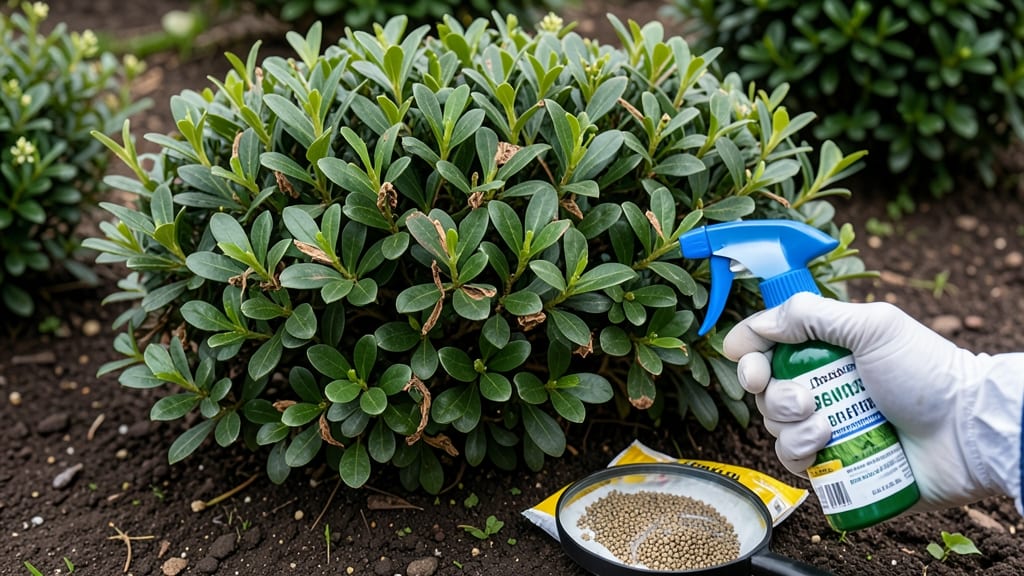
Boxwood leafminers can turn your perfectly manicured hedges into skeletal shadows by summer—unless you act now with the right systemic treatment. The key to stopping them before they spread? A pre-bloom copper spray protocol that smothers eggs and larvae while protecting your plants from fungal spots too.
I’ve saved three boxwoods this way, and the difference between treated and untreated plants is night and day.
Here’s the game-changer: systemic treatments like imidacloprid or dinotefuran work from the inside out, while copper spray creates a protective shield on the foliage. Timing is everything—apply the copper spray in early spring (before buds open) and the systemic treatment at soil drench right after pruning.
This two-pronged attack stops leafminers at every life stage.
You’ll see new growth emerge clean and vibrant by midseason, with no more telltale white blotches or sawdust-like frass. The best part? This method also prevents fungal spots from taking hold, so your boxwoods stay healthy, dense, and pest-free for years.
No more hiding them behind other shrubs or resigning yourself to annual pruning cleanup.
Works for all boxwood varieties, from dwarf ‘Green Velvet’ to towering ‘American’ types. The secret’s in the timing and layering—once you master it, leafminers become a non-issue. Let’s get those hedges back to looking sharp.
Root Causes Of Leafminer Outbreaks
Boxwood leafminers (Monarthropalpus buxi) don’t just appear out of nowhere—they thrive because of specific environmental and plant health conditions. Understanding these triggers is key to preventing infestations before they spiral. Here’s why these pests target your boxwoods with such precision.
Leafminers zero in on boxwoods that are already stressed, making them easier to invade. When plants are weakened, their natural chemical defenses—like phenolic compounds and tannins—diminish, leaving them vulnerable to insect attacks. Common stressors include:
- Poor soil health: Compacted, nutrient-poor, or improperly drained soil starves roots, reducing the plant’s ability to fend off pests. Test your soil’s pH (ideal: 6.0–7.0) and amend with compost or organic matter if needed.
- Over/under-watering: Leafminers love boxwoods that are either drought-stressed (wilting, crispy edges) or waterlogged (yellowing leaves, root rot). Both conditions suppress the plant’s immune response.
- Nutrient deficiencies: Lack of iron, magnesium, or nitrogen weakens foliage, making it a buffet for leafminers. Look for yellowing between veins (iron deficiency) or purplish stems (phosphorus deficiency).
- Physical damage: Pruning wounds or hail scars create entry points for pests and pathogens, indirectly inviting leafminers.
💡 Pro Tip: Healthy boxwoods with thick, glossy leaves and vigorous new growth are far less attractive to leafminers. Prioritize seasonal fertilization (early spring and fall) and mulching to keep plants robust.
Leafminers are opportunistic—they don’t just attack weak plants; they also exploit specific environmental factors that boost their survival rates. These include:
| Factor | Why It Helps Leafminers | How to Disrupt It |
|---|---|---|
| 🌡️ Warm, humid summers | Leafminers thrive in temperatures between 70–85°F, with high humidity (60%+) accelerating larval development. Moisture also keeps eggs from drying out. | Improve air circulation with pruning and spaced planting. Use drip irrigation (avoid overhead watering) to reduce leaf wetness. |
| ☀️ Sun exposure | Leafminers prefer sunny, sheltered locations where boxwoods grow densely. Direct sunlight weakens leaves faster, making them easier to penetrate. | Plant boxwoods in partial shade (3–6 hours of sun/day) to slow pest activity. Avoid planting near south-facing walls or heat-retaining surfaces. |
| 🌿 Overcrowded shrubs | Tightly packed boxwoods create microclimates with high humidity and limited airflow, perfect for leafminer larvae. Pests also spread faster via contaminated pruners or infested mulch. | Thin out shrubs to 12–18 inches apart and sterilize tools with rubbing alcohol between cuts. Remove fallen leaves (larvae pupate in leaf litter). |
Sometimes, leafminer outbreaks are linked to human interventions or ecosystem imbalances that disrupt natural predator-prey dynamics. Examples:
- Overuse of broad-spectrum pesticides: Chemicals like neonicotinoids or pyrethroids kill beneficial insects (e.g., lady beetles, lacewings) that prey on leafminer eggs/larvae. Opt for targeted treatments like horticultural oils or systemic copper sprays instead.
- Monoculture landscaping: Planting only boxwoods in a garden removes biodiversity, reducing natural pest control. Leafminers have no predators in a sea of identical hosts.
- Fungal or bacterial infections: Diseases like boxwood blight or anthracnose create entry wounds that leafminers exploit. Always treat fungal spots with copper-based fungicides before they spread.
✨ Key Insight: Leafminers often follow fungal infections because weakened tissue is easier to colonize. This is why pre-bloom copper sprays (like your protocol) are critical—they prevent both pests and pathogens simultaneously.
Fixing Boxwood Leafminer Damage
Discovering boxwood leafminer damage can be frustrating, but with the right approach, you can restore your shrubs and prevent future outbreaks. Below, we’ve mapped out practical solutions based on the root cause of the problem—whether it’s active infestation, fungal secondary infections, or long-term prevention.
Follow these steps to revive your boxwoods and keep them thriving.
If you’ve spotted the telltale signs—serpentine mines, frass (insect waste), or wilting leaves—your first priority is to eliminate the leafminers themselves.
🍳 Apply Systemic Insecticides (Best for Severe Cases)
Systemic treatments are absorbed into the plant’s vascular system, making them highly effective against leafminers. Here’s how to do it right:
- Choose the right product: Look for imidacloprid- or dinotefuran-based systemic insecticides (e.g., Merit or Safari). These are labeled for boxwoods and other ornamental shrubs.
- Timing is critical: Apply before new growth emerges in early spring (pre-bloom stage) or late summer to catch emerging larvae. Reapply every 4–6 weeks during peak leafminer activity (May–July).
- Proper application:
- Mix the insecticide with water according to label instructions.
- Use a hose-end sprayer or backpack sprayer for even coverage.
- Apply to both sides of the leaves and the soil around the base (root uptake is key!).
👨🍳 Use Contact Sprays for Immediate Relief
If systemic treatments aren’t an option (or you need faster action), contact sprays like neem oil, spinosad, or kaolin clay can suffocate larvae and eggs. Spray in the early morning or late evening to avoid harming beneficial insects.
Once leafminers create entry points, fungal diseases like boxwood blight or anthracnose can move in. Copper-based fungicides are your best defense—especially if you’re using a pre-bloom copper spray protocol.
✨ Copper Spray Protocol for Fungal Spot Eradication
When to spray: Apply copper fungicide (e.g., Copper Soap or Cheshunt Compound) 3 times, spaced 7–10 days apart, starting before bud break (late winter/early spring).
| Step | Action | Timing |
|---|---|---|
| 1 | Prune out heavily damaged leaves/foliage (sterilize shears with rubbing alcohol). | Late winter (before new growth) |
| 2 | Apply copper fungicide (follow label rates). | First spray: Pre-bloom (March) |
| 3 | Reapply copper spray every 7–10 days for 3 total applications. | Second spray: Early spring (April) |
| 4 | Monitor for new fungal spots; repeat if needed. | Ongoing (May–June) |
⚠️ Warning: Avoid copper sprays on evergreen boxwoods in hot, dry conditions—they can cause leaf burn. Stick to early spring or fall applications.
Once you’ve treated the infestation, focus on preventing recurrence with these proactive steps:
💡 Cultural Controls (Non-Chemical Solutions)
- Sanitation: Remove and dispose of heavily infested leaves (do not compost!). Burn or trash them to prevent reinfestation.
- Prune for airflow: Thin out dense foliage to reduce humidity and slow fungal spread.
- Mulch properly: Use 2–3 inches of organic mulch (wood chips, pine straw) to retain moisture but avoid piling against the stem.
- Water wisely: Water early in the day and at the base of the plant (avoid overhead sprinkling).
🔥 Biological & Physical Barriers
- Beneficial nematodes: Apply Steinernema carpocapsae (sold as NemaSeek) to the soil in early spring to target leafminer larvae.
- Row covers: Use fine mesh netting over young boxwoods to block adult moths from laying eggs.
- Reflective mulch: Aluminum mulch can disorient adult leafminers and reduce egg-laying.
🌱 Plant Resistant Varieties
If your boxwoods are repeatedly infested, consider replacing them with leafminer-resistant cultivars like:
- Buxus ‘Green Velvet’
- Buxus ‘Winter Gem’
- Buxus ‘Suffruticosa’ (Korean boxwood)
📅 Pro Tip: Keep a gardening journal to track spray dates, weather conditions, and reinfestation patterns. This helps you adjust your treatment schedule for next season!
Frequently asked questions
How do I know if my boxwoods need systemic treatment for leafminers?
Look for white serpentine trails under leaves (larvae feeding) or black frass (insect waste). If you see more than 10% of leaves damaged or wilting, systemic treatment is needed. Early signs include yellowing or browning patches that spread quickly in warm weather.
Can I mix copper fungicide with systemic insecticide?
No—always apply them separately with at least 24 hours between treatments. Copper can bind to systemic chemicals, reducing effectiveness. For best results, use copper pre-bloom (early spring) and systemic treatments after pruning (late spring/early summer).
How long until I see results from systemic treatment?
You’ll notice new growth free of mines within 4–6 weeks of application. Full recovery depends on plant health—severely damaged boxwoods may take a full season. Reapply every 4–6 weeks during peak leafminer season (May–July) for best results.
Are there organic alternatives to imidacloprid?
Yes! Try neem oil (spray weekly), kaolin clay (creates a protective barrier), or beneficial nematodes (apply to soil in spring). For severe cases, spinosad (derived from soil bacteria) works well. Combine with pruning and sanitation for best organic control.
Will systemic treatment harm beneficial insects?
Systemic treatments like imidacloprid can affect bees and pollinators if applied during blooming. Time applications for pre-bloom or late summer when flowers aren’t open. For pollinator safety, choose dinotefuran (less systemic persistence) or opt for contact sprays like neem oil instead.