
Tools
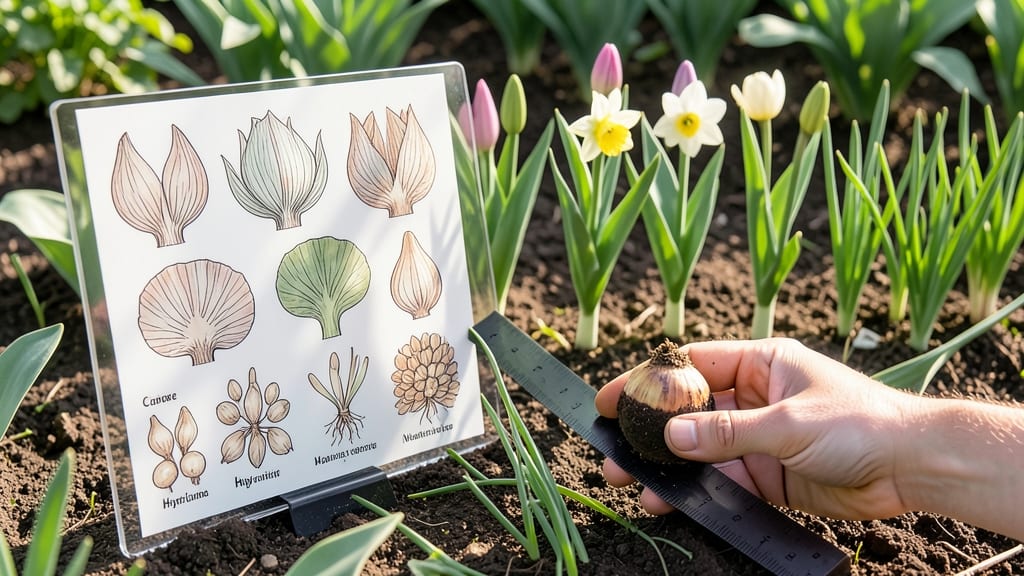
Bulb identification by leaf saves you from guessing which blooms will appear next spring. 🌱 The secret lies in those often-overlooked leaves—each bulb family has a signature shape, color, or growth pattern that reveals its identity long before flowers emerge. I’ve spent years studying these visual clues, and once you learn them, you’ll never confuse a tulip leaf from a daffodil’s again.
Start by comparing leaf width, length, and arrangement. Tulips have long, narrow leaves with parallel veins and a pointed tip, while daffodils produce broad, strap-like leaves with a slight curve. Alliums, like ornamental onions, grow in clusters of thin, grassy leaves that fan out from the base.
Even the texture matters—some leaves feel smooth, others slightly fuzzy or waxy to the touch.
Timing is everything: most bulb leaves emerge in early spring, but their growth pace varies. Tulips shoot up quickly, while alliums take their time, unfurling slowly over weeks. Watch for these cues, and you’ll know exactly which blooms to expect—no more surprises when your garden wakes up in spring.
Common mistakes? Overlooking leaf color (some bulbs have blue-green or grayish tones) or confusing broadleaf plants like lilies with true bulb families. Grab a notebook, sketch a few leaves, and soon you’ll spot the differences like a pro—no more mislabeled bulbs in your garden!
📚 In This Guide
- What you need
- Instructions
- Tips and common mistakes
- Wrapping up and next steps
What you need
- ○ Fresh or dried plant leaves – Collect from bulbs you suspect (or borrow from a friend’s garden!). Magnifying glass (10x magnification) – For examining fine details like leaf edges, veins, and textures. Ruler or measuring tape – To note leaf length, width, and spacing between veins (accuracy matters!). Notebook & pen – Sketch leaf shapes, colors, and key features (e.g., "sword-shaped," "variegated"). Field guide or plant ID app – Optional but helpful: Try iNaturalist, PictureThis, or a botany field manual for cross-referencing.
How to identify spring bulbs by their leaves
Here's my foolproof method for telling daffodils from tulips just by looking at their foliage—no blooms required.
🌱 Step 1: Observe Leaf Shape and Arrangement
Start by examining how the leaves grow from the bulb. Most spring bulbs fall into two distinct categories: those with fan-shaped leaves (like daffodils and snowdrops) and those with sword-like, pointed leaves (like tulips and hyacinths). Daffodils have long, strap-like leaves that emerge in a fan pattern, while tulips produce single, pointed leaves that grow upright from the base.
I always check this first because it's the most obvious difference. Hold the foliage between your fingers and notice how daffodil leaves feel slightly thicker and waxy, while tulip leaves are thinner and more papery. This texture clue helps when leaves look similar in shape.
🌿 Step 2: Count the Leaf Arrangement
Tulips and hyacinths typically have one or two leaves emerging at a time, while daffodils and alliums often produce multiple leaves in a clustered fan. Look closely at the base where leaves meet the soil—you'll see daffodils have 3-5 leaves radiating outward, whereas tulips usually have just one or two leaves per stem.
This is where it gets fun: if you see three leaves in a tight cluster, it's almost certainly a daffodil. If the leaves grow spread apart with just one or two per stem, it's likely a tulip. I've used this trick to identify bulbs in my garden before they even bloom.
☀️ Step 3: Check for Vein Patterns
Examine the veins running through the leaves. Daffodil leaves have parallel veins that run the length of the leaf, while tulip leaves often show more prominent midribs with smaller veins branching out. Hold the leaf up to the light—you'll see the difference clearly.
Hyacinths have a distinctive pleated, sword-like leaf with a central vein that's thicker than the surrounding veins. This is a dead giveaway when you're trying to distinguish them from tulips, which have smoother, less pronounced veins. I keep a small flashlight handy for this step—it makes the vein patterns pop.
✂️ Step 4: Look for Leaf Edges and Texture
Run your fingers along the edges of the leaves. Daffodil leaves have smooth, slightly rounded edges, while tulip leaves often have sharper, more pointed tips. Hyacinth leaves are stiffer and more rigid, almost like a small sword blade.
Pay attention to the leaf surface too. Daffodil leaves feel slightly waxy to the touch, which helps them retain moisture. Tulip leaves are softer and more delicate, almost like tissue paper. This texture difference is especially useful when leaves look similar in shape and size.
🪴 Step 5: Compare Growth Habit and Size
Notice how the leaves grow in relation to the bulb. Daffodils typically have longer, narrower leaves that can reach 12-18 inches tall, while tulip leaves are usually shorter and broader, often staying under 12 inches. Measure a few leaves if you're unsure—this simple comparison can solve many identification puzzles.
I also watch how the leaves angle outward. Daffodil leaves grow more horizontally, almost like a fan, while tulip leaves tend to stand upright. This growth habit is another key clue that helps me distinguish between these common spring bulbs before they bloom.
Tips & tricks for mastering spring bulb identification
These simple tricks will help you confidently distinguish bulbs by their leaves—even when blooms aren't visible yet.
Leaf Texture Test: The texture difference between daffodil and tulip leaves is your best friend. Daffodil leaves feel slightly waxy, almost like a fresh green bean, while tulip leaves are delicate and papery—almost like touching tissue paper. I always run my fingers along the edges first because this subtle difference can be the deciding factor when shapes look similar.
Lighting Hack for Veins: When examining vein patterns in Step 3, natural daylight works best—but if you're indoors, place the leaf on a white surface and shine a flashlight at a 45-degree angle. This makes the parallel veins in daffodils pop dramatically against the more complex vein structure of tulips. I keep a small desk lamp handy for this exact purpose during bulb identification sessions.
Growth Angle Clue: Pay attention to how leaves angle outward from the bulb. Daffodil leaves grow more horizontally, almost like a fan spreading out from the center, while tulip leaves stand upright. This growth habit is particularly helpful when you're looking at bulbs in garden beds—just glance at the angle, and you'll often know which plant family you're dealing with.
Pro Tips for Bulb Identification By Leaf
- These simple tricks will help you confidently distinguish bulbs by their leaves—even when blooms aren't visible yet.
- Leaf Texture Test: The texture difference between daffodil and tulip leaves is your best friend.
- Lighting Hack for Veins: When examining vein patterns in Step 3, natural daylight works best—but if you're indoors, place the leaf on a white surface and shine a flashlight at a 45-degree angle.
Frequently asked questions
Got questions about identifying bulbs by their leaves? You’re not alone—this method can feel tricky at first! Here are some of the most common questions (and answers) to help you navigate the process like a pro.
How do I know if a bulb’s leaves are mature enough to identify?
Wait until the leaves are fully unfurled and at least half their expected height for that bulb type. Early leaves (like those of tulips or daffodils) can look very similar, but mature leaves reveal key differences—like shape, texture, or vein patterns. Pro tip: Check your plant’s growth habit—some bulbs (e.g., alliums) grow fast, while others (like lilies) take weeks.
What if my bulb’s leaves are damaged or torn?
Don’t panic! Focus on the undamaged sections of the leaf—even a small intact portion can reveal critical clues (e.g., parallel veins, serrated edges). For heavily damaged leaves, compare them to reference photos or use a leaf rub test (gently rub a pencil over the leaf to reveal vein patterns).
Can I identify a bulb by leaf if it’s already bloomed?
Yes—but timing matters! If the plant is still in bloom, use the flower shape and color as a backup clue. Once the flower fades, rely on the leaves, stems, or even the bulb’s scent (e.g., hyacinths have a strong fragrance). Warning: Some bulbs (like snowdrops) bloom before leaves appear, so check the stems for clues.
Are there bulbs that can’t be identified by leaf alone?
Most can, but a few tricky ones require extra steps. For example:
- Daffodils (Narcissus) and Jonquils have nearly identical leaves—use flower shape or bulb size instead.
- Some alliums (like Allium cristophii) have grass-like leaves; cross-reference with bloom time or bulb shape.
- Tulips vs. fritillaries: Tulip leaves are smooth, while fritillaries have a checkered pattern.
When in doubt, dig up a small section of the bulb (if safe) to spot root or basal plate differences.
What’s the fastest way to confirm an ID if I’m unsure?
Combine leaf traits with these quick checks:
Clue
What to Look For
Growth habit
Basal (e.g., lilies) vs. stem-based (e.g., tulips)
Leaf arrangement
Alternate (e.g., hyacinths) vs. whorled (e.g., snowflakes)
Bulb shape
Round (e.g., daffodils) vs. elongated (e.g., fritillaries)
Bloom time
Early spring (e.g., crocus) vs. late summer (e.g., rain lilies)
Still stuck? Use a bulb ID app or post a photo in gardening forums—many experts can help!
Wrapping up and next steps
Mastering bulb identification by leaf unlocks a world of gardening confidence—no more guessing which stunning blooms belong in your garden! 🌱 By focusing on shape, texture, and arrangement, you’ve got the tools to decode even the trickiest plant families with ease.
Now that you’re armed with these visual clues, why not put your skills to the test?
Your next step? Grab a notebook, head outdoors, and start documenting the leaves in your garden (or even on a nature walk). Snap photos, sketch details, and challenge yourself to match them to the families you’ve learned. The more you practice, the sharper your eye becomes—happy identifying! 🌿