
Pests and Diseases
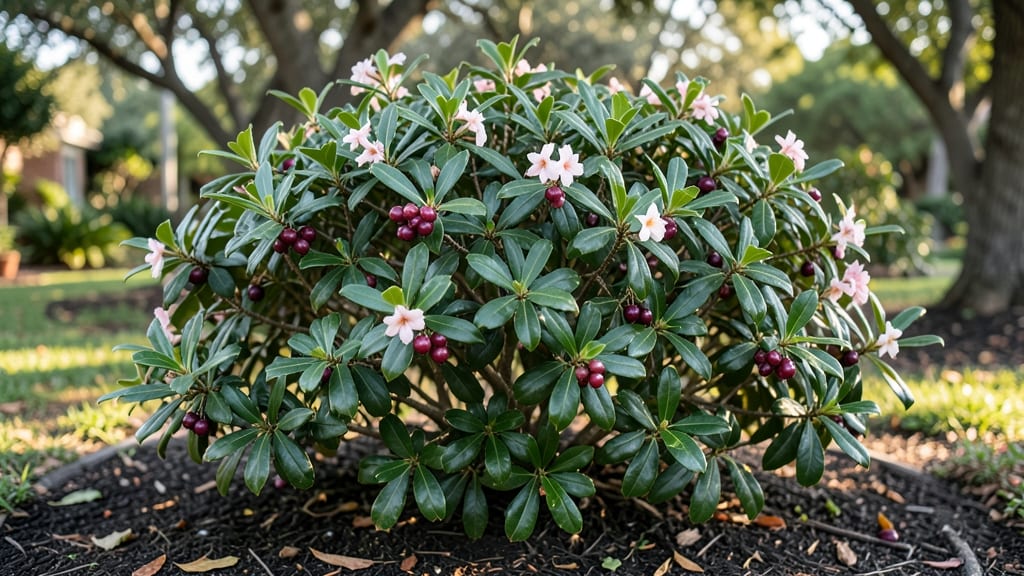
Growing Carissa holly leaf transforms any space into a lush, evergreen statement. 🌿 This glossy-leaved wonder thrives year-round with minimal fuss, making it the perfect hedge or container plant for gardeners who crave drama without the drama.
My first Carissa bush now stands as the centerpiece of my front yard, its dark green leaves catching the light like polished jade. The secret lies in its adaptability—it handles full sun to partial shade, tolerates poor soil, and even produces edible fruit.
Unlike finicky tropicals, Carissa stays healthy with simple care: water when the top inch of soil dries, and prune just twice a year to maintain shape. Even my black thumb can't kill this one.
What you'll end up with is a plant that looks expensive but costs almost nothing to maintain. The leaves stay vibrant through winter, the fruit attracts birds, and neighbors will ask how you keep it looking so effortlessly polished.
It's the kind of plant that makes gardening feel like a win. Works as a formal hedge, a container specimen, or even a low-maintenance privacy screen. Let's get yours growing!
📚 In This Guide
- What you need
- Instructions
- Tips and common mistakes
- Wrapping up and next steps
What you need
- ● Carissa holly leaf plant: 1 mature plant (for cuttings) or
- ● 5–10 seeds (if starting from scratch)
- ● Well-draining soil mix: 50% cactus/succulent soil
- ● 30% perlite or pumice (for aeration)
- ● 20% compost (for nutrients)
- ● 6-inch pots or containers (with drainage holes)
- ○ Rooting hormone (optional but recommended for cuttings)
- ● Spray bottle (for misting seedlings)
- ● Pruning shears (sterilized with rubbing alcohol)
- ● Gloves (to protect hands from thorns)
- ● Trowel or small shovel (for transplanting)
- ● Sunlight access: Full sun (6+ hours/day) for outdoor plants
- ● Bright, indirect light for indoor setups
- ● Watering can with a fine rose nozzle (to avoid disturbing soil)
- ● Fertilizer: Balanced liquid fertilizer (10-10-10) or
- ● Slow-release granules (for long-term growth)
- ● Mulch (to retain moisture and deter weeds)
- ● Pest control spray (neem oil or insecticidal soap)
- ● Support stakes (for training young plants)
- ● Grow lights (if indoor lighting is limited)
Step-by-Step guide to growing Carissa holly leaf
Here's how to cultivate this stunning evergreen shrub with bold foliage and minimal fuss.
🌱 Step 1: Choose the Perfect Planting Location
Carissa holly leaf thrives in full sun to partial shade, making it perfect for sunny borders or as a dramatic focal point. I always plant mine where they'll get at least 6 hours of direct sunlight daily—this ensures those glossy leaves stay vibrant year-round. The key is well-draining soil; if your yard has heavy clay, amend with 2-3 inches of compost mixed into the top 12 inches of soil.
Watch for the soil's natural drainage before planting. If water pools after heavy rain, you'll need to improve drainage by adding coarse sand or gravel. Carissa holly leaf hates soggy roots, so this step prevents future problems. I dig a hole twice as wide as the root ball but only as deep—planting too deep can suffocate the roots and stunt growth.
🪴 Step 2: Plant with Proper Spacing and Support
Space your Carissa holly leaf plants 6-8 feet apart to allow for mature growth without crowding. These shrubs grow into dense, rounded bushes with striking foliage, so proper spacing ensures they develop their signature fullness. I always add a 4-inch layer of mulch around the base (but not touching the trunk) to retain moisture and regulate soil temperature.
Here's the thing—Carissa holly leaf benefits from a sturdy support stake during its first year. The glossy leaves and upright growth habit make it prone to wind damage when young. Drive a 5-foot wooden stake into the ground next to the plant and loosely tie the main stems to it with soft plant ties. You'll see the plant establish stronger roots and stand taller within a few months.
☀️ Step 3: Water Deeply and Establish a Routine
Water your newly planted Carissa holly leaf deeply once a week during the first growing season. The goal is to moisten the soil to a depth of 12 inches—this encourages deep root growth. You'll know you've watered enough when the top 2 inches of soil feel damp but not soggy. Overwatering is the fastest way to kill these plants, so resist the urge to water lightly every few days.
Once established (after about 12 months), Carissa holly leaf becomes remarkably drought-tolerant. You'll see this when the plant develops a network of deep roots that access moisture from lower soil layers. At this point, you can reduce watering to every 2-3 weeks, unless you're experiencing an extended dry spell or extreme heat.
✂️ Step 4: Prune for Shape and Health
Prune your Carissa holly leaf in late winter or early spring, just as new growth begins to appear. This is when the plant is most responsive to shaping. I always start by removing any dead, damaged, or crossing branches first—this opens up the center of the plant and improves airflow. Use clean, sharp pruning shears to make cuts just above a leaf node or outward-facing bud.
For shaping, I like to maintain a natural, rounded form. Cut back any overly long branches by about one-third to encourage bushier growth. Real talk: Don't over-prune. Carissa holly leaf responds well to light pruning but can become leggy if you remove too much foliage at once. You'll see new growth emerge within 4-6 weeks of pruning, signaling the plant is happy with the new shape.
🌿 Step 5: Fertilize for Vibrant Foliage
Feed your Carissa holly leaf with a balanced, slow-release fertilizer (10-10-10 ratio) in early spring and again in mid-summer. This timing ensures the plant has nutrients when it needs them most—during active growth periods. I spread the fertilizer granules evenly around the root zone and water deeply to help them dissolve into the soil.
Watch the leaves for signs of nutrient needs. Healthy Carissa holly leaf has glossy, deep green foliage. If you notice yellowing leaves or stunted growth, it might be time for a light application of iron chelate or a foliar spray. Too much fertilizer can burn the roots, so always follow the package instructions and never exceed the recommended amounts.
Tips & tricks for growing stunning Carissa holly leaf
These simple strategies will help your Carissa holly leaf thrive with minimal fuss and maximum drama.
Sunlight Secret: While 6 hours of sunlight is the minimum, I've found that morning sun (especially east-facing exposure) gives the best leaf color and prevents leaf scorch. If your plant gets intense afternoon sun, consider providing a bit of afternoon shade during the hottest months. The glossy foliage will thank you!
Soil Test Tip: Before planting, do a quick soil test by digging a small hole and filling it with water. If it drains completely within 10 minutes, your soil is well-draining. If water remains after 30 minutes, you'll definitely need to amend with sand or gravel as mentioned in Step 1. Proper drainage is the foundation of healthy roots.
Pruning Precision: When you're pruning in Step 4, look for the small buds where leaves meet stems—these are your growth points. Cutting just above these buds encourages new growth in the right direction. I like to step back and visualize the plant's shape after each cut. The goal is to maintain that natural rounded form while opening up the center for better airflow.
Fertilizer Timing: The early spring and mid-summer feeding schedule in Step 5 works perfectly, but here's a pro move: mix a handful of compost into the soil around the base when you fertilize. This gives your plant a slow-release nutrient boost without the risk of burning. I also water deeply after fertilizing to help distribute nutrients throughout the root zone.
Pro Tips for Carissa Holly Leaf
- These simple strategies will help your Carissa holly leaf thrive with minimal fuss and maximum drama.
- Sunlight Secret: While 6 hours of sunlight is the minimum, I've found that morning sun (especially east-facing exposu...
- Soil Test Tip: Before planting, do a quick soil test by digging a small hole and filling it with water. If it drains ...
Frequently asked questions
Got questions about keeping your Carissa holly leaf thriving? You’re not alone! Here are answers to the most common concerns—from pruning puzzles to pest problems—so you can enjoy lush, drama-free foliage year-round.
How often should I prune my Carissa holly leaf?
Prune your Carissa holly leaf lightly 2–3 times a year: once after flowering (late winter/early spring) to shape it, again in summer to encourage bushiness, and a final trim in fall to tidy up. Avoid heavy pruning—this plant responds best to gentle shaping! Pro tip: Never cut more than 1/3 of the plant at once to prevent stress.
What pests commonly attack Carissa holly leaf, and how do I treat them?
The most common pests are aphids, scale insects, and spider mites. For mild infestations, spray with neem oil or insecticidal soap weekly. Severe cases may need systemic pesticides—isolate the plant and check the undersides of leaves first! Preventative tip: Keep your plant healthy with proper watering and airflow to deter pests.
Can Carissa holly leaf survive cold winters, or do I need to protect it?
Most Carissa holly leaf varieties tolerate USDA Zones 9–11, but frost can damage tender new growth. In colder climates, mulch the base and wrap the plant in burlap during freezes. If potted, move it indoors near a bright window or use a plant heater. Warning: Avoid sudden temperature swings!
Why are my Carissa holly leaf’s leaves turning yellow?
Yellow leaves usually signal overwatering, underwatering, or nutrient deficiency. Check the soil—it should be slightly moist but not soggy. If the roots smell rotten, repot in fresh, well-draining mix. Yellowing from the tips down? Likely underwatering. For general yellowing, fertilize lightly with a balanced 10-10-10 formula. Fix: Adjust watering and trim dead leaves to redirect energy.
Are there any non-toxic alternatives to Carissa holly leaf for pets?
If you have curious pets, Carissa holly leaf is mildly toxic (can cause stomach upset if ingested). Safer alternatives with similar foliage include Dwarf Boxwood (Buxus), English Holly (Ilex), or Fatsia japonica. Always research pet safety before swapping plants—some "non-toxic" options may still cause mild reactions! Note: Supervise pets around any new plants.
| Quick Troubleshooting Guide |
|---|
|
Problem: Dropping leaves Cause: Stress from overwatering, underwatering, or transplant shock Fix: Adjust watering and avoid repotting unless necessary |
|
Problem: No flowers Cause: Lack of sunlight or over-fertilizing with nitrogen Fix: Move to full sun (6+ hours/day) and switch to a low-nitrogen bloom booster |
|
Problem: Leggy growth Cause: Not enough light or over-pruning Fix: Trim back leggy stems and place in brighter light |
Wrapping up and next steps
Carissa holly leaf isn’t just a pretty face—it’s a resilient, low-maintenance superstar for year-round greenery! 🌿 With the right pruning precision, you’ll keep pests and diseases at bay while shaping a thriving, dramatic shrub. Whether you’re a gardening newbie or a seasoned green thumb, these tips ensure your Carissa stays lush, healthy, and pest-free.
Ready to level up your garden game? Start by inspecting your plant weekly—early action is your best defense! Grab those pruners, brush up on your techniques, and enjoy the satisfaction of a Carissa holly that’s the talk of the neighborhood. Happy pruning! ✂️🌟