
Pruning
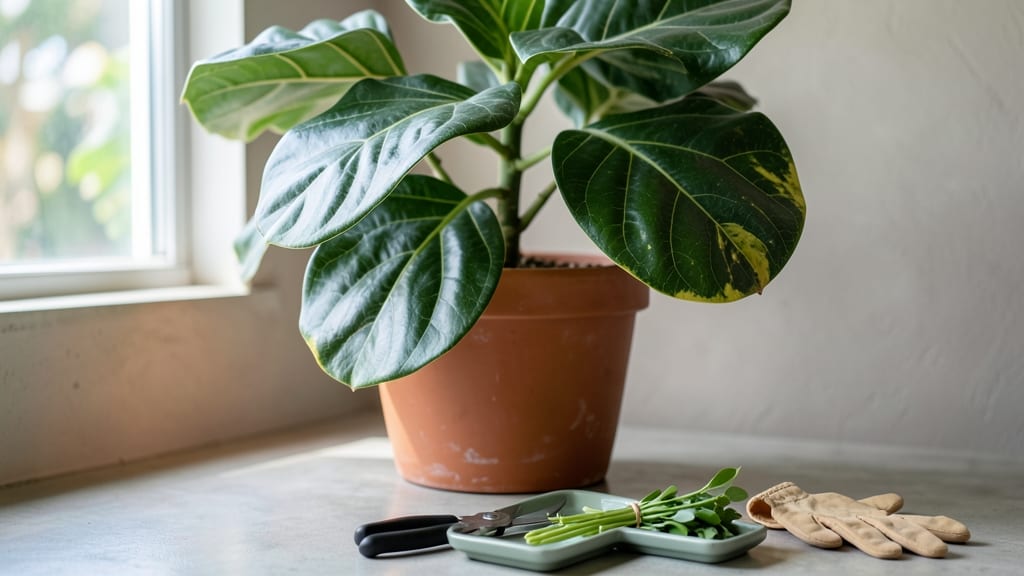
When you cut a fiddle leaf fig—whether pruning for shape or fixing a broken branch—you’re not just trimming leaves; you’re shaping its future. ✂️ The right cut sparks lush regrowth, while the wrong one stresses the plant for months.
I’ve turned leggy, sparse fiddle leaf figs into bushy, vibrant plants with just a few strategic snips and proper aftercare.
Here’s the game-changer: cut just above a leaf node (that little bump where leaves grow) using clean, sharp pruners—never tear branches. After trimming, wipe the cut with rubbing alcohol to prevent bacterial infections, then let the plant rest for 24 hours before watering.
The first few weeks are critical: too much water now drowns fresh cuts, but too little stunts regrowth.
Within 4-6 weeks, you’ll see new leaves unfurling from the cut nodes—proof the plant is healing. For extra fullness, propagate the cuttings in water or moist potting mix. My accidental breakage turned into three new plants, and the original bush now has five times the foliage it had before.
This method works for any size fiddle leaf fig, from tiny houseplants to 6-foot giants. The key? Patience and precision—no rushing, no guesswork. Let’s get those cuts right so your plant thrives, not just survives.
📚 In This Guide
- What you need
- Instructions
- Tips and common mistakes
- Wrapping up and next steps
What you need
- ● Sharp, clean pruning shears (bypass pruners work best—avoid dull or rusty blades!)
- ● Rubbing alcohol (70% or higher) (for sterilizing tools—1-2 small bottles)
- ● Hydrogen peroxide (3%) or cinnamon powder (to prevent infection—small bottle or 1 tsp)
- ● Glove (to protect your hands from sap—1 pair)
- ● Newspaper or drop cloth (to catch leaves and debris—1 large sheet)
- ● Water spray bottle (for misting cuts—small, 8-16 oz)
- ○ Pencil and paper or a plant pruning guide (to sketch your plan—optional but helpful!)
- ● Rooting hormone (if propagating cuttings—small jar)
- ● Small pots with well-draining soil (for propagating—1-2 pots, 4-6 inches wide)
- ● Plant tie or twine (to support new growth—small roll)
- ● Grow lights or a sunny windowsill (for cuttings—if indoors)
- ● Pruning sealant (like tree wound paint—small tube)
Precision trimming guide for fiddle leaf figs
Here’s how to cut your fiddle leaf fig for fuller growth—without killing it.
✂️ Step 1: Identify the Right Cuts for Bushier Growth
Fiddle leaf figs grow upward by default, so strategic cuts encourage branching. Look for stems with at least 3-4 leaves—these are strong enough to support new growth. I always target the topmost leaf node (where leaves meet the stem) just below a set of leaves. This spot holds dormant buds that will sprout into new branches.
Never cut at a random spot—this leads to weak regrowth or dead stems. The 45-degree angle just above a leaf node is key. It prevents water from pooling and ensures the cut heals cleanly. If you’re unsure, count leaves upward from the base: the third or fourth node from the top is ideal for your first cut.
✂️ Step 2: Use Sharp Tools and Clean Technique
Dull scissors crush stems and invite disease. Grab your sterilized pruning shears (or a clean knife) and make a single, smooth cut at your chosen node. A clean cut heals faster and reduces stress on the plant. Wipe the blades with rubbing alcohol before and after to prevent bacterial spread—especially if you’ve trimmed other plants.
I like to hold the stem firmly with one hand and cut downward in one motion. Avoid tearing or crushing the stem—this damages the vascular tissue and slows recovery. If you’re nervous, practice on a few lower stems first. The goal is precision, not speed.
🌿 Step 3: Encourage New Growth with Light and Water
After trimming, move your fiddle leaf fig to a bright, indirect light spot (think 4-6 feet from an east or north-facing window). Direct sun will scorch new leaves, while low light stunts regrowth. You’ll see tiny bumps at the cut nodes within 2-4 weeks—these are the future branches. Keep the soil lightly moist (not soggy) to support healing.
If your plant looks stressed after cutting, reduce watering slightly. Overwatering now can drown the new shoots before they emerge. A good rule: Wait until the top 1-2 inches of soil feel dry before watering again. Mist the leaves lightly if the air feels dry—fiddle leaf figs love humidity but hate soggy roots.
⏰ Step 4: Monitor and Repeat for Long-Term Shape
Watch for new growth at the cut nodes—it should appear as small, pointed leaves within 4-6 weeks. Once these leaves harden (feel firm to touch), you can trim again to encourage even more branching. I repeat this process every 6-8 weeks during the growing season (spring and summer) to maintain a full, bushy shape.
Resist the urge to over-trim. Fiddle leaf figs are resilient but not indestructible. If you cut too aggressively, the plant may focus energy on recovery instead of new growth. Start conservatively—one or two cuts per session—and adjust based on how your plant responds. Patience pays off with a thicker, healthier plant.
Tips & tricks for perfect fiddle leaf fig trimming
Mastering the art of trimming your fiddle leaf fig transforms it from a single-stemmed showpiece into a lush, multi-branched beauty.
Node Selection Strategy: In Step 1, when identifying the topmost leaf node, look for stems where the leaves are fully mature but still vibrant. The third or fourth node from the top is ideal because these nodes contain the strongest dormant buds. I’ve found that stems with leaves showing slight yellowing at the edges are actually better candidates—they indicate the plant is ready to redirect energy toward new growth rather than maintaining aging foliage.
Cutting Technique: The 45-degree angle mentioned in Step 2 isn’t just about aesthetics—it’s about plant physiology. This angle prevents water from collecting in the cut stem, which could lead to rot. I’ve ruined multiple stems by making flat cuts that pooled water. Use your pruning shears to make the cut downward at the angle, then immediately wipe any sap from the blade with a damp cloth. This keeps your tools clean and prevents sap from clogging the blades.
Light and Recovery: After trimming, the bright indirect light mentioned in Step 3 is crucial, but don’t overlook the importance of humidity. While fiddle leaf figs love humidity, they also need good air circulation. I place my trimmed plants on a pebble tray filled with water to increase humidity without creating a stagnant environment. This balance helps the new shoots emerge stronger and healthier, typically within that 2-4 week window mentioned in the instructions.
Monitoring New Growth: When you see those tiny bumps at the cut nodes within 4-6 weeks, resist the urge to trim them immediately. Let the new leaves harden and develop a leathery texture—this usually takes about 2-3 weeks after they first appear. I’ve made the mistake of trimming too soon, which can stunt the growth of these delicate new shoots. Once they’re firm to the touch, you can safely trim again to encourage even more branching.
Pro Tips for Cut Fiddle Leaf Fig
- Mastering the art of trimming your fiddle leaf fig transforms it from a single-stemmed showpiece into a lush, multi-b...
- Node Selection Strategy: In Step 1, when identifying the topmost leaf node, look for stems where the leaves are fully...
- Cutting Technique: The 45-degree angle mentioned in Step 2 isn’t just about aesthetics—it’s about plant physiology. T...
Frequently asked questions
Got questions about cutting back your fiddle leaf fig? Here are answers to the most common concerns—so you can trim with confidence and keep your plant thriving!
When is the best time to cut a fiddle leaf fig?
The ideal time is late spring or early summer when the plant is entering active growth. Avoid trimming in fall/winter—this is its dormant period. If you spot yellowing or overgrown leaves anytime, a light prune is still safe, but prioritize timing for best results.
How much can I cut off my fiddle leaf fig?
You can remove up to 1/3 of the plant’s foliage in one session without stressing it. For bushier growth, trim back leggy stems to just above a leaf node. Avoid cutting into woody stems—focus on green growth. Think “less is more” for first-timers!
What if my cuts look messy or jagged?
Jagged cuts happen! Use a sharp, sterilized pair of pruners (or clean scissors) and cut at a 45-degree angle to prevent water pooling. If mistakes occur, don’t panic—fiddle leaf figs heal well. Just trim again cleanly later. Pro tip: Wipe the blade with rubbing alcohol between cuts to avoid bacterial spread.
Can I propagate my cuttings?
After trimming, place healthy 4–6 inch cuttings in water (change weekly) or straight into moist soil. Use a humidity dome or plastic bag to retain moisture. Roots typically form in 4–8 weeks. Fiddle leaf figs propagate easily—just be patient!
Why is my fiddle leaf fig drooping after trimming?
Drooping can signal transplant shock or over-pruning. If it’s mild, reduce watering and place the plant in bright, indirect light. Severe drooping may mean you cut too much—trim only 10–15% of the plant next time. Avoid fertilizing for 4–6 weeks post-prune to help recovery.
Wrapping up and next steps
Pruning your fiddle leaf fig isn’t just about keeping it tidy—it’s the secret to unlocking its full, lush potential! 🌿 With the right tools, timing, and technique, you’ll encourage bushier growth and healthier leaves.
Remember, confidence comes with practice, so don’t hesitate to start small and observe how your plant responds.
Ready to give your fiddle leaf fig the TLC it deserves? Grab your shears and get trimming! 🌱 Next, monitor your plant’s progress and adjust your pruning routine as needed—your green thumb is just a cut away!