
Watering
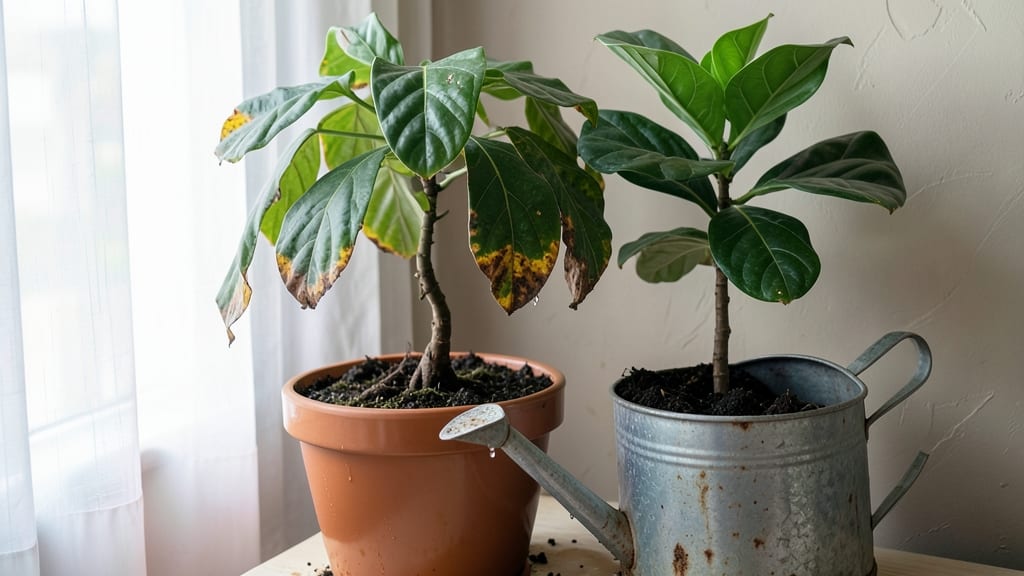
Your drooping fiddle leaf fig overwatered might be screaming for help—overwatering is the silent killer of these dramatic houseplants. ✨ I’ve nursed back more than my share of sad, soggy fiddle leaf figs, and the good news is that with the right moves, you can revive drooping leaves in just 3 days.
The key? Stopping the water torture and giving roots room to breathe again.
Here’s the hard truth: yellowing leaves, mushy stems, and roots that smell like rot aren’t just sad—they’re urgent. Most people wait too long, thinking their plant just needs "more love." But fiddle leaf figs hate soggy soil.
The fix starts with letting the soil dry out completely between waterings and checking roots for black, mushy signs of rot. You’ll also need a clean pot and fresh, well-draining soil to give those roots a fighting chance.
Within 72 hours, you’ll see leaves perking up as the plant sheds its stress. Prune any blackened leaves to redirect energy, and keep humidity up with a pebble tray. The real win?
Your plant will bounce back stronger than ever—and you’ll spot the early warning signs next time. Trust me, this is the moment your fiddle leaf fig starts its comeback story.
Once the crisis passes, adjust your watering routine to match your home’s humidity and light. A finger test in the soil is your new best friend—water only when the top 2 inches feel dry.
Fiddle leaf figs reward patience with glossy, vibrant leaves that’ll make your space feel alive again. No more guesswork, just happy plants.
Root Causes Of Overwatering
When your fiddle leaf fig starts looking sad with droopy, yellowing leaves, the culprit is often too much water—either from overzealous watering or poor drainage. But why does this happen so easily? Let’s break down the science and habits that lead to soggy soil and stressed roots.
🌱 Poor Drainage Systems
Fiddle leaf figs (Ficus lyrata) are tropical plants, but their roots hate sitting in waterlogged soil. Without proper drainage, excess moisture gets trapped, suffocating roots and blocking oxygen. Here’s why this happens:
- Clay or compacted soil: Dense soils (like clay) don’t allow water to drain quickly. Even if you water less, the soil stays soggy for days.
- Missing drainage holes: Pots without holes act like a bathtub—water pools at the bottom, and roots drown.
- No gravel or perlite: Mixing in drainage materials (like pumice or perlite) creates air pockets, but skipping this step turns soil into a water trap.
Pro tip: 💡 Test your soil’s drainage by filling a pot with water. If it drains in 10–15 minutes, you’re good. If it takes hours, amend your soil or repot.
💦 Overwatering Frequency Mistakes
Fiddle leaf figs thrive on a consistent but infrequent watering schedule. Common mistakes include:
- Watering on a set schedule: Plants don’t need water every Monday—check soil moisture first! Use your finger: Stick it 1–2 inches deep. If it’s dry, water; if damp, wait.
- Ignoring seasonal changes: Winter slows growth, so roots need 40–50% less water than in summer. Overwatering in cold months is a fast track to root rot.
- Using ice cubes or misting leaves: While trendy, these methods add unnecessary moisture to the soil. Stick to watering at the base.
Pro tip: ⏰ Use a moisture meter for accuracy—it removes guesswork and prevents overwatering.
🌡️ Environmental Factors Tricking You
Humidity, temperature, and light levels affect how quickly soil dries. If your home’s conditions change, your watering habits might need to adjust too:
- High humidity (60%+): Slow evaporation means soil stays wet longer. A hygrometer can help you gauge when to hold off on water.
- Low light conditions: Less light = slower growth = roots absorb water more slowly. Yet many people increase watering, thinking the plant is thirsty.
- Cold drafts or AC near the plant: Cool air dries soil faster, but if your plant is near a vent, it might look dry when it’s actually stressed from temperature swings.
Pro tip: 🌡️ Move your fiddle leaf fig away from heaters or AC vents—consistent temps (65–75°F) keep watering predictable.
🚫 Using the Wrong Pot or Soil Mix
Not all pots and soils are created equal. Here’s how your container and growing medium can backfire:
- Terracotta pots without glaze: They dry out faster, but if they’re too small, roots fill the space quickly, leading to overcrowding and water retention.
- Plastic pots: They retain moisture longer, so you might think the plant needs water when it doesn’t.
- Heavy garden soil: Designed for outdoor plants, it compacts and holds water like a sponge. Use a well-draining mix (50% potting soil, 30% perlite, 20% orchid bark).
Pro tip: ✨ Repot into a slightly larger container (1–2 inches wider) with fresh, airy soil to improve drainage.
How to Revive Your Fiddle Leaf Fig
Your fiddle leaf fig is drooping, but don’t panic—with the right steps, you can nurse it back to health! Overwatering is often reversible if you act quickly. Below, we’ll break down the fixes based on the root cause, along with prevention tips to keep your plant thriving.
If your fiddle leaf fig’s leaves are turning yellow or brown at the edges (or worse, falling off), root rot may be the culprit. This happens when soil stays soggy for too long, suffocating the roots.
Step 1: Remove the Plant from the Pot 🌱
Gently take your fiddle leaf fig out of its container. If the roots are black, mushy, or smell foul, root rot has set in. Healthy roots should be firm and white or tan.
Step 2: Trim the Damaged Roots ⏰✂️
Using sterilized scissors or pruning shears, snip off any soft, dark, or slimy roots. Focus on saving as much healthy root as possible—even a few inches can regrow!
Step 3: Repot in Fresh, Dry Soil 🏺
- Choose a clean pot with drainage holes (terracotta is ideal).
- Use a well-draining potting mix (like a blend of peat, perlite, and orchid bark).
- Add a thin layer of gravel or charcoal at the bottom to improve drainage.
Step 4: Let It Dry Out Before Watering 💧🚫
Wait 5–7 days before watering again. This gives the roots time to heal and prevents further rot.
Prevention Tips 💡
- Water only when the top 1–2 inches of soil are dry (stick your finger in to check!).
- Avoid saucers that trap water—empty excess water from the saucer after watering.
- Repot every 1–2 years to refresh the soil and prevent compaction.
If the leaves are drooping but still green (not yellow or brown), your plant might just be overly saturated. This is an early-stage issue, and recovery is faster!
Step 1: Stop Watering Immediately 🚰🚫
Let the soil dry out completely. This could take 3–5 days, depending on humidity and pot size.
Step 2: Improve Airflow 🌬️
Move your fiddle leaf fig to a bright, indirect spot with good airflow (but no cold drafts). A fan on low can help speed up evaporation.
Step 3: Water Only When Necessary 💧⏳
- Check soil moisture by sticking your finger in—if it’s damp past the first inch, wait longer.
- Water thoroughly but less often—deep watering encourages stronger roots.
Prevention Tips 🌡️
- Use a moisture meter to track soil dryness (aim for 3–4 on the scale).
- Group plants together—they create a mini humid environment but still allow airflow.
- Avoid misting leaves—this can lead to fungal issues if the plant is already stressed.
If your fiddle leaf fig has small leaves, slow growth, or a weak stem, it’s likely been overwatered for months. This weakens the plant’s ability to absorb nutrients.
Step 1: Reset the Root System 🌿✨
Follow the root trimming and repotting steps above, but this time, prune back any leggy or weak stems to redirect energy to new growth.
Step 2: Feed It Lightly 🍽️💪
Wait 4–6 weeks before fertilizing. Once you resume, use a balanced, diluted fertilizer (half-strength) every 2–3 months in spring/summer.
Step 3: Optimize Light Conditions ☀️🌿
- Bright, indirect light is key (east or north-facing windows are ideal).
- Rotate the pot weekly so all sides get even light.
Prevention Tips 🎯
- Stick to a watering schedule (e.g., every 7–10 days in summer, less in winter).
- Upgrade to a larger pot (only if roots are tightly bound)—this improves stability and drainage.
- Monitor leaf color—new growth should be vibrant green, not pale or yellow.
If your fiddle leaf fig is severely drooping, wilting, or has black stems, act within 24–48 hours:
- Trim all mushy, black stems (use sterilized tools).
- Repot in fresh, dry soil (as above).
- Place in bright, indirect light and stop watering for 1 week.
- Mist lightly (if humidity is low) to reduce stress.
Final Pro Tip: 💡 Patience is key! Recovery can take 2–4 weeks, but with the right care, your fiddle leaf fig will bounce back stronger than ever. Keep an eye on its progress and adjust as needed!
Frequently asked questions about reviving an overwatered fiddle leaf fig
How do I know if my fiddle leaf fig is overwatered vs. underwatered?
Check the leaves and soil: Overwatered plants have yellowing leaves, mushy stems, and soil that smells foul or stays soggy for days. Underwatered plants show brown, crispy edges and dry, pulling away from the pot. Stick your finger in—if the top 2 inches are bone dry, it’s thirsty. If damp past 1 inch, it’s overwatered.
Can I save my fiddle leaf fig if the roots are completely black and mushy?
Yes, but act fast! Trim all black, mushy roots with sterilized scissors, then repot in fresh, well-draining soil with gravel at the bottom. Skip watering for 5–7 days to let roots heal. Even with severe rot, healthy root tissue can regrow—just give it time and patience.
Why does my fiddle leaf fig keep getting overwatered even when I stop?
This usually means your pot or soil isn’t draining properly. Check for clogged drainage holes or a soil mix too heavy with peat. Upgrade to a terracotta pot (if not already) and amend soil with 30% perlite or orchid bark. Also, group plants together—they create a microclimate that dries soil faster.
How often should I water my fiddle leaf fig after recovery?
Wait until the top 2–3 inches of soil are completely dry before watering again. In summer, this might be every 7–10 days; in winter, stretch it to every 3–4 weeks. Use a moisture meter for accuracy—aim for a reading of 3–4 (dry but not bone-dry).
Will pruning help my overwatered fiddle leaf fig recover faster?
Prune any yellow, brown, or black leaves to redirect energy to healthy growth. Use sterilized scissors and cut just above a leaf node. For severely stressed plants, trim 1/3 of leggy stems to encourage bushier regrowth. Just avoid cutting into healthy green tissue.