
Pests and Diseases
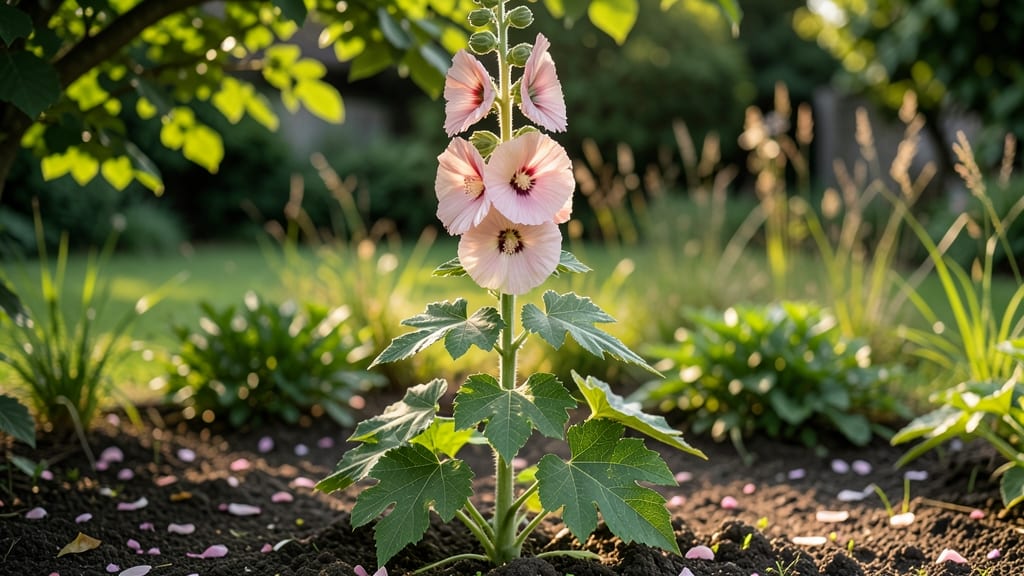
The hollyhock leaf shape typically features 5 to 7 deep, pointed lobes with serrated edges, though some varieties exhibit 3 to 9 lobes depending on maturity and growing conditions. The classic Alcea rosea displays 5–7 lobes, while hybrids may deviate slightly in structure and depth.
Hollyhock leaves aren't just pretty—their lobing patterns act like fingerprints for identifying cultivars. 🌿 For example, the Black Knight series often shows deeper, more pronounced lobes compared to the rounded edges of Chater’s Double varieties.
These differences become more noticeable as plants mature, with younger leaves sometimes appearing less defined. Gardeners often use leaf shape alongside flower color to distinguish between types, especially when dealing with mixed plantings.
What's fascinating is how environmental factors play a role. Low light or nutrient deficiencies can cause leaves to develop fewer or shallower lobes, while optimal growing conditions encourage the full expression of a cultivar's genetic leaf shape.
This means a plant labeled as having 5-lobed leaves might show 7 lobes in ideal conditions—or revert to 3 lobes under stress.
💡 In This Article
- Biological Factors Influencing Hollyhock Leaf Lobing
- Identifying Hollyhock Cultivars by Leaf Structure
Biological factors influencing hollyhock leaf lobing
The number of lobes on hollyhock leaves is primarily determined by genetics, with the classic Alcea rosea species typically expressing 5 to 7 lobes due to its genetic blueprint.
These lobes form through a process called laminar outgrowth, where cells along the leaf margin grow at different rates to create indentations.
The deeper the indentations, the more pronounced the lobes appear—this is why some cultivars like Black Knight develop 9 lobes while others like Chater’s Double may show only 3 to 5.
Environmental factors like sunlight exposure play a critical role in lobe development. Hollyhocks grown in full sun (6+ hours daily) tend to produce leaves with deeper, more defined lobes because photosynthesis fuels cellular growth along the margins.
In contrast, shade-grown plants often develop shallower lobes or fewer indentations due to reduced energy availability. Soil nutrients—particularly nitrogen and phosphorus—also influence leaf morphology; deficiencies can lead to stunted growth and less distinct lobing patterns.
Seasonal growth stages further complicate lobe counting. Young hollyhock leaves start with 3 to 5 rounded lobes that gradually deepen as the plant matures. By mid-summer, when most cultivars reach their full height, leaves typically achieve their genetically predetermined lobe count.
This is why gardeners often recommend waiting until plants are at least 3 feet tall before using leaf shape for identification, as immature leaves can be misleading.
Hybridization introduces another layer of variation. Breeders often cross hollyhocks with different lobe counts to create new cultivars, resulting in unpredictable patterns. For example, a cross between a 5-lobed and a 7-lobed parent might produce offspring with 6 lobes or even asymmetrical leaves.
This genetic mixing explains why some modern hybrids display leaves with uneven lobing or additional smaller lobes along the margins.
Temperature also affects leaf development. Hollyhocks grown in cooler climates (zones 3-7) often develop more compact, deeply lobed leaves as a survival adaptation, while those in warmer regions (zones 8-10) may produce broader, less defined lobes.
This regional variation is why leaf shapes can differ even between plants of the same cultivar grown in different locations.
Understanding these biological factors helps gardeners predict leaf development. For instance, if you're growing Alcea rosea in partial shade, expect the lobes to be less pronounced than in full sun.
Conversely, nutrient-rich soil can encourage more dramatic lobing even in shade-tolerant varieties. These insights allow for better cultivar selection and care practices tailored to specific growing conditions.