
Planting
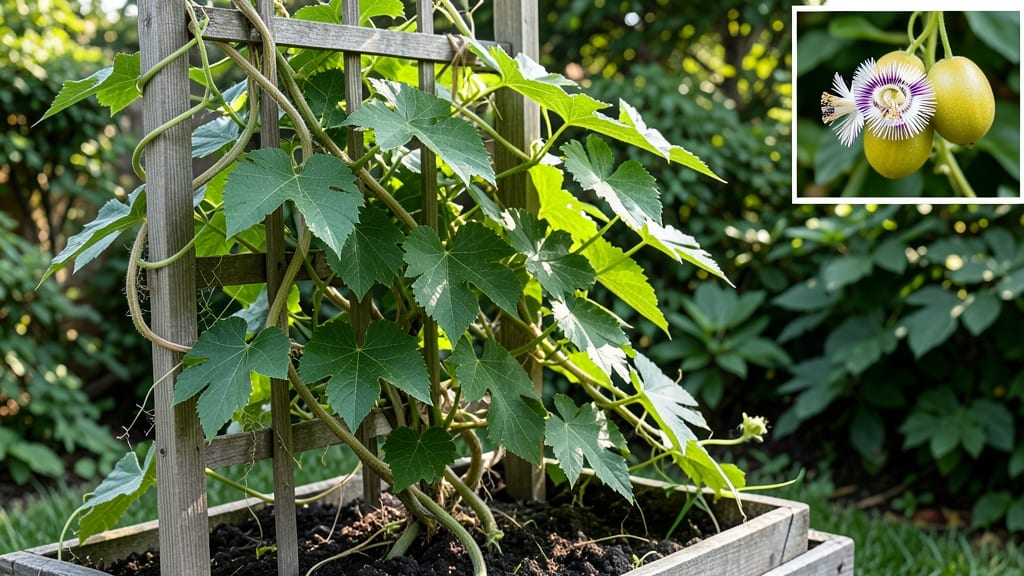
When you spot a climbing plant and want to identify it by the leaf, the leaves hold all the clues. 🌿 I’ve spent years untangling vines in my garden, and once you know what to look for—leaf shape, edges, and arrangement—identifying them becomes second nature.
A single glance at the leaf can tell you whether that vine will smother your fence or gracefully drape your trellis.
The secret is focusing on three key features: leaf structure (lobed, serrated, or smooth?), vein patterns (prominent or faint?), and how they attach to the stem (alternate or opposite?). Wisteria leaves, for example, have pinnate arrangements with 7-19 leaflets, while clematis leaves are simple and heart-shaped with pointed tips.
Ivy’s classic 3-5 lobed leaves are unmistakable once you’ve seen them up close.
By the end of this, you’ll confidently spot the differences—no more guessing whether that vine is a fast-growing nuisance or a delicate ornamental. I’ll even show you how to use a simple field guide or app to double-check tricky cases. No more letting mystery vines take over your garden!
This works for backyard explorers, urban gardeners, or anyone trying to reclaim a vine-choked fence. Let’s turn those leafy mysteries into easy identifications!
How Nature Shapes Plant Leaves
Climbing plants develop their distinctive leaf features through a mix of evolutionary adaptations, environmental pressures, and genetic quirks. Understanding these drivers helps explain why some leaves are broad and heart-shaped while others are thin and needle-like.
Here’s why climbing plants end up with the leaf traits that make them so easy—or tricky—to identify.
---
Climbing plants didn’t just choose their leaf shapes—they evolved them for survival. Their leaves often reflect three key evolutionary goals:
1. Light Optimization 🌞 Many climbing plants grow in shaded understories or dense canopies, where sunlight is scarce. Broad, palmate or pinnate leaves (like those of ivy or wisteria) maximize surface area to capture every photon.
Some even develop dissected or lobed edges (e.g., Clematis) to reduce self-shading, ensuring light reaches deeper leaf layers.
2. Water Efficiency 💧 Thin, leathery leaves (common in tropical climbers like Monstera) conserve moisture by reducing water loss through transpiration. Others, like Passiflora (passionflower), have deeply veined leaves that channel water efficiently to growing tips, a critical advantage when vines stretch toward sunlight.
3. Structural Support 🌿 Some climbing plants sacrifice leaf size for flexibility. Vines like Hedera helix (English ivy) have small, lobed leaves that reduce wind resistance, helping them cling to surfaces without snapping.
Meanwhile, tendril-bearing climbers (e.g., Phaseolus beans) often have compound leaves—breaking into smaller leaflets—to balance photosynthesis with the energy cost of producing tendrils.
--- A plant’s habitat dictates its leaf design. Climbing plants in different climates develop traits that directly counter local challenges:
| Environment | Leaf Adaptation | Why It Matters | |------------------------|-----------------------------------|------------------------------------------------------------------------------------| | Tropical Rainforests | Large, waxy, or glossy leaves | Retains moisture in high-humidity but competitive-light conditions. | | Arid Regions | Small, succulent, or silver-gray | Reduces water loss (e.g., Cynanchum vines in deserts). | | Temperate Zones | Deciduous or semi-evergreen | Sheds leaves in winter to conserve energy (e.g., Actinidia—kiwi vine). | | Shady Underbrush | Thin, delicate, or variegated | Maximizes light absorption in low-light environments (e.g., Epipremnum aureum). |
Pro Tip: 🌡️ If a climbing plant’s leaves are thick and fleshy, it’s likely adapted to drought or high humidity. Needle-like leaves? Think coastal or alpine climates where wind is a factor.
--- Not all leaf shapes are about survival—they’re also about how the plant grows. Two genetic factors heavily influence climbing plant foliage:
1. Vine Architecture - Twiners (e.g., Morning Glory) often have opposite or alternate leaf arrangements to wrap around supports efficiently. - Tendril climbers (e.g., Peas) may have compound leaves where leaflets double as sensory organs to detect surfaces. - Root climbers (e.g., Bougainvillea) develop aerial roots that anchor them, sometimes paired with small, tough leaves to reduce weight.
2. Photosynthetic Trade-Offs Some climbing plants prioritize growth speed over leaf durability. Fast-growing vines like Kudzu (Pueraria montana) have large, simple leaves to fuel rapid expansion. Others, like Hoya, invest in thick, waxy leaves to store water and nutrients for slow-but-steady growth.
--- Believe it or not, human activity has subtly shaped some climbing plants’ leaves: - Cultivated Varieties: Gardeners select for variegated leaves (e.g., Hedera helix ‘Glacier’) or dwarf forms with smaller foliage for easier management. - Invasive Species: Plants like Japanese Honeysuckle (Lonicera japonica) have broad, oval leaves partly because they evolved in dense forests where outcompeting neighbors was key. - Pollution Tolerance: Urban climbers (e.g., Celastrus orbiculatus) may develop thicker cuticles or darker green leaves to resist air pollutants.
Key Takeaway: 🔍 If a climbing plant’s leaves look too perfect—like uniform variegation or unnaturally glossy—it might be a cultivar (cultivated variety) rather than a wild specimen. Always check for natural variations in leaf shape, color, and texture.
Quick Guide to Identify Climbing Plants
---
If you’ve ever found yourself staring at a lush, leafy vine and wondering, "What on earth is this?"—don’t panic! Identifying climbing plants by their leaves is easier than you think, especially when you break it down into simple, actionable steps.
Below, we’ve mapped out practical solutions for common challenges, whether you’re dealing with unfamiliar foliage, similar-looking species, or just need a foolproof method to nail the ID. Plus, we’ll share pro tips to prevent future guessing games.
---
Sometimes, two climbing plants can have leaves that seem identical at first glance—until you dig deeper. Here’s how to tell them apart:
#### 🍃 Focus on Leaf Arrangement Not all vines grow their leaves the same way.
Check if the leaves: - Alternate (one leaf per node, like a spiral staircase). - Opposite (two leaves per node, directly across from each other). - Whorled (three or more leaves growing from a single point).
> 💡 Pro Tip: Snap a quick photo from different angles (top-down, side view) to compare arrangements later.
#### 🌿 Examine the Stem and Tendrils - Tendrils: Are they coiled (like a corkscrew) or branched (like tiny fingers)? - Stem texture: Smooth, hairy, or ridged?
Some vines (like Clematis) have woody stems, while others (like Passiflora) are herbaceous. - Milky sap? If crushed leaves ooze white sap, it’s likely a Milkweed or Morning Glory relative.
#### 📏 Measure and Compare Key Features Use a ruler or your phone’s measuring app to check: - Leaf length/width ratio (e.g., long and narrow vs. broad and lobed). - Venation pattern (veins fanning out like fingers or running parallel). - Edge details (smooth, serrated, lobed, or wavy).
Example: A Boston Ivy leaf is 3-lobed with coarse teeth, while Virginia Creeper has 5 leaflets with blue-black berries in fall.
---
If you’re still stumped, technology can be your best friend.
Try these tools: - Plant ID Apps: PictureThis, PlantNet, or Google Lens (upload a photo, and they’ll suggest matches). - Field Guides: Books like The Gardener’s Guide to Climbing Plants or National Audubon Society Field Guide to North American Wildflowers include climbing species. - Local Plant Databases: Check your state’s Cooperative Extension Service or university botany department for regional guides.
> ✨ Bonus Tip: Take photos in morning light (avoids harsh shadows) and include a reference object (like a coin) for scale.
---
The best way to avoid future confusion? Get to know your plants before they take over! - Label your vines with plant tags or a simple garden journal. - Press a few leaves from each climbing plant and store them in a binder for future reference. - Join a gardening group (online or local) to swap ID tips and photos.
💡 Remember: Most climbing plants have unique quirks—whether it’s the scent of Jasmine leaves or the sticky sap of Poison Ivy. Trust your senses!
---
Not all climbing plants are harmless. If you spot: - Three leaflets (could be Poison Ivy—remember: "Leaves of three, let it be!"). - Thorns or aggressive growth (e.g., Bitter Sweet or Honeysuckle, which can smother other plants). - Unknown berries or seeds (some invasive species spread rapidly).
When in doubt, consult a local nursery or arborist—they’ve seen it all!
Frequently asked questions
What are the most common climbing plants with distinctive leaves?
Start with these easy-to-spot vines: English Ivy (3-5 lobed leaves), Clematis (heart-shaped, pointed leaves), and Wisteria (pinnate leaves with 7-19 leaflets). Boston Ivy has glossy, 3-lobed leaves, while Virginia Creeper features 5 leaflets resembling tiny maple leaves. These are great beginner plants to recognize first.
How do I tell apart ivy and poison ivy just by looking at the leaves?
Use this simple trick: English Ivy has 3-5 rounded lobes with smooth edges, while Poison Ivy has 3 shiny leaflets with smooth or slightly toothed edges. The key difference is that poison ivy leaflets grow from a single stem (not individual stems), and the leaves often have a reddish tint in fall. Always remember: "Leaves of three, let it be!"
What should I do if I can't identify a climbing plant by its leaves?
Try these steps: 1) Take clear photos from multiple angles in natural light, 2) Check for flowers, fruit, or stems, and 3) Use a plant ID app like PictureThis or PlantNet. If still unsure, consult a local nursery or university extension service—they often have experts who can help with tricky identifications.
Are there any climbing plants with unusual leaf textures?
Yes! Monstera deliciosa (Swiss cheese plant) has large, glossy leaves with distinctive holes, while Hoya carnosa features thick, waxy leaves that store water. Passionflower leaves often have deep veins and a slightly fuzzy texture. These textures can be great identifying features when shapes look similar.
Can I identify a climbing plant if it's not flowering?
Focus on leaf arrangement (alternate, opposite, or whorled), leaf shape (lobed, serrated, or smooth), and stem characteristics. Many climbing plants have unique leaf patterns that remain consistent even without flowers. For example, Clematis always has heart-shaped leaves, while Morning Glory leaves are arrowhead-shaped regardless of flowering stage.