
Pests and Diseases
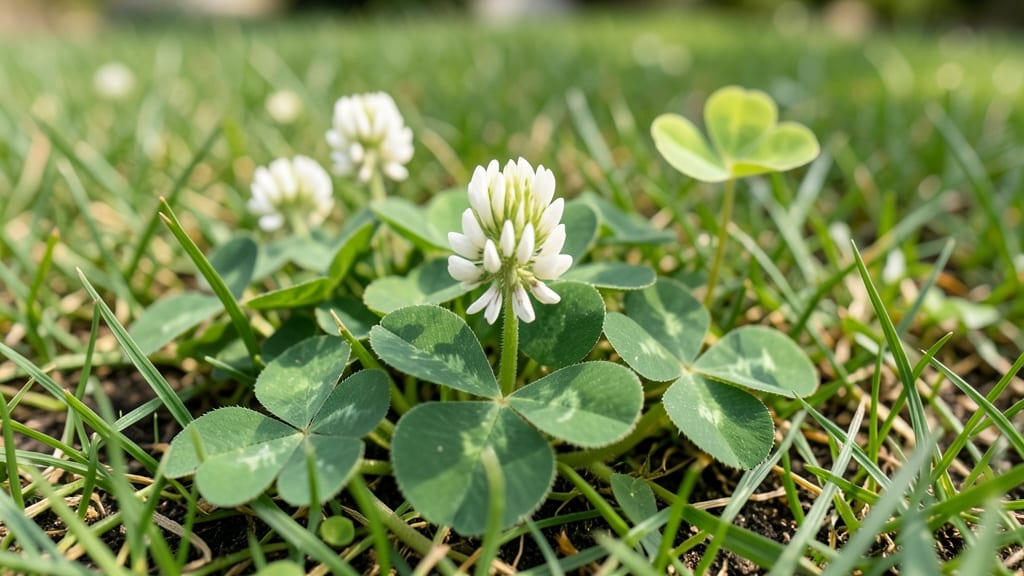
Yes, there is such a thing as a four-leaf clover, and it exists naturally as a rare genetic mutation of the common three-leaf white clover, with odds of finding one estimated at 1 in 10,000 plants. The extra leaf often appears as a small fourth leaflet on the standard trifoliate structure.
These rare botanical oddities aren't just luck—they're the result of genetic quirks in the white clover's DNA. 🌱 The fourth leaf typically forms when a chromosomal variation causes an extra leaflet to sprout, though it often stays smaller than its three siblings.
Unlike the mythical "lucky charm," these clovers grow naturally in grassy areas worldwide, though their scarcity makes them feel magical. I’ve found them most often in well-maintained lawns where clover thrives, proving that patience (and a keen eye) pays off!
What’s fascinating is how these mutations occur: environmental stress or random genetic shifts can trigger the extra leaf. While some sellers market "four-leaf clovers" as souvenirs, true natural specimens are unaltered—just a rare twist of nature’s design. 💫
💡 In This Article
- How Four-Leaf Clover Mutations Occur in Nature
- Maximizing Your Chances of Finding a Four-Leaf Clover
How four-leaf clover mutations occur in nature
The fourth leaf in a clover isn't just random luck—it's a fascinating genetic anomaly. This mutation typically occurs when a chromosomal variation called a trisomy happens during cell division, causing an extra leaflet to develop.
Unlike the symmetrical three-leaf structure of white clovers (Trifolium repens), the fourth leaf often remains smaller because it shares limited nutrients with its siblings during growth.
Scientists have observed that environmental stressors—like drought, temperature fluctuations, or even soil composition—can increase mutation rates. For example, clovers grown in slightly acidic soil (pH 6.0-6.5) show higher mutation frequencies compared to neutral soils.
The fourth leaf usually appears as a tiny, underdeveloped leaflet attached to one of the three main leaves, making it easy to miss at first glance. 🌱
Botanically, the three-leaf structure is called trifoliate, while the four-leaf version is a rare tetrafoliate variant. The extra leaf doesn't affect the plant's reproductive capabilities, but it does make it stand out visually.
This genetic quirk isn't limited to white clovers—similar mutations occur in other trifoliate plants, though they're far less common.
What's even more intriguing is that the fourth leaf often contains higher concentrations of anthocyanins (the pigments that give it a darker green hue). These pigments act as natural sunscreen, protecting the leaf from UV damage.
This adaptation might explain why four-leaf clovers sometimes appear slightly more vibrant than their three-leaf counterparts, though the difference is subtle to the untrained eye.
While the mutation rate is low (about 1 in 10,000 plants), certain growing conditions can slightly improve your odds. For instance, clovers grown in partial shade with consistent moisture tend to produce more mutations.
However, the process remains largely random—no amount of care can guarantee a four-leaf clover, only increase the chances of spotting one naturally. ✨
It's worth noting that not all "four-leaf clovers" are natural. Some commercial versions are created through grafting or selective breeding, where a fourth leaf is manually attached or encouraged to grow.
These are technically altered and don't carry the same genetic significance as wild mutations. Always look for the tiny, imperfect fourth leaflet—the hallmark of a true natural specimen.