
Pruning
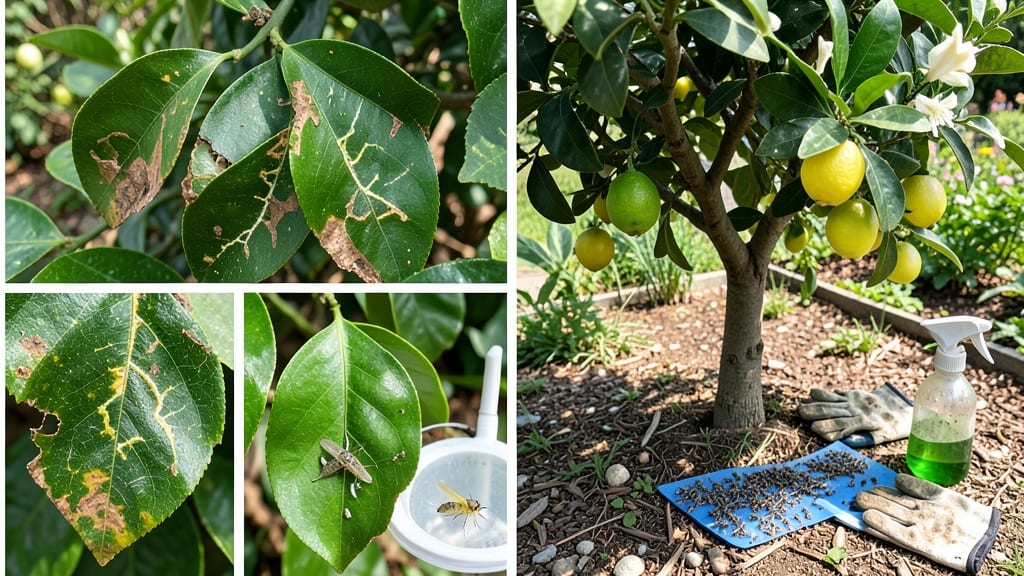
Your lemon tree’s serpentine trails of white aren’t just unsightly—they’re leaf miners wreaking havoc. ✨ These tiny pests tunnel through leaves, turning vibrant green into skeletal brown in weeks. The good news? Targeted pruning can stop the damage before your tree loses its health entirely.
Start by removing only the worst-infested branches—don’t over-prune, or you’ll stress the tree further. Look for leaves with winding, translucent trails or premature browning. Snip those branches just above a healthy leaf node, and dispose of the clippings in sealed bags (not compost).
Repeat every 2-3 weeks until new growth emerges clean. What you’ll gain is a tree that bounces back with stronger, miner-free foliage by next season. The pruned branches encourage fresh growth, and removing the infested leaves cuts off the miners’ food source.
With consistent care, your lemon tree’s health—and fruit production—can rebound faster than you’d expect. This works for citrus trees of all sizes, from dwarf varieties to full-sized backyard specimens. The key is acting fast before the miners spread to new branches.
Let’s get those shears sharp and save your tree!
Hidden Invaders Behind The Damage
Leaf miners aren’t just random pests—they’re tiny, highly specific insects that thrive under the right conditions. Understanding why they target your lemon tree helps you stop them before they cause irreversible harm. Here’s why these unwelcome guests show up in the first place.
Leaf miners are the larval stage of flies (most commonly Phytomyza species in citrus trees). Their sole mission? To burrow into tender leaf tissue for food. Here’s why your lemon tree becomes their buffet:
- Young, soft leaves are irresistible. New growth is packed with nutrients, making it the perfect feeding ground for larvae. If your tree is healthy but producing lots of fresh foliage (like after pruning or spring flush), miners will exploit it.
- Lack of natural predators. Young larvae are vulnerable, but adult flies lay eggs undetectably on the underside of leaves. Without birds, parasitic wasps, or beneficial nematodes in your garden, the larvae go unchecked.
- Warm, humid microclimates. Leaf miners adore 60–85°F (15–30°C) with high humidity—ideal conditions for egg hatching and larval development. Greenhouses, coastal areas, or shaded trees create the perfect breeding ground.
💡 Pro Tip: If your lemon tree is over-fertilized with nitrogen, it produces more lush growth, which attracts miners. Balance your fertilizer to toughen leaves naturally.
Leaf miners don’t just appear out of nowhere—they’re drawn to stressed or neglected trees. Here’s how poor pruning practices set the stage:
| Problem | Why Miners Move In |
|---|---|
| Thick, tangled canopies | Reduced airflow and sunlight create damp, shaded spots where flies thrive. Overgrown trees also trap humidity near leaves. |
| Dead or dying branches | Weak wood attracts secondary pests (like aphids), which also attract leaf miners as they search for easy meals. |
| No winter pruning | Miners overwinter in leaf litter or bark crevices. If you skip late-winter cleanup, next season’s larvae have a head start. |
✨ Key Insight: Miners often strike after you’ve pruned—because fresh cuts stimulate new growth, which they love. Time your pruning for early spring (before blooms) to avoid this trap.
Healthy lemon trees resist leaf miners better because their leaves have natural defenses like tannins and waxy coatings. But when trees are compromised, miners win:
- Nutrient deficiencies (especially nitrogen or potassium). Weak leaves are easier for larvae to penetrate. Yellowing edges or purple stems? That’s a red flag.
- Water stress (over- or under-watering). Drought weakens leaves, while soggy soil invites fungal diseases that also attract miners.
- Pest or disease damage. If your tree is already battling scale insects, citrus leaf miner flies may see it as an easy target.
🌡️ Quick Check: Run your finger along a leaf. If it feels thin or leathery, your tree’s defenses are down—and miners will notice.
Now that you know why leaf miners attack, the next step is how to outsmart them with targeted pruning and prevention. Don’t let these tiny invaders turn your lemon tree into a skeleton!
Quick Fixes for Leaf Miner Damage
Leaf miners can turn your lemon tree’s lush green leaves into a sad, skeletonized mess—but don’t panic! With the right approach, you can reverse the damage, restore your tree’s health, and prevent future infestations.
Below, we’ve broken down targeted solutions based on the root cause of the problem, from immediate action steps to long-term prevention. Let’s get your lemon tree back to thriving! 🌿✨
Problem: Larvae tunneling through leaves weaken the tree and spread faster if left unchecked. Fix:
- Inspect daily – Check for white or brown serpentine trails (larvae paths) or tiny holes in leaves.
- Prune aggressively – Use clean, sharp pruners (disinfect with rubbing alcohol) to snip off and discard heavily infested leaves.
- Pro Tip: 💡 Drop infested leaves into a sealed bag (not your compost!) to prevent larvae from crawling back onto the tree.
- Focus on new growth – Leaf miners love tender young leaves, so trim back any fresh shoots showing signs of mining.
Prevention:
- Shake the tree gently over a tarp or bucket of soapy water to dislodge adult flies (they emerge in spring).
- Avoid overhead watering—keep foliage dry to deter egg-laying.
Problem: Chemical sprays can harm beneficial insects and residue may linger on fruit. Fix:
- Neem oil spray (best for organic gardens):
- Mix 1 tbsp neem oil + 1 tsp mild soap + 1 quart water.
- Spray early morning or evening (avoid direct sun) every 5–7 days until infestation clears.
- Why it works: 🌡️ Disrupts larvae development and deters adult flies.
- Kaolin clay (Surround WP):
- Creates a physical barrier that confuses and repels miners.
- Apply as a foliar spray (follow label rates) when trees are dormant or after harvest.
- Beneficial nematodes (Steinernema feltiae):
- Microscopic worms that attack leaf miner larvae in the soil.
- Apply early spring or fall to soil around the tree’s drip line.
Prevention:
- Rotate treatments to avoid resistance—combine neem + kaolin clay for better coverage.
- Plant companion herbs like basil, mint, or marigolds near your lemon tree to repel pests naturally.
Problem: Heavy infestations stress the tree, reducing fruit yield and vigor. Fix:
- Thin out crowded branches – Leaf miners thrive in dense foliage.
- Remove 1/3 of the smallest, most infested branches to improve airflow and sunlight.
- How to prune: ⏰ Best time: Late winter/early spring (before new growth).
- Shape for sunlight access:
- Trim overlapping branches so neem oil or sprays reach all leaves.
- Avoid top-heavy pruning—focus on opening the canopy from the bottom up.
- Sanitize cuts:
- Wipe pruners with 70% isopropyl alcohol between cuts to prevent disease spread.
Prevention:
- Prune regularly (2–3 times/year) to reduce hiding spots for miners.
- Avoid heavy pruning in summer—stressed trees attract more pests.
Problem: Weak trees attract more pests—leaf miners love stressed citrus. Fix:
- Fertilize properly:
- Use a balanced citrus fertilizer (6-6-6 or 8-3-9) every 2–3 months.
- Signs of over/under-fertilizing: 📊 Yellow leaves = too much nitrogen; pale leaves = deficiency.
- Improve drainage:
- Leaf miners thrive in waterlogged soil. Amend with compost or sand if your soil is clay-heavy.
- Mulch (2–3 inches of wood chips) to retain moisture and deter pests.
- Water deeply but less often:
- Drought-stressed trees attract miners. Water at the base (not leaves) 1–2 times/week in dry climates.
Prevention:
- Test soil pH (ideal for citrus: 6.0–7.0). Adjust with lime (to raise) or sulfur (to lower).
- Avoid synthetic fertilizers—they can burn roots, making trees more vulnerable.
If your lemon tree shows:
- Heavy defoliation (50%+ leaves damaged).
- New growth consistently attacked despite treatments.
- Signs of secondary pests (aphids, scale) moving in.
Next steps:
- Consult a local arborist for systemic insecticides (like imidacloprid) if organic methods fail.
- Consider tree wraps (fine mesh) to physically block adult flies during peak season.
Final Thought: 🎯 Consistency is key—leaf miners won’t disappear overnight, but with pruning, sprays, and soil care, your lemon tree can bounce back stronger than ever. Start today, and watch those golden lemons return! 🍋🌟
Frequently asked questions
How do I tell if my lemon tree has leaf miners?
Look for white or brown serpentine trails (like tiny worm paths) on leaves or small holes where larvae exit. Check the undersides of leaves for tiny white maggots or black specks (frass). Early signs include yellowing or browning between veins, even if the leaf stays attached.
Can I save my lemon tree if it’s already heavily infested?
Yes! Start by pruning all infested branches (up to 1/3 of the canopy) and dispose of them in sealed bags. Apply neem oil spray every 5–7 days while improving airflow with targeted thinning prunes. For severe cases, consider beneficial nematodes or kaolin clay to break the cycle. Consistency is key—most trees recover within 2–3 months with aggressive treatment.
Will pruning alone stop leaf miners?
Pruning removes the food source (infested leaves), but it’s only 50% of the solution. Combine it with preventative sprays (neem oil or kaolin clay) and soil treatments (beneficial nematodes) to stop new infestations. Without follow-up care, miners will return to new growth as soon as it emerges. Think of pruning as the "cleanup," not the cure.
Are there chemical-free ways to prevent leaf miners?
Start with cultural controls: mulch heavily (2–3 inches of wood chips), avoid overhead watering, and plant companion herbs (basil, mint, or marigolds) near your tree. For physical barriers, wrap the trunk with fine mesh during peak fly season. Beneficial nematodes (applied to soil) and parasitic wasps (like Diglyphus isaea) are also chemical-free options.
How often should I inspect my lemon tree for leaf miners?
Check your tree weekly during spring and summer (peak miner season) and biweekly in fall/winter. Focus on new growth (miners love tender leaves) and the undersides of leaves. Early detection lets you prune and treat before damage spreads. Pro tip: Use a hand lens to spot tiny eggs or larvae you’d miss with the naked eye.