
Trees
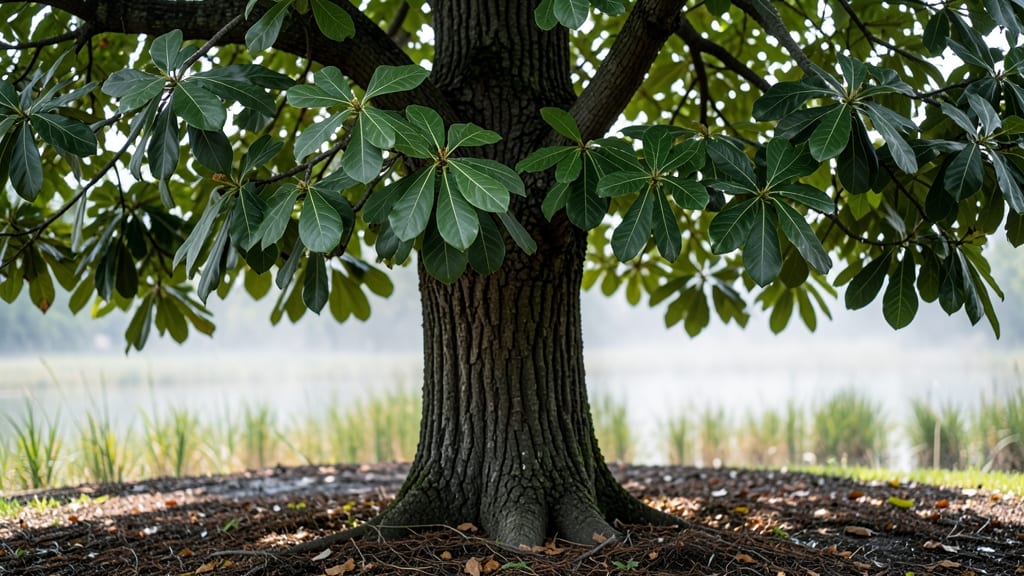
Mastering swamp oak leaf identification means unlocking the secrets of one of nature’s most resilient trees. 🌳 The deep, rounded lobes and glossy texture set them apart—once you know what to look for, spotting them in the wild becomes second nature.
My first mistake? Confusing them with willow oaks until I noticed the swamp oak’s brighter green undersides and more pronounced veins.
Swamp oaks have 5-7 lobes that curve inward like a smile, with a smooth, hairless upper surface that shines in sunlight. Young leaves start fuzzy but lose that texture by summer, while mature leaves develop a distinctive wine-red tint in fall.
The key difference from water oaks? Swamp oak leaves are larger (4-7 inches long) and have shallower sinuses between lobes.
Misidentifications happen when comparing juvenile leaves—swamp oaks start with sharper points that soften with age. Use a leaf rubbing kit to capture vein patterns, or snap a photo and compare with apps like LeafSnap for instant verification.
This skill isn’t just academic: knowing your swamp oak helps time pruning, spot pests early, and plan landscapes that highlight their dramatic fall color.
For verification, join local arborist groups or visit university extension offices—they often host oak identification workshops. Bring a reference photo and a sample leaf (press it between books to preserve it), and you’ll leave with confidence. The payoff? A landscape that thrives and tells a story.
Behind Swamp Oak Leaf Shapes
Understanding why swamp oak (Quercus nigra and related species) leaves develop their distinctive, often irregularly lobed shapes requires a deep dive into genetics, environmental pressures, and evolutionary biology. Here’s why these leaves look the way they do—and what factors influence their identification:
🌱 Why it matters: Swamp oaks inherit their lobed leaf structure from a complex genetic code that prioritizes resilience over uniformity.
Swamp oaks, like many oak species, carry polygenic traits—meaning multiple genes contribute to leaf shape. The LOB domain proteins (a family of transcription factors) play a critical role in regulating leaf margin development.
In swamp oaks, these proteins often produce incomplete or jagged lobes rather than smooth edges, a trait linked to: - Heterozygosity: Swamp oaks frequently hybridize with other oak species (e.g., Quercus lyrata or Quercus michauxii), blending genetic instructions for leaf shape.
This creates variability even within the same tree. - Dominant vs. Recessive Genes: Some swamp oak populations express dominant "lobed" alleles, while others carry recessive genes for smoother leaves. Environmental stress can "turn on" dormant recessive traits, altering lobing patterns.
Actionable tip: 🔍 If you’re identifying swamp oak leaves in the field, note whether the lobes are deeply cut (like fingers) or shallow with rounded sinuses—this can hint at genetic lineage.
🌊 Why it matters: Swamp oaks thrive in wetlands, but their leaf morphology adapts to waterlogging, nutrient scarcity, and humidity—factors that directly influence lobing.
- Flooding and Anaerobic Soil - Swamp oaks grow in seasonally flooded or waterlogged soils, where oxygen is scarce.
To maximize gas exchange, their leaves develop: - Thicker cuticles (to reduce water loss). - Irregular lobes that create microclimates, trapping air and improving photosynthesis in low-oxygen conditions. - Leaves in perpetually wet areas often have more pronounced, wavy lobes compared to those in drier microhabitats.
- Nutrient Competition - Wetland soils are often low in nitrogen and phosphorus.
Swamp oaks respond by: - Slowing leaf growth to conserve resources, leading to smaller, asymmetrical lobes. - Increasing leaf toughness (via lignin deposition), which can make lobes appear stiffer or more rigid. - Field clue: 🌿 Leaves from nutrient-poor swamps may have fewer but deeper lobes, while those in richer soils might show more uniform, shallower indentations.
- Humidity and Fungal Pressure - High humidity in swamps encourages leaf pathogens (e.g., Cercospora fungi).
Swamp oaks counteract this by: - Producing uneven lobe edges that disrupt fungal spore landing zones. - Secreting secondary metabolites (like tannins) in lobed areas, which act as natural fungicides. - Visual tell: 🍃 Leaves with ragged or "chewed" lobe tips may signal fungal stress—common in dense swamp canopies.
🌱 Why it matters: Swamp oak leaves don’t stop changing after germination—they adapt on the fly to light, temperature, and competition.
- Juvenile vs. Mature Leaves
- Seedlings: Young swamp oak leaves are often simple (unlobed) or shallowly lobed, mimicking other oak species to avoid herbivory.
- Mature Trees: As the tree ages, auxin and gibberellin hormones promote lobing, but environmental cues modify the pattern:
- High light exposure → Broader, more pronounced lobes (to capture sunlight).
- Shade → Narrower, less lobed leaves (a shade-adaptation strategy).
- Seasonal Variations
- Spring flush: Early leaves may appear less lobed due to rapid growth under cool, wet conditions.
- Summer heat: Leaves develop deeper sinuses to increase surface area for transpiration cooling.
- Fall: Lobes may darken and thicken as the tree prepares for dormancy, sometimes appearing more "crinkled" than in summer.
Pro tip: ✨ Compare leaves from the same tree across seasons—you’ll often see a gradient from smooth-edged (spring) to deeply lobed (summer/fall).
🐛 Why it matters: Swamp oak leaves aren’t just about survival—they’re a chemical and physical deterrent against pests.
- Lobe complexity makes leaves harder for insects (like gypsy moth caterpillars) to chew cleanly.
Irregular edges force herbivores to work around obstacles, reducing feeding efficiency. - Tannin distribution: Swamp oaks concentrate tannins in lobe tips and margins, making them less palatable while preserving the leaf’s core structure. - Mimicry: Some swamp oak lobes resemble the leaves of toxic plants (e.g., poison ivy), deterring browsers through visual deception.
Field observation: 🦋 Look for unevenly eaten leaves—if the damage avoids the lobe tips, it’s likely a predator-avoidance adaptation at work.
🧬 Why it matters: Swamp oaks don’t grow in isolation—they crossbreed with other oaks, creating leaves that defy easy classification.
- Common hybrids:
- Quercus nigra × Quercus lyrata (overcup oak): Leaves may have lyrate (lyre-shaped) lobes with a single deep sinus.
- Quercus nigra × Quercus michauxii (swamp chestnut oak): Lobes can appear more rounded and fewer in number.
- Hybrid leaves may lack the classic "swamp oak" look, featuring:
- Asymmetrical lobing (one side deeper than the other).
- Variable lobe count (3–7 lobes, vs. the typical 5–9 in pure swamp oak).
Key identifier: 🔎 Hybrid swamp oak leaves often have a "thumbprint" or "handprint" shape when held up to light—look for one prominent, larger lobe paired with smaller ones.
Practical tips for identifying swamp oak leaves
Mastering swamp oak leaf identification doesn’t have to be a guessing game—with the right approach, you can confidently distinguish these iconic lobed leaves from their look-alikes. Below, we break down actionable solutions tailored to common challenges, whether you're a beginner or a seasoned arborist.
From field tricks to tech-assisted tools, these methods will sharpen your skills and prevent future mix-ups.
Cause: Swamp oaks (like Quercus michauxii or Q. lyrata) often share traits with other oaks, such as willow oaks or water oaks, leading to confusion. Fix:
- Count the lobes: Swamp oaks typically have 5–7 rounded lobes with shallow sinuses (the gaps between lobes). Willow oaks, for example, have smoother, fewer lobes (3–5), while water oaks have bristly tips.
- Check leaf base: Swamp oak leaves often have a rounded or slightly cordate (heart-shaped) base. Compare this to overcup oak leaves, which are more asymmetrical.
- Observe leaf edges: Swamp oak lobes are usually broad and blunt, while pin oaks have sharp, pointed lobes.
Cause: Young swamp oak leaves may appear smoother or less lobed, while older leaves can develop brown edges or fungal spots, throwing off your identification. Fix:
- Compare mature and immature leaves: Look for consistency in lobe shape across different growth stages. Immature leaves might have fewer lobes, but the overall shape should align with swamp oak traits.
- Inspect the underside: Swamp oak leaves often have paler, fuzzy undersides. If the leaf is glossy or hairless underneath, it’s likely not a swamp oak.
- Check for damage: If leaves are torn or eaten by insects, focus on remaining intact lobes or nearby healthy leaves on the same branch.
Cause: Non-oak trees (like hickories or beeches) can mimic oak leaf shapes, especially from a distance.
Fix:
Feature
Swamp Oak
Look-Alike (e.g., Hickory)
Leaf Arrangement
Alternate (one leaf per node)
Often opposite or clustered (hickories)
Leaf Texture
Rough, lobed edges; may be fuzzy underneath
Smoother, sometimes compound leaves (hickories)
Bark
Dark, scaly, or ridged
Hickories have shaggy or plate-like bark
Cause: Even experts need backup—especially when dealing with hybrid oaks or regional variations. Fix:
- Use a leaf database: Websites like USDA Forest Service’s Tree Identification Guide or Arkive offer high-res images and range maps.
- Leverage social media: Post a photo on r/whatsthisthing or iNaturalist for crowd-sourced IDs. Include location, habitat, and leaf details for faster responses.
- Consult a local arborist: Many universities (e.g., Extension offices) offer free tree ID services.
With these strategies, you’ll go from “Is this a swamp oak?” to “Ah, classic Quercus michauxii—look at those lobes!” in no time. Happy identifying!
Frequently asked questions
How can I tell the difference between swamp oak and willow oak leaves?
Swamp oak leaves have 5-7 rounded lobes with shallow sinuses, while willow oaks typically show 3-5 smoother lobes that appear more elongated. Another key difference: willow oak leaves often have a slightly asymmetrical base, whereas swamp oak leaves have a more symmetrical, rounded shape.
Why do swamp oak leaves sometimes look fuzzy on the underside?
Young swamp oak leaves often appear fuzzy due to fine hairs called trichomes, which protect the leaf while it develops. These hairs typically fall off by midsummer, leaving a smoother surface. The undersides remain slightly paler than the top, which helps distinguish them from other oaks.
Can I identify swamp oak leaves in winter when they're bare?
Yes! Look for the tree's dark, scaly bark and acorn caps that cover only 1/3 to 1/2 of the nut. Swamp oak acorns also have a shorter stalk compared to other oaks. If you're near wetlands, this increases the likelihood it's a swamp oak.
What's the best time of year to identify swamp oak leaves?
Late spring through early summer (May-July) is ideal when leaves are fully mature but before fall colors develop. This is when their distinctive lobing pattern and glossy texture are most pronounced. Avoid early spring when young leaves may appear less lobed.
How do I handle a potential hybrid swamp oak?
Hybrid swamp oaks may show asymmetrical lobing or variable lobe counts (3-7 instead of typical 5-7). Look for one prominent larger lobe paired with smaller ones—this "thumbprint" shape often indicates hybridization. Compare with nearby pure swamp oaks for reference.