
Plants
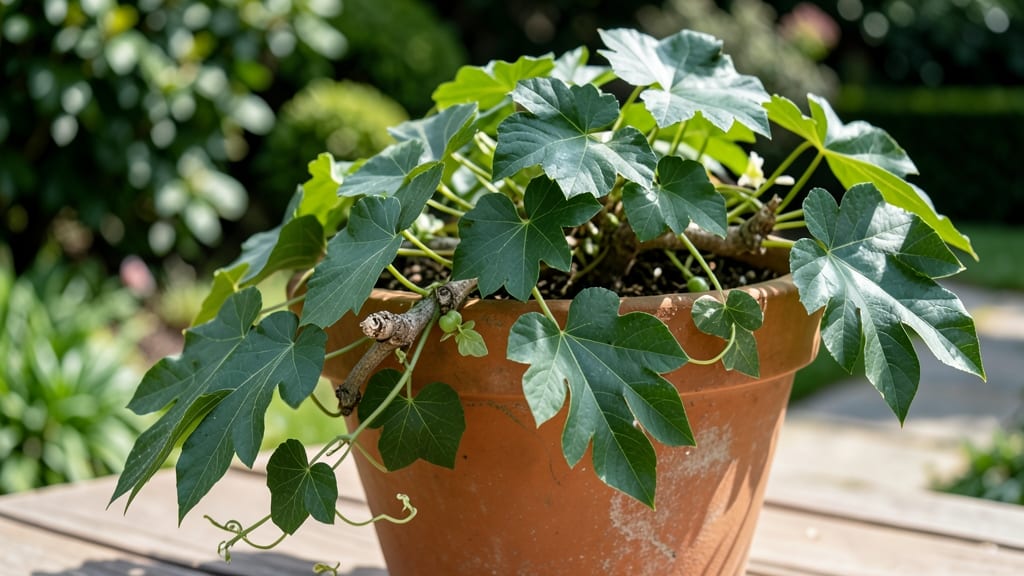
Growing a six-leaf vine transforms your garden into a lush, evergreen statement piece that thrives even when other plants sleep. 🌿 This cold-hardy beauty (Tetrastigma voinierianum) keeps its dramatic foliage year-round, making it a standout for climates from zones 7-11.
The key to success? Mimicking its natural tropical-forest habitat with just the right balance of shade, moisture, and support.
Start with well-draining soil rich in organic matter—think 50% potting mix, 30% perlite, and 20% compost—and plant where it gets morning sun and afternoon shade. Water deeply when the top inch of soil dries, but avoid soggy roots.
Propagation is easiest from semi-hardwood cuttings in spring, though seeds work if you're patient (they take 4-6 weeks to germinate).
By summer, you’ll see those signature six-leaf clusters unfurling, creating a velvety green curtain that’s perfect for trellises, arbors, or even container training. Prune lightly in late winter to shape growth, and watch it bounce back with new shoots by spring.
The vine’s glossy leaves repel most pests, but keep an eye out for spider mites in dry spells—just spray with water to deter them.
This vine shines in humid climates but adapts surprisingly well to drier regions if you mulch heavily and water consistently. Use it as a privacy screen, living wall, or dramatic focal point—it’s the kind of plant that makes neighbors ask, “What is that gorgeous vine?” Let’s get yours thriving!
Genetic Traits Behind Leaf Count
The number of leaflets on a hexastylis (commonly called a six-leaf vine) is primarily a result of its genetic makeup, passed down through generations. This plant belongs to the Asaroideae subfamily of the Aristolochiaceae family, and its distinctive foliage is a defining trait.
Here’s why you typically see six leaflets—and what can cause variations:
The six-leaf vine’s signature foliage is hardwired into its DNA. Each leaf is compound, meaning it’s divided into multiple leaflets (usually six, though some cultivars may have five or seven). This trait is stable because:
- Stable chromosome structure: The plant’s genetic code dictates the arrangement of leaflets in a symmetrical, palmate pattern (like fingers on a hand). Mutations are rare but can occur, leading to slight deviations.
- Species consistency: Most Hexastylis species, like H. arifolia, reliably produce six leaflets. However, hybrids or cultivated varieties may show slight differences due to selective breeding.
- Environmental plasticity: While genetics set the baseline, external factors (like light or stress) can influence leaflet size or shape—not their count.
While the six-leaf structure is genetically dominant, environmental stressors can sometimes trigger temporary or permanent changes in leaflet number. Common culprits include:
| Stressor | Effect on Leaflets | Why It Happens |
|---|---|---|
| 🌡️ Extreme Heat or Cold | Fewer or malformed leaflets | Temperature shocks disrupt cell division in developing leaves. For example, late spring frosts can stunt growth, leading to underdeveloped foliage. |
| 💧 Over/Under Watering | Irregular leaflet counts (e.g., 5 or 7) | Water stress triggers hormonal imbalances (like ethylene production), which can alter leaf morphology. Drought may cause smaller, fewer leaflets, while overwatering can lead to swollen, misshapen growth. |
| 🌿 Poor Soil Nutrition | Smaller leaves with fewer leaflets | Deficiencies in nitrogen or magnesium limit photosynthetic efficiency, forcing the plant to prioritize fewer, larger leaflets for survival. |
| 🐛 Pest or Disease Damage | Missing or fused leaflets | Insects (like spider mites) or pathogens (e.g., fungal leaf spot) can physically damage emerging leaves, leading to incomplete or abnormal growth patterns. |
Not all six-leaf vines are genetically identical. Some variations in leaflet count stem from:
- Natural hybrids: Cross-pollination between different Hexastylis species (e.g., H. heterophylla) can produce offspring with 5–7 leaflets due to genetic recombination.
- Selective breeding: Nurseries may propagate plants with slightly altered foliage for ornamental appeal. For example, a cultivar might consistently produce 5 leaflets if bred for compact growth.
- Polyploidy: Rarely, chromosomal doubling (e.g., tetraploidy) can lead to larger, more leaflets—but this is uncommon in Hexastylis.
Pro Tip: 💡 If you’re growing from seed, expect variability! Leaflet count may differ from the parent plant due to genetic recombination. For consistent foliage, opt for propagated cuttings from a trusted source.
Quick fixes for common vine struggles
If your 6-leaf vine (or Tetrastigma voinierianum) isn’t thriving, don’t panic—most issues have simple, actionable fixes. Below, we’ve mapped common problems to their solutions, so you can revive your plant (or prevent future headaches) with minimal effort. Think of this as your vine’s first-aid kit!
Cause: Overwatering, underwatering, or poor drainage. Fix:Start by checking the soil—stick your finger 1–2 inches deep. If it’s soggy, your vine is drowning. If it’s bone-dry, it’s thirsty. Adjust your watering routine:
- 💧 Water deeply but infrequently: Only water when the top 1–2 inches of soil feel dry. This vine prefers to dry out slightly between drinks.
- 🏗️ Improve drainage: If your pot lacks drainage holes, repot it into one with holes or add a layer of perlite/pumice to the soil mix.
- 🌡️ Watch the temperature: Cold drafts or sudden temperature drops (below 40°F) can shock the plant. Move it to a sheltered spot if needed.
Prevention tip: 💡 Use a moisture meter or the "finger test" to avoid guesswork. Mulch around the base (if planted outdoors) to retain moisture without suffocating roots.
Cause: Insufficient sunlight or over-fertilization with nitrogen. Fix:Leggy vines are basically screaming, "I need more light!" Try these steps:
- ☀️ Move it to brighter conditions: Place it near an east- or west-facing window (or under grow lights if indoors). Aim for 4–6 hours of indirect light daily.
- 🌿 Prune strategically: Trim back overly elongated stems to encourage bushier growth. Cut just above a leaf node (where leaves grow) to promote new branches.
- 🍽️ Adjust fertilizing: If you’ve been using high-nitrogen fertilizer, switch to a balanced (10-10-10) or phosphorus-rich (5-10-5) formula to boost flowering and compact growth.
Prevention tip: ✨ Rotate your vine occasionally so all sides get even light exposure. If indoors, supplement with a full-spectrum LED grow light for 12–14 hours/day.
Cause: Spider mites, aphids, or scale insects (common on stressed plants). Fix:Pests love a weak vine, so act fast with these organic or chemical-free solutions:
- 🔍 Inspect thoroughly: Check undersides of leaves and stems for webbing, sticky residue (honeydew), or tiny bugs.
- 💦 Blast them off: Spray the plant with a strong stream of water to dislodge pests, then repeat every 3–4 days.
- 🌿 Neem oil or insecticidal soap: Mix 1 tsp neem oil or 1 tbsp mild soap with 1 quart of water. Spray all surfaces (including pots) until damp. Reapply weekly for 2–3 weeks.
- 🍋 DIY garlic spray (for stubborn infestations): Blend 2 cloves of garlic with 1 quart of water, strain, and add a drop of dish soap. Spray on leaves.
Prevention tip: 🔥 Keep your vine healthy—stress attracts pests! Quarantine new plants for 2 weeks before introducing them to your collection.
Cause: Low humidity, cold winds, or sudden temperature swings. Fix:Brown edges are often a cry for cozy conditions. Try this:
- 💧 Boost humidity: Place the pot on a tray of pebbles with water (ensure the pot isn’t sitting in water) or use a humidifier nearby. Aim for 50–60% humidity.
- 🏡 Protect from drafts: Avoid placing it near AC vents, heaters, or open windows in winter. A sheer curtain can buffer cold drafts.
- 🌡️ Acclimate gradually: If moving outdoors, harden it off by exposing it to outdoor conditions for 1–2 hours daily, increasing time over a week.
Prevention tip: 🌡️ Group vines together to create a microclimate with stable humidity. Mist leaves lightly in the morning (avoid evening misting to prevent fungal issues).
Cause: Overpruning, root-bound pots, or winter dormancy. Fix:If your vine is just "taking a break," it might need a nudge—or a little TLC:
- 🌱 Check the roots: Gently remove the vine from its pot and inspect roots. If they’re circling or tightly packed, it’s time to repot into a container 1–2 inches larger.
- ✂️ Prune wisely: Avoid heavy pruning in late fall/winter. Instead, trim back only dead or diseased stems. Save major pruning for early spring.
- 🌿 Fertilize lightly: In spring, use a half-strength balanced fertilizer (like 10-10-10) to encourage growth without burning roots.
- ☀️ Encourage warmth: If dormant, keep it in a spot above 50°F. Resume regular care in spring when new growth appears.
Prevention tip: 🎯 Repot every 2–3 years to refresh the soil and roots. Use a well-draining mix (e.g., 60% potting soil, 20% perlite, 20% orchid bark).
Pro Tip: 📝 Keep a plant journal! Note watering, light, and pest issues to spot patterns. Most vine problems are fixable with patience and the right adjustments—your 6-leaf vine will bounce back in no time!
Frequently asked questions
What’s the best way to identify a six-leaf vine?
The defining feature is its palmate leaves with six leaflets arranged like fingers on a hand. Look for glossy, deep green foliage and small white flowers in spring. If you’re unsure, check for climbing tendrils—this vine naturally twines around supports. Compare with similar plants like ivy (which has 3-5 leaflets).
Can I grow a six-leaf vine indoors?
Yes, but it needs bright, indirect light and high humidity (50-60%). Place it near an east-facing window or under grow lights for 4-6 hours daily. Use a pebble tray with water or humidifier to mimic its tropical habitat. Choose a pot with drainage holes and a well-draining mix.
How fast does this vine grow?
Under ideal conditions, it grows 12-24 inches per year, though growth slows in winter. For faster results, provide consistent moisture, balanced fertilizer (every 6-8 weeks), and a trellis or support structure. In containers, growth may be slightly slower than when planted in garden beds.
Why are my six-leaf vine’s leaves turning yellow?
Yellowing leaves usually signal overwatering or poor drainage. Let the top 1-2 inches of soil dry between waterings and ensure the pot has drainage holes. Check for root rot by gently removing the plant—if roots smell foul or are mushy, repot with fresh, well-draining soil.
Does this vine attract wildlife?
Its small white flowers may attract bees and butterflies, but it’s generally pest-resistant. Deer and rabbits typically avoid it due to its mild toxicity (though not deadly). The glossy leaves deter many insects, making it a low-maintenance choice for gardens. Always supervise pets around new plants.