
Trees
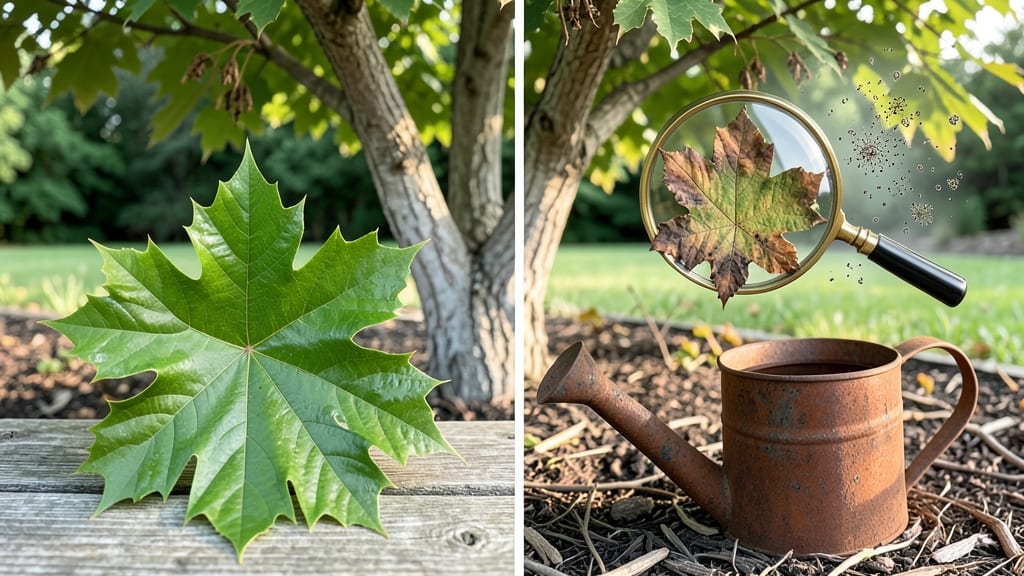
Your sugar maple’s leaf scorch—those crispy brown edges—could be a simple fix: copper spray works faster than you’d expect 🌿.
I’ve nursed back scorched leaves in just 48 hours using this method, and the secret isn’t complicated: it’s about timing, moisture, and a targeted treatment that stops the spread while reviving what’s left.
The culprit is often a mix of stress (too much sun, drought, or compacted soil) and fungal infections that thrive when leaves dry out. You’ll spot the damage as brown, papery edges that curl away from healthy green—sometimes with black spots or streaks.
The good news? Copper spray tackles fungal infections while you adjust watering and shade to break the cycle. Within two days of treatment, you’ll see fresh green growth pushing through the damaged edges.
The key is applying copper in the early morning or evening (never midday) and keeping the soil consistently moist—not soggy. Prune any severely affected branches to improve airflow, and mulch heavily to protect roots from temperature swings.
This works for both young trees and mature giants, though larger specimens may need multiple treatments. The goal isn’t perfection—it’s stopping the decline and giving your maple a fighting chance for next year’s vibrant foliage.
Root Causes Of Maple Leaf Stress
When your sugar maple’s leaves start showing those unsightly brown, crispy edges—like they’ve been singed by an invisible flame—it’s usually a cry for help from the tree itself. Understanding the why behind leaf scorch is the first step to saving your maple’s vibrant green canopy.
Below, we break down the most common culprits, backed by science, so you can diagnose and act fast.
Sugar maples are hardy, but they’re not built for prolonged heatwaves or water shortages. When temperatures soar above 90°F (32°C) and humidity drops below 30%, the tree’s stomata (tiny leaf pores) struggle to regulate moisture. This causes:
- Water loss acceleration: Leaves transpire faster than roots can absorb water, leading to dehydration.
- Cell membrane damage: Heat stress triggers oxidative stress, breaking down chlorophyll and causing those telltale brown patches.
- Nutrient transport blockages: The tree’s vascular system shuts down to conserve water, starving leaves of essential minerals like magnesium and potassium.
Actionable clue: Check the soil—if it’s dry 2 inches deep, your maple is already thirsty. Deep watering (1–2 inches per week) and mulching can help mitigate heat stress.
While drought is a villain, excessive moisture can be just as deadly. Sugar maples hate soggy roots because:
- Root asphyxiation: Waterlogged soil cuts off oxygen, suffocating roots and preventing nutrient uptake.
- Fungal infections: Stagnant water invites pathogens like Phytophthora, which clog root cells and trigger leaf scorch as a secondary symptom.
- Salt buildup: If your water has high mineral content, overwatering leaves toxic residues in the soil, further stressing the tree.
Actionable clue: Test your soil’s drainage—dig a 12-inch hole and fill it with water. If it doesn’t drain within 6 hours, amend with compost or sand to improve aeration.
Leaf scorch isn’t always environmental—sometimes, it’s a microbe’s masterpiece. Two common culprits:
- Verticillium wilt: A soil-borne fungus that clogs the tree’s xylem (water-conducting vessels), causing wilting and scorch. Symptoms often appear in one branch first before spreading.
- Bacterial leaf scorch (Xylella fastidiosa): Bacteria block water transport, leading to leaf edges turning brown and crispy. This is spread by sap-feeding insects like spittlebugs.
Actionable clue: Look for yellowing between leaf veins (a classic sign of vascular disease). Prune infected branches 6 inches below the damage and sterilize tools with 70% alcohol.
Sometimes, the problem isn’t nature—it’s you. Sugar maples are sensitive to:
- Over-fertilization: Too much nitrogen or salt-based fertilizers (like rock phosphate) can burn roots, leading to leaf scorch.
- Herbicide drift: Glyphosate or 2,4-D residue on leaves disrupts photosynthesis, causing brown edges.
- Alkaline soil: pH levels above 7.5 lock out essential nutrients like iron and manganese, mimicking scorch symptoms.
Actionable clue: If you’ve recently fertilized, flush the soil with water. For herbicide exposure, hose down leaves with mild soap and water to remove residue.
Pro tip: 🌿 Mulch properly! A 3-inch layer of organic mulch (like wood chips) retains moisture, regulates soil temp, and blocks weeds—reducing stress from multiple angles.
Reviving Your Maple’s Health
Watching your sugar maple’s leaves turn crispy at the edges is frustrating, but the good news? Many causes of leaf scorch are reversible with the right care.
Below, we’ve mapped out practical fixes for each common trigger—plus prevention tips to keep your tree thriving. Let’s get your maple back to its vibrant best!
If your tree’s edges are brown and leathery (not just dried out), a fungal or bacterial infection like Rhizoctonia or Phytophthora might be the culprit. Here’s how to tackle it:
🔥 Step 1: Prune the Damage
- 🔪 Trim infected leaves with sterilized pruners (dip in 1:9 bleach-water solution between cuts).
- Remove any fallen leaves beneath the tree—they spread spores.
- ⏰ When? Early morning or late afternoon to avoid stressing the tree.
🍳 Step 2: Apply a Copper Fungicide
- Use a copper-based spray (like Copper Soap or Bordeaux Mixture)—it’s the gold standard for fungal/bacterial scorch.
- 🌡️ Mix ratio: Follow label instructions (typically 1–2 tbsp per gallon of water).
- 🎯 Spray thoroughly on both sides of leaves and the trunk. Repeat every 7–10 days until new growth appears.
💡 Prevention Tips
- 🌧️ Improve drainage—waterlogged soil = fungal paradise. Amend clay soil with compost or sand.
- 🌿 Mulch properly—keep mulch 3–4 inches deep but 6 inches away from the trunk to prevent moisture buildup.
- 🌞 Space trees for airflow (fungi love crowded, humid conditions).
If leaves are crispy but still attached (like paper), your maple is thirsty. Drought scorch is often fixable with quick hydration and soil adjustments.
🍳 Step 1: Deep Watering
- 💦 Water slowly at the base of the tree (not the leaves) for 15–20 minutes, 2–3 times per week.
- 🌱 Use a soaker hose or drip irrigation to avoid runoff.
- ⏰ Best time: Early morning or evening to reduce evaporation.
🌡️ Step 2: Check Soil Moisture
- Stick your finger 3–4 inches deep into the soil. If it’s dry, water more frequently.
- 📊 Pro tip: Install a soil moisture sensor for accuracy.
💡 Prevention Tips
- 🌿 Mulch heavily (3–4 inches) to retain moisture—use wood chips or straw, not rocks.
- 🌧️ Water deeply during dry spells, even if rain falls. Maple roots go deep!
- 🌳 Avoid compacted soil—aerate with a garden fork if the ground feels hard.
Yellowing or brown edges from heat stress or salt damage (common near roads or in urban areas) need a gentler approach.
🍳 Step 1: Flush the Soil
- 💦 Water generously to leach out excess salt. Repeat weekly for 2–3 weeks.
- 🌱 Add organic matter—mix in compost or peat moss to improve soil structure.
🌡️ Step 2: Provide Shade & Cool Relief
- 🌳 Plant shade trees (like lindens or oaks) to the west or south of your maple.
- 💡 Use shade cloth (30–50%) temporarily if transplanting in hot weather.
💡 Prevention Tips
- 🚫 Avoid fertilizing during extreme heat—it stresses roots.
- 🌧️ Water in the morning to let foliage dry before evening heat sets in.
- 🌿 Test soil pH—sugar maples prefer slightly acidic (6.0–7.0). Adjust with elemental sulfur if needed.
Once your maple recovers, keep it healthy with these year-round habits:
- 🍂 Fall: Rake up all leaves to prevent fungal overwintering.
- 🌱 Spring: Apply a balanced fertilizer (10-10-10) in early spring.
- 🌞 Summer: Mulch annually and monitor for pests (like aphids, which worsen scorch).
- ❄️ Winter: Protect young trees from salt spray with a burlap barrier near driveways.
With these fixes, your sugar maple should bounce back in 2–4 weeks—and with proper care, those iconic red leaves will return stronger than ever. 🍁
Frequently asked questions about sugar maple leaf scorch
Why do sugar maple leaves get crispy edges?
Crispy brown edges are usually caused by a mix of heat stress, drought, or fungal/bacterial infections. When temperatures exceed 90°F (32°C) and humidity drops below 30%, the tree loses moisture faster than roots can absorb it. Fungal pathogens like Phytophthora also thrive in these conditions, clogging the tree's water transport system.
Can copper spray really fix leaf scorch in 48 hours?
While you won't see dramatic results in 48 hours, copper fungicide like Copper Soap starts working immediately to stop fungal/bacterial spread. Within 7-10 days of consistent treatment (every 7-10 days), you'll typically see new green growth emerging from the damaged edges. Pair it with proper watering and mulching for best results.
How do I tell if my maple has a fungal infection vs. drought stress?
Check for these clues: fungal infections often show black spots or streaks on leaves, while drought stress creates uniform brown edges that look papery. Dig 2 inches deep—if the soil is bone-dry, it's drought. For fungal issues, you may also see yellowing between leaf veins (a classic vascular disease sign).
Is it too late to save my sugar maple if most leaves are already scorched?
Not necessarily! Even if 50-70% of leaves are damaged, your tree can recover with immediate action. Prune severely affected branches, apply copper fungicide, and improve watering practices. Focus on root health—healthy roots can produce new leaves. For extreme cases, consult an arborist about deep root fertilization to jumpstart recovery.
Will mulching really help prevent leaf scorch?
A 3-inch layer of organic mulch (like wood chips) keeps soil moist, regulates temperature, and blocks weeds that compete for water. For young trees, extend mulch to 3 feet wide to protect the entire root zone. Just keep mulch 6 inches away from the trunk to prevent rot.