
Companion Plants
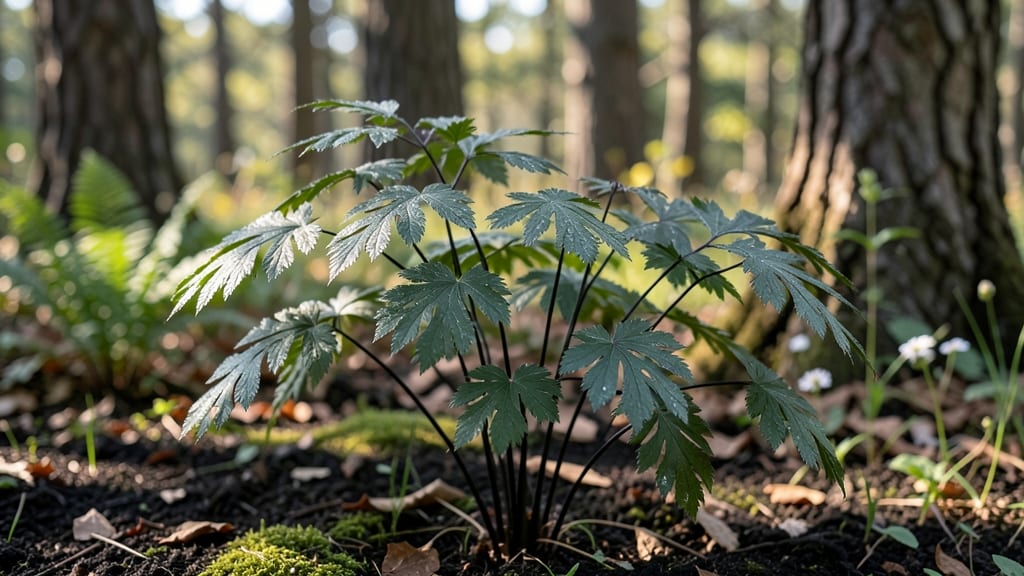
That five-leaf plant with thorns you’ve been admiring? 🌿 It’s likely a castor bean (Ricinus communis), though Dieffenbachia’s got a similar leaf shape—without the dangerous seeds. Handling either requires gloves, since sap can irritate skin (and castor beans are toxic if ingested).
The key to bushier growth lies in thornless pruning—snip just above leaf nodes (where leaves attach) to encourage branching. Water when the top inch of soil feels dry, and keep it in bright, indirect light. Overwatering causes yellow leaves, while too little light makes them stretch.
You’ll see new shoots emerge within 2-3 weeks of pruning, and the plant will fill out faster than you’d expect. Castor beans thrive in warm climates, while Dieffenbachia prefers humidity—both reward patience with dramatic foliage.
For propagation, take stem cuttings with at least two leaves, dip in rooting hormone, and place in moist soil. Pests like spider mites are rare, but wipe leaves occasionally to keep them dust-free. Safety first—always wear gloves when handling!
Why Thorns Appear Unexpectedly
Understanding why your five-leafed plant with thorns (likely a Gouania or Ziziphus species) develops unwanted spikes is the first step to managing them. Thorns aren’t just a defensive quirk—they’re a survival mechanism tied to stress, genetics, and environmental cues.
Below, we break down the real culprits behind sudden thorn growth and how to address them.
Some plants, like the **five-leafed Gouania species, are hardwired to produce thorns as a natural defense against herbivores. If your plant is thriving but still developing thorns, it might simply be following its genetic blueprint.
- Why it happens: Thorns are a hereditary trait passed down through generations.
If the parent plant had thorns, the offspring likely will too—no matter how well you care for it. - What to do: - Accept that some thorns are unavoidable in certain species. - Focus on pruning techniques (like selective thinning) to reduce visibility rather than eliminate thorns entirely. - If thorns are excessive, consider propagating from thornless cuttings (if possible) to grow a new, less spiky plant.
Plants develop thorns as a last-resort defense when they sense danger. Poor growing conditions trigger stress hormones that prompt thorn production.
- Why it happens:
- Extreme temperatures (too hot or too cold) → Shock disrupts normal development.
- Poor soil nutrition → Deficiencies (especially nitrogen or phosphorus) weaken the plant, making it more vulnerable.
- Overcrowding or root binding → Competition for resources stresses the plant, prompting thorn formation.
When a plant gets nipped, pruned, or damaged, it releases trauma hormones that signal danger. In response, it ramps up thorn production to deter future attacks.
- Why it happens:
- Pests or animals (like rabbits or deer) chewing on leaves or bark stimulate defensive responses.
- Mechanical stress (like wind rubbing against branches) can also provoke thorn formation.
Young, healthy plants often produce fewer thorns, but as they mature**, many species (including Gouania) become more thorny as a natural part of aging.
- Why it happens:
- Older wood tends to develop thicker, more pronounced thorns.
- Slower growth in mature plants means energy is redirected toward defense rather than new leaves.
- What to do:
- Regularly prune older branches to encourage new, thorn-free growth.
- Fertilize mature plants to keep them vigorously growing (less energy for thorns = fewer spikes).
- Consider rejuvenation pruning—cut back 1/3 of the oldest growth in early spring to stimulate fresh, less thorny shoots.
Plants produce growth hormones (auxins, cytokinins) and stress hormones (ethylene, abscisic acid) that regulate development. If these hormones are out of whack, thorn production can skyrocket.
- Why it happens:
- Over-fertilizing with nitrogen can lead to soft, weak growth that the plant compensates for with thorns.
- Ethylene gas buildup (from overcrowding or poor airflow) signals stress, prompting thorn formation.
- Root damage (from transplant shock or compacted soil) disrupts hormone signals.
- What to do:
- Use a balanced fertilizer—avoid high-nitrogen formulas if thorns are a problem.
- Ensure good airflow around the plant to reduce ethylene buildup.
- Avoid overwatering—waterlogged roots disrupt hormone balance.
If you’re unsure whether your plant’s thorniness is genetic or stress-related, try this:
- Move it to ideal conditions (right light, water, and nutrients) for 3-4 weeks.
- If thorns reduce, the issue was environmental stress.
- If thorns stay the same, it’s likely genetic—time to embrace (or prune strategically).
By identifying the root cause, you can minimize thorns and keep your five-leafed plant lush, full, and—dare we say—less prickly!
Revive & Shape Your Thorny Plant
If your five-leaf plant with thorns (likely a Gouania lupuloides or similar) is struggling with overgrowth, sparse foliage, or unsightly thorns, don’t worry—there’s a simple way to turn things around. Below, we’ve mapped out practical fixes for common issues, along with prevention tips to keep your plant thriving. Let’s get to work!
Cause: Too much shade, overwatering, or lack of pruning. Fix:
Prune back 1/3 of the leggy stems to encourage bushier growth. Cut just above a leaf node (where leaves meet the stem) to stimulate new branches.
- ✂️ When to prune: Early spring or after flowering (if applicable).
- 🌿 Tools needed: Clean, sharp pruners (sterilize with rubbing alcohol to prevent disease).
- 💧 Post-prune care: Reduce watering slightly—overwatering stresses new growth.
Prevention: Place your plant in bright, indirect light (morning sun is ideal) and prune lightly every 3–4 months to maintain shape.
Cause: Root rot (from overwatering) or nutrient deficiency. Fix:
Check the soil first—if it’s soggy, your plant is drowning. Here’s how to revive it:
| Issue | Solution |
|---|---|
| 💦 Overwatered/Root Rot |
|
| 🍂 Nutrient Deficiency |
|
Prevention:
- ⏳ Water deeply but infrequently—thorny plants hate “wet feet.”
- 🌱 Use a pot with drainage holes (or elevate it on pebbles).
Cause: Natural growth habit (thorns are protective), but you can manage them! Fix:
Thorns don’t harm the plant, but if they’re a nuisance, selective pruning can help:
- 🔪 Trim thorny stems back by 1/2 to reduce their prominence.
- 🌿 Encourage leafier growth by pinching back tips of new shoots (this redirects energy to foliage).
- ✨ Bonus: Wear gloves when pruning—thorns are sharp!
Prevention:
- 🌞 Give your plant plenty of light—healthy growth = fewer “defense” thorns.
- 🍃 Avoid over-fertilizing with nitrogen (it promotes leafy growth but can increase thorniness).
Cause: Dry air, dust, or weak plant stress. Fix:
If you spot tiny bugs or webbing, act fast with these natural remedies:
- 💦 Spray with soapy water (1 tsp mild dish soap + 1 quart water). Test on a small area first!
- 🌿 Neem oil treatment (mix 1 tbsp neem oil + 1 tsp mild soap + 1 quart water; spray weekly for 2 weeks).
- 🌡️ Increase humidity (place a tray of water nearby or use a humidifier).
Prevention:
- 🚿 Wipe leaves regularly with a damp cloth to remove dust (pests love hiding spots!).
- 🌱 Quarantine new plants for 2 weeks before introducing them to your collection.
Final Tip: Thorny plants are tough once established—consistency is key. Stick to a pruning schedule, monitor soil moisture, and give it the right light, and you’ll have a lush, manageable bush in no time! 🌟
Frequently asked questions
Is the five-leaf plant with thorns safe for pets or children?
Most five-leaf plants with thorns, like castor bean (Ricinus communis), are highly toxic if ingested. The seeds contain ricin, a deadly poison, while the sap can irritate skin. Keep these plants out of reach of pets and kids, and wear gloves when handling. Dieffenbachia (another five-leaf plant) is also toxic but lacks thorns.
How do I tell if my five-leaf plant is castor bean or something else?
Castor bean has deep red stems, large palmate leaves (5-7 lobes), and spiky seed pods. Dieffenbachia has similar leaf shape but no thorns and white speckles on stems. For other species, check leaf arrangement—castor bean leaves grow in a spiral pattern from the stem.
Can I grow this plant indoors without sunlight?
No—these plants need bright, indirect light to thrive. Without enough light, leaves will stretch (etiolation) and become sparse. Place near an east or west-facing window, or use a grow light for 12-14 hours daily. Artificial light won't replace natural sunlight but helps prevent leggy growth.
Why are my plant's leaves turning yellow?
Yellow leaves usually mean overwatering or nutrient deficiency. Let the top 2 inches of soil dry out between waterings, and check for root rot (mushy, black roots). If the problem persists, fertilize with a balanced liquid fertilizer (like 10-10-10) every 4-6 weeks during growing season.
How do I propagate my five-leaf plant with thorns?
Use stem cuttings with at least two leaf nodes. Dip the cut end in rooting hormone, then plant in moist potting mix. Keep the soil consistently damp and place in bright, indirect light. Roots should form in 4-6 weeks. Wear gloves—thorns make handling tricky!