
Picking
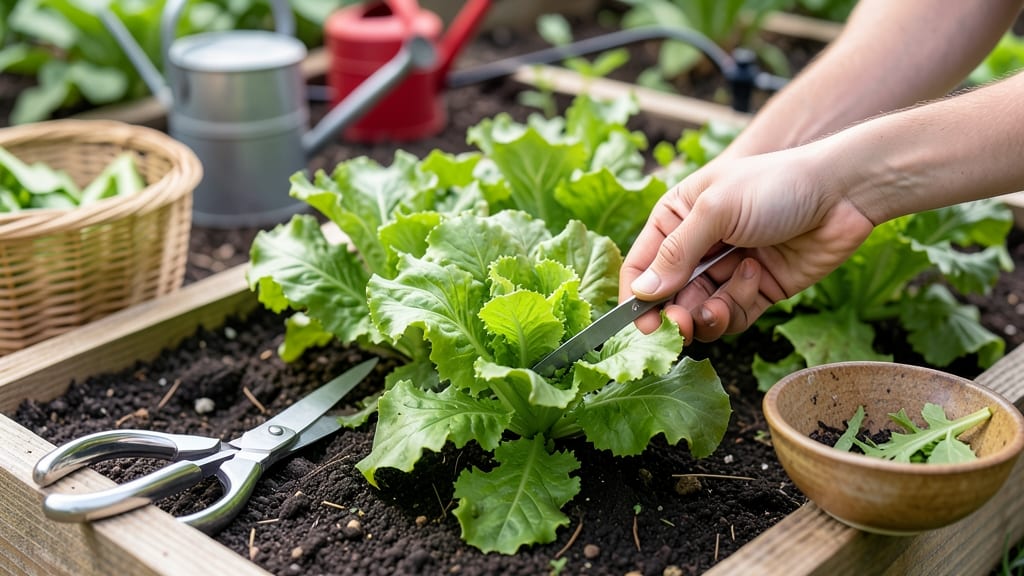
Harvesting leaf lettuce the right way turns a single planting into a never-ending salad bowl. ✂️ The cut-and-come-again method lets you snip outer leaves while the center keeps growing—no replanting, just continuous harvests for 6-8 weeks or longer with proper care.
Most gardeners stop too soon, missing out on weeks of fresh greens.
You’ll need sharp scissors or clean pruners, a sunny spot with 4-6 hours of light daily, and consistent moisture—lettuce hates drying out. Start harvesting when leaves reach 3-4 inches tall, cutting just above the lowest set of leaves to encourage regrowth.
The key is never taking more than one-third of the plant at once.
After harvesting, water deeply and add a light layer of compost to replenish nutrients. Keep the soil moist but not soggy, and watch as new leaves push out within 5-7 days.
The first few harvests are tender and sweet, but don’t let the plants bolt—shade cloth helps in hot weather.
Common mistakes include cutting too aggressively, letting soil dry out, or harvesting in extreme heat. With this method, you’ll enjoy double the yield of traditional harvesting while keeping your lettuce productive long after most gardens give up. Here’s how to do it right.
📚 In This Guide
- What you need
- Instructions
- Tips and common mistakes
- Wrapping up and next steps
What you need
- ● Leaf lettuce plants: Choose varieties like Buttercrunch, Romaine, or Oakleaf (avoid head lettuce for this method). Start with 3–6 mature plants (or seedlings) for a small harvest.
- ● Sharp pruning shears or clean kitchen scissors: A pair of bypass pruners (4–6 inch blades) works best to avoid crushing leaves.
- ● Watering can or hose with a gentle spray nozzle: Keep soil consistently moist (not soggy) to encourage regrowth.
- ○ Organic fertilizer (optional but recommended): A balanced 10-10-10 or fish emulsion (diluted to half-strength) to replenish nutrients after harvests.
- ● Mulch (straw or shredded leaves): 1–2 inches to retain moisture and suppress weeds.
- ● Garden gloves: Protect your hands from dirt and thorns (especially if using heirloom varieties).
- ● Shade cloth (30–50%): For hot climates—provides partial shade to prevent bolting (going to seed).
- ● Compost or worm castings: Mix into soil before planting for nutrient-rich growth.
- ● Harvest basket or colander: Keeps freshly cut leaves clean and organized.
- ● Garden journal: Track harvest dates, weather, and regrowth patterns for future success!
Step-by-step instructions for the cut-and-come-again lettuce harvest method
Here's how to keep your leaf lettuce thriving with minimal effort and maximum yield.
🌱 Step 1: Wait Until Plants Reach the Right Size
Harvest begins when your lettuce plants develop 3-4 mature leaves—about 4-6 weeks after sowing. You'll know they're ready when the outer leaves reach 4-6 inches long and show vibrant color. Avoid harvesting earlier, or you'll stunt the plant's ability to regrow.
I always check the base of the plant first. If the inner leaves are already 2 inches tall with visible veins, the plant can handle harvesting. The key is leaving the inner rosette intact—this acts as the growth engine for your next harvest.
✂️ Step 2: Use the Proper Cutting Technique
Grab a pair of clean, sharp scissors or pruning shears. Make your first cut ½ inch above the soil line but leave the innermost 1-2 leaves untouched. This prevents damaging the crown where new growth emerges. For a single plant, I cut about ⅓ of the outer leaves—never take more than that first harvest.
Angle your cuts slightly to avoid leaving stubby remains that can rot. If you're harvesting multiple plants, sterilize your tools between cuts with rubbing alcohol to prevent cross-contamination. The goal is clean cuts that heal quickly, not jagged tears that invite disease.
💧 Step 3: Provide Immediate Post-Harvest Care
Water the base of the plant within 24 hours of harvesting to compensate for lost foliage. Use a gentle stream to avoid disturbing the remaining leaves. I like to water in the early morning so the plant can dry quickly—this prevents fungal issues from lingering moisture.
Add a light application of balanced liquid fertilizer (like 10-10-10) diluted to half-strength. This gives the plant a quick nutrient boost to support regrowth. Avoid heavy fertilizers immediately after cutting—they can burn tender new leaves trying to sprout.
☀️ Step 4: Monitor Light and Growth Conditions
Maintain 4-6 hours of morning sun and afternoon shade for optimal regrowth. Too much direct sun after harvesting can stress the plant, while too little light slows new growth. You'll see the first signs of recovery in 5-7 days as tiny new leaves push from the center.
If your lettuce starts bolting (sending up a tall flower stalk), it's getting too much heat. Move it to a cooler spot or provide afternoon shade immediately. Bolting means the plant has shifted energy from leaf production to seed-making—once it bolts, you won't get another harvest from that plant.
⏰ Step 5: Time Subsequent Harvests Correctly
After the first harvest, wait until the plant regrows to half its original size—about 2-3 weeks depending on conditions. You'll know it's ready when the remaining leaves fill out again and new growth appears at the base. Each subsequent harvest should be slightly smaller than the last, but you can keep cutting for 3-4 harvests per season this way.
When the center of the plant starts looking woody or the leaves turn bitter, it's time to let the plant bolt naturally or pull it up to make room for a new crop. I always save the last harvest for salads or cooking—bolted lettuce loses its tender quality but makes great flavor additions to soups.
Tips & tricks for perfect cut-and-come-again lettuce harvests
Here's what nobody tells you about maximizing your lettuce's regrowth potential—and how to avoid common pitfalls that waste your harvest.
Timing is Everything: The 4-6 week window before your first harvest isn't just about leaf size—it's about maturity. I've seen gardeners rush harvests at 3 weeks only to watch their plants struggle to regrow. Wait until those inner leaves hit 2 inches tall with visible veins; that's when the plant has stored enough energy in its rosette to bounce back. Think of it like giving your lettuce a financial cushion before you start withdrawing from its savings account.
Precision Cutting Technique: That ½-inch cut above soil level might seem arbitrary, but it's critical. Cut too high and you risk damaging the crown where new growth emerges. Too low and you leave stubby remains that trap moisture and rot. I use a small white marker on my pruners to create a visual guide—just a tiny line at the ½-inch mark. For multiple plants, keep a spray bottle of rubbing alcohol handy between cuts to prevent cross-contamination. I learned this the hard way after losing an entire row to downy mildew.
Post-Harvest Recovery Strategy: The 24-hour watering window isn't just about hydration—it's about establishing a routine. Water at the same time every morning (I set a reminder on my phone) to create predictability for the plant. After watering, I always do a quick visual inspection: if the remaining leaves look wilted, I give them a gentle mist with water to help them recover faster. The key is mimicking the plant's natural growing conditions as closely as possible during this critical recovery period.
Light Management Secret: Those 4-6 hours of morning sun are your golden window for regrowth. I've found that using sheer white fabric draped over the plants during the hottest afternoon hours (around 1-4pm) can extend your harvest season by weeks. The fabric diffuses light without completely blocking it, and it's easy to remove when temperatures drop. This simple trick has kept my lettuce producing for months when other gardeners' plants bolted by early summer.
Pro Tips for Harvest Leaf Lettuce So It Keeps Growing
- Here's what nobody tells you about maximizing your lettuce's regrowth potential—and how to avoid common pitfalls that waste your harvest.
- Timing is Everything: The 4-6 week window before your first harvest isn't just about leaf size—it's about maturity.
- Precision Cutting Technique: That ½-inch cut above soil level might seem arbitrary, but it's critical.
Frequently asked questions
Got questions about harvesting leaf lettuce the right way?
Here are answers to the most common ones—so you can keep your garden producing fresh, crisp greens all season long!
How do I know when leaf lettuce is ready to harvest?
Leaf lettuce is ready to harvest when the outer leaves are at least 4–6 inches long and tender. Avoid waiting until the whole head matures—this can make the center bitter. For baby leaves, harvest when they’re just 2–3 inches tall for a milder flavor.
How often should I harvest leaf lettuce to encourage regrowth?
Harvest every 7–10 days by cutting just above the soil line (or the lowest set of leaves). This gives the plant time to regrow while preventing stress. In cooler weather, you can stretch it to 2–3 weeks between harvests.
What if my lettuce bolts (goes to seed) before I can harvest?
Bolting happens when lettuce senses heat or stress. To delay it:
- Use shade cloth (30–50%) in hot climates.
- Plant heat-tolerant varieties like ‘Black Seeded Simpson’ or ‘Jericho.’
- Harvest aggressively in early spring or fall.
Can I use scissors or should I pull leaves by hand?
Both work! Use clean, sharp scissors or pruners to snip leaves at the base for precision. For delicate varieties, gently twist leaves by hand to avoid damaging the crown. Just avoid yanking—this can uproot the plant.
What if my lettuce stops growing after harvesting?
Check for these issues:
- Overcrowding: Thin seedlings to 6–12 inches apart for airflow.
- Nutrient deficiency: Feed with a balanced fertilizer (10-10-10) or compost tea.
- Pests/disease: Inspect for aphids or fungal spots; treat with neem oil if needed.
Wrapping up and next steps
Harvesting leaf lettuce the right way doesn’t just give you fresh greens—it keeps your plants thriving for weeks (or even months!) of endless harvests. By mastering the cut-and-come-again method, you’re not just picking leaves; you’re nurturing a resilient crop that rewards your patience.
Now that you’ve got the know-how, grab those shears and get harvesting—your kitchen (and taste buds) will thank you!
🌱 Next step: Try harvesting a few outer leaves today and watch your lettuce bounce back stronger. Pro tip: Keep a journal to track growth patterns—you’ll soon become a lettuce-growing pro! 📝✨