
Pruning
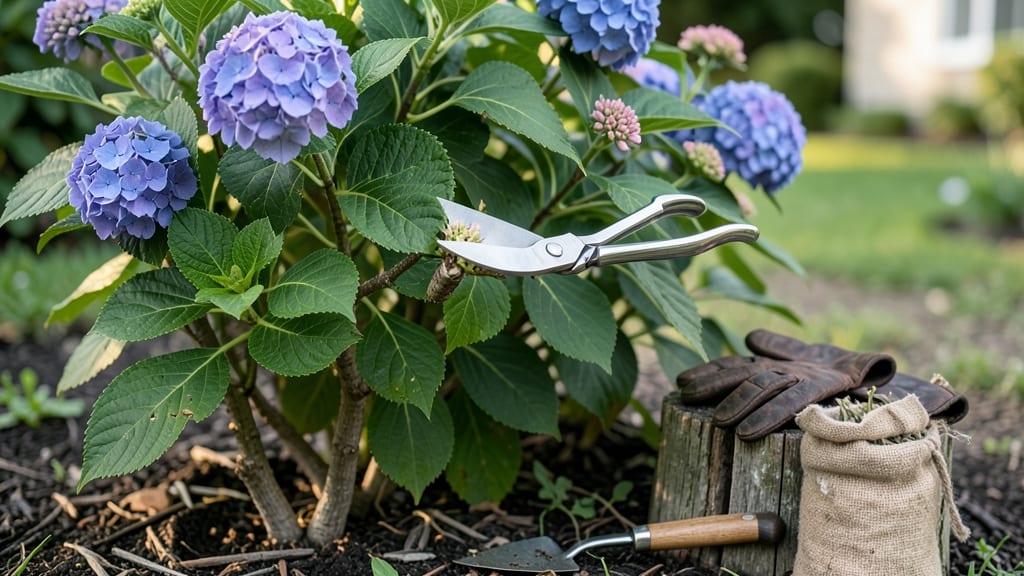
Bigleaf hydrangea pruning in late winter means next summer's blooms will be bushier than ever before. 🌿 I've pruned these plants for years, and the difference between a neglected bush and one that looks like a lush, flower-covered cloud comes down to timing, technique, and a little patience.
The key is cutting back one-third of the oldest stems—those are the ones that flowered last year—while leaving the newer growth untouched. Grab your pruners and gloves, then focus on making clean cuts just above a set of buds or leaves.
This encourages the plant to put energy into fresh, vibrant growth rather than struggling with overcrowded stems. By mid-spring, you'll see new shoots emerging with shockingly lush foliage, and those stems will produce next year's blooms.
The flowers themselves won't appear until summer, but the foundation you're building now ensures they'll be bigger, brighter, and more abundant than ever. This method works for both mophead and lacecap varieties, and it's perfect for gardeners who want to shape their plants while keeping them healthy.
Avoid pruning after summer blooms—wait until next winter to repeat the process.
📚 In This Guide
- What you need
- Instructions
- Tips and common mistakes
- Wrapping up and next steps
What you need
- ● Pruning shears: Bypass pruners (for cuts up to ½ inch thick) – sharp, clean, and well-oiled (e.g., Felco or Fiskars).
- ● Loppers: For thicker stems (½ to 1½ inches) – long-handled for reach and leverage (e.g., Corona or Bahco).
- ○ Pruning saw: Optional but handy for stubborn, thick branches (e.g., blank">Fiskars X27).
- ● Disinfectant: 70% isopropyl alcohol or a pruning sealant (like blank">Tanglefoot Pruning Seal) to prevent disease spread.
- ● Gloves: Heavy-duty gardening gloves (e.g., Wolfe Gardens) to protect from thorns and sap.
- ● Rag or paper towels: For wiping tools between cuts.
- ● Trash bags: 2–3 large bags (13-gallon or bigger) for debris.
- ○ Markers or flags: Optional but helpful for labeling cuts if you’re doing layered pruning.
- ● Weather check: Prune on a dry, overcast day (avoid rainy or windy conditions).
- ● Hydrangea health: Ensure your plant is dormant (late winter/early spring) or post-bloom (summer, for non-flowering cuts).
- ○ Safety gear: Safety glasses (optional but recommended if you’re aggressive with the saw).
- ● Plan ahead: Sketch a rough outline of your desired shape or take photos before cutting!
Step-by-Step bigleaf hydrangea pruning for year-round health
Here’s the method I swear by—timed perfectly to maximize blooms and keep your plant thriving for decades.
✂️ Step 1: Prune Immediately After Flowering (Late Summer)
Bigleaf hydrangeas bloom on old wood, so wait until after the last flower fades—usually late August to early September. This timing ensures you don’t accidentally cut off next year’s buds. Look for brown, papery flower heads; that’s your cue.
Remove 1/3 of the oldest stems at the base. These are the thickest, woody stems that no longer produce vibrant blooms. I like to cut them back to the ground—it’s dramatic, but it forces fresh growth from the center. Use clean, sharp pruners to avoid tearing the bark.
🌿 Step 2: Thin Out Crowded Stems in Early Spring (Before Bud Swell)
In late February or March, before you see any buds, inspect the plant. Remove any weak, crossing, or dead stems at the base. You’re aiming for an open center that lets air and light reach all stems. I usually leave 3-5 of the strongest stems per plant—this prevents overcrowding and encourages bigger blooms.
If you see stems growing toward the center, cut them back to redirect energy outward. This is also the time to shape the plant—step back and visualize where you want new growth to emerge. Bigleaf hydrangeas respond well to gentle shaping, but avoid heavy pruning now.
⏰ Step 3: Light Maintenance Pruning in Mid-Summer (Optional)
If your plant looks leggy or overgrown by mid-July, give it a quick tidy-up. Cut back new growth by 1/3 to encourage bushier branching. This isn’t about removing flowers—it’s about redirecting energy to weaker stems so they thicken up before next season.
Here’s the thing—bigleaf hydrangeas are forgiving. If you skip this step, don’t stress. Just focus on the late-summer and early-spring pruning, and your plant will still reward you with stunning blooms. The goal is balance, not perfection.
☀️ Step 4: Post-Pruning Care for Strong Recovery
After pruning, give your hydrangea a light feeding with balanced fertilizer (10-10-10) to support new growth. Water deeply at the base—avoid wetting the leaves to prevent fungal issues. Bigleaf hydrangeas love moisture but hate soggy roots, so aim for 1-2 inches of water per week.
Watch for new shoots emerging from the base within 2-3 weeks. These are your signal that the plant is happy and ready for next year’s blooms. Mulch around the base with 2-3 inches of organic mulch to retain moisture and protect roots in winter.
Tips & tricks for perfect bigleaf hydrangea pruning
These little adjustments will transform your pruning game—and your hydrangea’s blooms—next season.
Timing is Everything: The late August to early September window for Step 1 is non-negotiable. I’ve seen gardeners accidentally cut off next year’s buds by pruning too early. Look for those brown, papery flower heads—they’re nature’s "go" signal. If you miss this window, don’t panic! Just wait for spring’s Step 2 instead.
The 1/3 Rule: When removing stems in Step 1, measure the total number of stems and cut back exactly one-third of the oldest ones. This forces fresh growth from the center without shocking the plant. I like to count stems first—it’s easier to visualize cutting back 3 out of 9 stems than trying to guess "about a third."
Spring Shaping Secret: In Step 2, when shaping your plant, step back and visualize an open vase shape. This creates airflow and light penetration that prevents fungal issues. I often sketch a rough circle in the air to guide where I want growth to emerge—it sounds silly, but it works!
Post-Pruning Care: After pruning, the 2-3 weeks of watching for new shoots is crucial. This is when your plant decides whether it’ll thrive or struggle next year. Keep soil consistently moist (but not soggy) during this period—it’s like giving your plant a confidence boost after its "haircut."
Pro Tips for Bigleaf Hydrangea Pruning
- These little adjustments will transform your pruning game—and your hydrangea’s blooms—next season.
- Timing is Everything: The late August to early September window for Step 1 is non-negotiable.
- The 1/3 Rule: When removing stems in Step 1, measure the total number of stems and cut back exactly one-third of the oldest ones.
Frequently asked questions
Got questions about pruning your bigleaf hydrangea? You’re not alone! Here are answers to the most common concerns—so you can prune with confidence and enjoy those stunning blooms next season.
When is the best time to prune bigleaf hydrangeas?
Prune your bigleaf hydrangea right after flowering (late summer to early fall) to avoid cutting off next year’s blooms. Avoid pruning in late fall or winter—this plant blooms on old wood, so early cuts risk sacrificing flowers. If you must prune in spring, do it very lightly to shape, but prioritize summer/fall for major trims.
Can I prune bigleaf hydrangeas in spring?
Yes, but only for light shaping or removing dead wood. Heavy spring pruning risks cutting off next season’s flower buds, which form on last year’s growth. If you skip summer/fall pruning, a minimal spring trim (10-20% of stems) is better than nothing—but aim to prune after blooms fade for optimal results.
How much should I cut back bigleaf hydrangeas?
For healthy growth, remove 1/3 to 1/2 of the oldest stems each year to encourage new blooms. Cut back to a bud or lateral branch (not just a stub) to promote bushiness. Avoid over-pruning—bigleaf hydrangeas thrive with 3-5 years of stem age left intact. Think of it like a haircut: shape, not shave!
What if I prune at the wrong time and my hydrangea doesn’t bloom?
Don’t panic! If you pruned too early (like in late winter), your hydrangea may still bloom later in the season—just expect fewer flowers. Next year, prune after blooming and avoid heavy cuts. For immediate help, fertilize with acid-loving plant food and keep soil moist. Patience pays off—your hydrangea will bounce back!
Do bigleaf hydrangeas need pruning every year?
Not necessarily! If your hydrangea is healthy and blooming well, you can skip pruning for a year or two. However, annual light pruning (removing dead/diseased stems and thinning oldest growth) keeps the plant vibrant and encourages bigger blooms. Think of it like maintenance—a little effort now saves headaches later!
How do I know if I’ve pruned too much?
Watch for these signs: fewer blooms, sparse foliage, or leggy growth mean you may have over-pruned. Bigleaf hydrangeas need at least 3-4 years of stem age to bloom well. If you’ve cut back more than half the plant, give it time to recover—next year, prune less aggressively and focus on shaping.
Wrapping up and next steps
Mastering the art of bigleaf hydrangea pruning is your ticket to lush, vibrant blooms year after year! 🌸 By understanding the when and how of pruning—whether you’re shaping for size, reviving old growth, or encouraging new flowers—you’re setting your hydrangeas up for success.
Don’t let hesitation hold you back: grab those shears and give your plants the care they deserve!
Ready to take the next step? Mark your calendar for late winter or early spring, gather your tools, and roll up your sleeves. Your hydrangea’s future beauty starts with one confident cut—happy pruning! ✂️💚