
Companion Plants
Want a thriving garden with fewer pests and better yields? These 10 leafy greens act as natural companion plants, enhancing growth while repelling harmful insects—perfect for organic gardeners and space-conscious growers.
Lettuce Near Carrots For Pest Control

Struggling with chewed-up carrots? Planting lettuce nearby is a game-changer—its strong scent confuses carrot flies, the pests responsible for those unsightly holes. This simple pairing not only protects your harvest but also creates a microclimate where tender carrot roots stay cooler and more hydrated.
For best results, sow loose-leaf varieties like Buttercrunch or Oakleaf alongside carrots in well-draining soil with partial shade (lettuce wilts in scorching afternoon sun). The lettuce’s broad leaves also act as living mulch, suppressing weeds while keeping moisture levels steady. This combo thrives in small raised beds or even container gardens with 6-inch depth.
Urban gardeners and beginners will love this low-maintenance duo—it’s a two-for-one harvest with minimal extra effort. Your carrots will grow straighter and sweeter, while you enjoy fresh greens in just 30 days. 🌱
Spinach With Strawberries For Soil Health

Spring gardeners, this is your secret weapon: spinach and strawberries working together to create a self-sustaining, nutrient-rich bed. While strawberries spread across the soil, spinach’s deep taproots break up compacted earth, improving drainage and aeration—perfect for heavy clay or urban garden plots where soil struggles to breathe.
Plant spinach in early spring (as soon as soil is workable) and let it grow for 4-6 weeks before strawberries emerge. The spinach’s nitrogen-rich leaves will decompose into the soil, feeding the shallow-rooted strawberries without requiring extra fertilizer. This combo thrives in partial shade (3-6 hours of sun), making it ideal for gardeners with east-facing beds or dappled sunlight from trees.
This low-maintenance pair is especially great for beginner gardeners or those with limited space—just 12 inches apart in rows. By summer, you’ll harvest sweet strawberries while the spinach’s job is done, leaving behind enriched soil for next year’s crops. 🌱
Kale Beside Onions To Repel Pests

Struggling with cabbage moths devouring your kale? Plant onions nearby—their pungent aroma acts as a natural deterrent, confusing pests while boosting your harvest. This space-saving combo thrives in urban gardens where every inch counts.
The trick is planting onions 12-18 inches away from kale, allowing their scent to spread without competing for nutrients. Both plants prefer full sun (6+ hours daily) and well-draining soil, making them ideal partners. Harvest kale leaves as needed, leaving the outer leaves intact to maintain protection.
This pairing is perfect for city gardeners with limited space or anyone tired of chemical sprays. The onions add flavor to meals while saving your kale from destruction! 🌱
Swiss Chard Near Tomatoes For Growth Boost

Struggling with tomato plants wilting in the heat? Swiss chard can be your secret weapon. Its broad, vibrant leaves act like a natural shade canopy, keeping tomato roots cool and reducing moisture loss—critical for hot climates where tomatoes often struggle.
Plant Swiss chard just 12-18 inches away from tomato stems to maximize shade benefits without competing for sunlight. The chard’s deep roots also help break up compacted soil, improving water drainage for tomatoes. Bonus: Harvest the chard’s colorful stalks while the tomatoes ripen, giving you a dual harvest from the same space.
This pairing is perfect for gardeners in zones 3-10 who want bigger, healthier tomatoes with less effort. Try it this season and watch your yield—and your chard—thrive! 🌻
Arugula With Radishes For Space Efficiency

Small-space gardeners, rejoice—arugula and radishes are the ultimate dynamic duo for maximizing every inch of your plot. This pairing turns your succession planting into a pest-deterring powerhouse while keeping your harvests coming all season.
Start by sowing arugula seeds first—they’ll sprout in just 7-10 days and be ready to harvest in 3-4 weeks. Once you’ve harvested the arugula, the space is automatically cleared for radish seeds, which take 25-30 days to mature. The radishes act as natural pest control by repelling flea beetles, which would otherwise target your leafy greens. This cycle lets you grow both crops in the same spot without competition.
This method works beautifully in windowsill gardens or small raised beds, making it ideal for urban gardeners or anyone with limited space. Plus, the peppery flavor of arugula pairs perfectly with the crisp sweetness of radishes—you’ll get double the harvest and double the flavor! 🌱
Collard Greens Beside Peppers For Heat Tolerance

If your garden sizzles in summer heat, collard greens and peppers are the dynamic duo you’ve been missing. While peppers crave warmth, their leaves can scorch under relentless sun—collards act as natural sunscreen, shielding delicate pepper foliage while their broad leaves create a microclimate that deters aphids.
Plant collards 12-18 inches away from pepper plants to balance shade and airflow. Both thrive in full sun to partial shade, making them perfect for southern climates or late-summer succession planting. Harvest collard leaves as needed to encourage bushier growth that continues protecting peppers through harvest season.
This pairing is especially valuable for gardeners in hot zones who struggle with pepper leaf burn or aphid outbreaks. The collards’ hardiness means they’ll keep working long after spring greens bolt. 🌻
Mustard Greens Near Corn For Nitrogen Fixation

Transform your nutrient-poor soil into a powerhouse for corn with this dynamic duo: mustard greens. Their fast-growing nature (ready in just 30-50 days) means they’ll outpace weeds while enriching the soil with nitrogen—exactly what corn’s deep roots crave for robust growth.
Plant mustard greens in the same row as corn or as a cover crop before planting, then till them in when they bolt. This method works especially well in sandy or clay soils where nitrogen is scarce. Bonus: Mustard greens also deter pests like corn earworms, giving you a two-for-one benefit!
This pairing is a game-changer for beginner gardeners or those restoring depleted land—no fancy fertilizers needed. 🌱
Endive With Beets For Aphid Deterrence

If you're tired of aphids devouring your beets, endive might be the unsung hero your garden needs. This bitter-tasting leafy green acts as a natural aphid deterrent, keeping those pesky insects away from your beet roots while adding a unique flavor to your harvest.
Endive thrives in partial shade to full sun and prefers well-drained soil. Plant it just a few inches away from your beets—its compact size makes it perfect for containers or tight spaces between rows. The key is to harvest the outer leaves regularly to encourage continuous growth and maintain its pest-repelling properties.
This pairing is ideal for urban gardeners or anyone with limited space, offering both pest control and a delicious dual harvest. 🌱
Dandelion Greens Near Fruit Trees For Pollinators

Think of dandelions as nature’s unsung heroes—especially when planted near fruit trees. Their bright yellow blooms act like neon signs for bees, butterflies, and other pollinators, boosting fruit set while requiring zero effort from you.
Beyond their pollinator appeal, dandelions send roots 10-15 feet deep, breaking up compacted orchard soil and improving drainage. Let them grow wild in the understory—their early spring greens are edible too! This combo works best in orchards, permaculture guilds, or backyard fruit gardens where pollinators are welcome.
Perfect for gardeners who want low-maintenance ecosystem support without sacrificing beauty. Your fruit trees will thank you—and so will the bees. 🌻
Watercress In Shallow Water For Pest Control

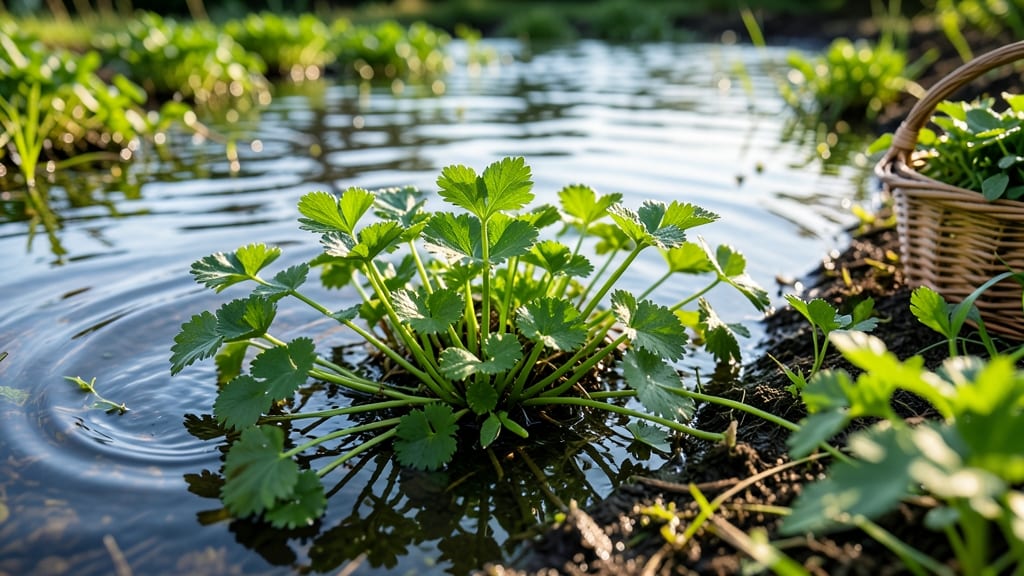
If slugs and snails are wrecking your garden, watercress might be your new best friend—this aquatic leafy green thrives in shallow water while naturally repelling those slimy pests. Its peppery flavor also makes it a delicious addition to salads, soups, or sandwiches, turning your pond edges into both a pest barrier and a harvestable crop.
Plant watercress in 3–6 inches of shallow water along garden borders, irrigation ditches, or even in decorative ponds. It grows quickly in partial sun to full shade, tolerating temperatures from 35°F to 85°F, and can be harvested continuously for year-round greens in mild climates. The dense foliage creates a physical barrier slugs avoid, while its roots stabilize soil near water features.
This dual-purpose plant is perfect for urban gardeners with water features or anyone tired of chemical slug baits. Plus, its low-maintenance nature makes it ideal for beginner-friendly edible landscaping. 🌿