
Pests and Diseases
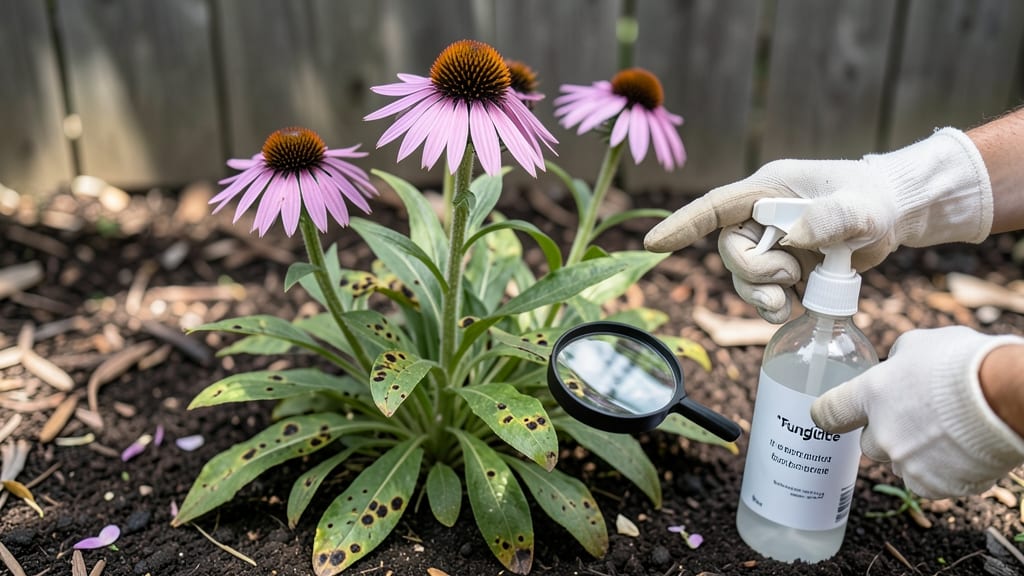
Coneflower leaf spot turns your disease-resistant blooms into a sad, spotted mess—unless you act fast. 🌱 I’ve seen this fungal nightmare ruin entire beds, but a simple neem oil and baking soda blend stops it in its tracks within days, not weeks.
The first sign is those ugly brown spots with yellow halos, then leaves crisp up and drop. Proper spacing and watering at the base (not overhead) keeps it from spreading. But when it hits, my two-ingredient spray saves the day—it’s cheap, organic, and works even on established infections.
You’ll see new growth pushing through within 5-7 days of treatment, with flowers returning stronger than before. The blend also prevents future outbreaks, so you won’t be playing catch-up next season. Works for garden beds, containers, and even potted coneflowers.
Here’s the exact mix and schedule to bring your plants back to full, vibrant health.
Understanding Fungal Triggers
When your coneflowers start showing those ugly brown spots on their leaves, fungi are usually the sneaky culprits behind the scene. These microscopic invaders thrive under specific conditions, turning your vibrant garden into a fungal buffet.
Let’s break down the real reasons this happens—and how you can prevent it before it spreads.
Fungi love moisture—way too much of it. When soil stays soggy for days, spores germinate and infect leaves, especially in tight, compacted soil that doesn’t drain well. Coneflowers (Echinacea) are drought-tolerant, but overzealous watering (or rain combined with poor drainage) creates the perfect fungal playground.
- 🔍 Signs: Yellowing leaves, spots with halos, and a musty smell near the base of plants.
- 💡 Fix:
- Water deeply but infrequently—aim for 1 inch per week (including rain).
- Amend soil with compost or perlite to improve aeration.
- Avoid overhead watering; use drip irrigation or soaker hoses.
Last year’s dead leaves, stems, or mulch can harbor dormant fungal spores waiting for warm, wet conditions to wake up. If you didn’t clean up after last season, those spores might’ve already hitched a ride onto this year’s coneflowers.
- 🔍 Signs: Spots appear first on lower leaves (closest to the soil) and spread upward.
- 💡 Fix:
- Remove all plant debris from late fall through early spring.
- Use sterilized tools when pruning to avoid spreading spores.
- Apply a 2–3 inch layer of fresh mulch (but keep it away from stems to prevent rot).
Fungi party hard when temperatures hover between 60–80°F (15–27°C) and humidity stays high. If your garden is shady and damp (or you’re in a region with frequent rain), spores spread like wildfire.
- 🔍 Signs: Outbreaks peak in late summer during heatwaves or after prolonged rain.
- 💡 Fix:
- Improve airflow by spacing plants 18–24 inches apart.
- Water early in the morning so leaves dry by afternoon.
- Consider shade cloth (30–50%) if your area gets intense heat + humidity.
Stressed coneflowers are fungal magnets. Poor soil, nutrient deficiencies, or root damage weaken their defenses, making them easy targets. If your plants are underfed, overcrowded, or struggling from transplant shock, fungi will exploit the opportunity.
- 🔍 Signs: Spots appear after extreme heat, drought, or recent planting.
- 💡 Fix:
- Feed with a balanced fertilizer (10-10-10) in early spring.
- Test soil pH—coneflowers prefer 6.0–7.0; amend with lime or sulfur if needed.
- Avoid over-fertilizing with nitrogen (it promotes lush, fungus-loving growth).
Now that you know the top triggers, the next step is stopping the spread—and neem oil + baking soda might just be your secret weapon. 🚀
Quick Fixes for Fungal Foliar Issues
Fungal leaf spots on coneflowers can feel like a losing battle, but with the right approach, you can restore your plants to their vibrant best. Below are targeted solutions based on the most common causes—fungal infections, environmental stress, or poor cultural practices—and how to tackle them effectively.
If leaf spots are caused by fungal pathogens like Alternaria or Septoria, act fast to prevent further damage.
🔥 Remove Infected Leaves
- How: Snip off severely spotted leaves with clean, sharp scissors or pruners.
- Why: Removing infected foliage reduces spores and stops the fungus from spreading.
- Pro Tip: 💡 Sterilize your tools with rubbing alcohol between cuts to avoid cross-contamination.
🍳 Apply a Neem Oil & Baking Soda Blend
A powerhouse combo for fungal control, this mix disrupts fungal cell walls while creating an alkaline environment that fungi hate.
Recipe:
- 1 tsp baking soda
- 1 tbsp neem oil
- 1 tsp dish soap (mild, like Castile)
- 1 quart water
How to Use:
- Mix all ingredients in a spray bottle.
- Shake well before each use.
- Spray both sides of leaves and stems until damp (avoid spraying in direct sunlight).
- Reapply every 7–10 days or after rain.
Why It Works: 🌡️ Neem oil smothers fungal spores, while baking soda raises the pH, making conditions hostile for pathogens.
🌡️ Improve Air Circulation
- How: Thin out overcrowded plants, space them 12–18 inches apart, and prune inner stems to allow airflow.
- Why: Fungi thrive in damp, stagnant air—better circulation keeps leaves dry.
If leaf spots appear after heavy rain or overwatering, the issue may be root rot or excess moisture on foliage.
⏰ Adjust Your Watering Routine
- How: Water deeply but less frequently—aim for 1 inch per week (including rain).
- When: Water in the early morning so leaves dry by evening.
- Avoid: Wetting leaves (use drip irrigation or soaker hoses instead of overhead sprinklers).
🔪 Fix Drainage Issues
- How: Amend heavy or compacted soil with compost or perlite to improve drainage.
- Check: Ensure pots have drainage holes, and garden beds aren’t sitting in low spots where water pools.
Weak plants are more susceptible to leaf spots. Boost their health with balanced fertilization.
💪 Use a Slow-Release Fertilizer
- How: Apply a balanced, organic fertilizer (like 10-10-10 or fish emulsion) in early spring.
- Avoid: High-nitrogen fertilizers, which promote lush but weak foliage.
🍎 Mulch for Moisture & Nutrients
- How: Spread 2–3 inches of organic mulch (straw or shredded leaves) around the base (but not touching stems).
- Why: Mulch retains moisture, regulates soil temp, and slowly releases nutrients.
Once your coneflowers recover, prevent recurrence with these habits:
- ✨ Rotate Plants: Avoid planting coneflowers in the same spot year after year—crop rotation reduces fungal buildup.
- 🌿 Clean Up Debris: Remove fallen leaves and spent blooms in autumn to eliminate fungal overwintering spots.
- 🎯 Choose Resistant Varieties: Opt for disease-resistant coneflower cultivars like ‘Magnus’ or ‘White Swan’.
- 🔄 Sterilize Tools: Always clean pruners and gardening tools between uses to prevent spreading spores.
By addressing the root cause—whether fungal, environmental, or nutritional—your coneflowers will bounce back stronger. Act quickly, and soon you’ll be admiring those cheerful purple blooms again! 🌼
Frequently asked questions
How do I tell if my coneflower has leaf spot or just sunburn?
Leaf spot shows as dark brown/black spots with yellow halos that often have tiny black specks (fungal spores) in the center. Sunburn appears as pale, dry patches on leaf edges, usually on one side only. Check the underside of leaves—leaf spot spreads from there, while sunburn stays on exposed surfaces.
Can I still use my coneflowers for bouquets if they have leaf spot?
Yes, but remove all spotted leaves before arranging. The fungus won't spread to cut flowers, but you'll want to sterilize your vase with a 1:10 bleach-water mix (rinse well) to prevent cross-contamination if you reuse containers. Healthy stems will still provide beautiful blooms for 5-7 days.
Will my coneflowers die if I don't treat leaf spot?
Not necessarily! While severe cases can weaken plants, coneflowers are hardy perennials. The fungus usually stops spreading in fall when temperatures drop. However, untreated plants may produce fewer blooms next season and look less vigorous. Early treatment (like the neem oil blend) ensures full recovery and better flowering.
How often should I spray the neem oil mix if it rains?
Reapply immediately after heavy rain (within 24 hours) since rain washes away the protective film. For light showers, wait until leaves are dry. The key is maintaining a 7-10 day interval between applications during active growth (spring to early fall). Store the mix in a cool, dark place to preserve effectiveness.
Are there any chemical treatments that work faster than organic options?
Yes, fungicides like copper fungicide or propiconazole can show results in 3-5 days when applied according to label instructions. However, they require multiple applications and may harm beneficial insects. For organic growers, the neem-baking soda blend works nearly as fast (5-7 days) while being safer for pollinators.