
Aphids
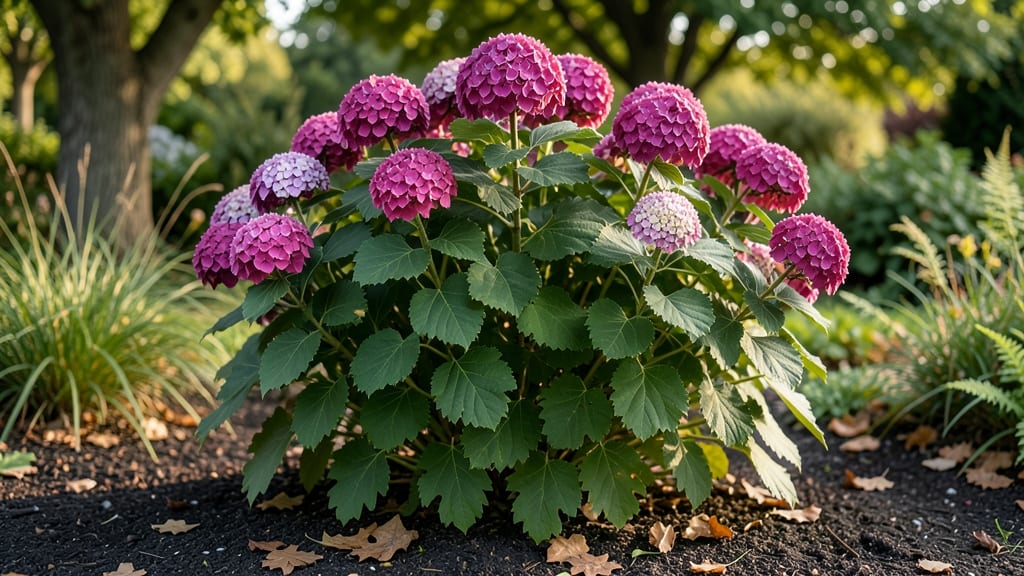
The Gatsby Moon oakleaf hydrangea steals every season with its creamy-white blooms and fiery fall foliage. 🌿 I fell for it the moment I saw how it transforms a shady corner into a showstopper—no fuss, just drama.
This isn’t your average hydrangea; it’s a four-season star that thrives where others fade. Its velvety foliage starts as deep green, then bursts into shades of peach and burgundy by autumn, while the blooms age gracefully from white to blush.
Perfect for borders, shade gardens, or as a mixed bed anchor, it pairs beautifully with ferns, hostas, and ornamental grasses for layered texture. Even winter brings interest—its exfoliating bark adds unexpected structure. What makes it magic? Minimal pruning means less work for you, more beauty for your garden.
Place it where you’ll see it daily—your porch, patio edge, or the spot where guests linger. The contrast of its bold foliage against evergreens or soft perennials creates instant curb appeal. For a foolproof focal point, group three together in a triangle.
Add spring bulbs at their base for early color, and watch how this hydrangea becomes the heart of your garden’s story—effortlessly.
📚 In This Guide
- What you need
- Instructions
- Tips and common mistakes
- Wrapping up and next steps
What you need
- ● Gatsby Moon Oakleaf Hydrangea: 1-3 plants (bare-root or container-grown, depending on preference). Look for healthy, vibrant foliage and sturdy stems.
- ● Well-draining soil: A mix of topsoil, compost (50%), and perlite or sand (20-30%) to ensure aeration and moisture retention.
- ● Organic mulch: 2-3 inches of pine bark, shredded leaves, or wood chips to conserve moisture and regulate soil temperature.
- ● Slow-release fertilizer: 10-10-10 or balanced organic fertilizer (e.g., fish emulsion or compost tea) for initial planting.
- ● Watering can or hose with a gentle spray nozzle: For deep, even hydration without disturbing roots.
- ● Gloves and pruning shears: Sharp, sterilized pruning shears (or small hand pruners) for minimal shaping.
- ○ Stakes and plant ties (optional but helpful): For young plants in windy areas.
- ● Sunlight assessment: Confirm your planting spot gets partial shade (morning sun, afternoon shade) for optimal growth.
- ○ pH test kit (optional): Ideal soil pH for Oakleaf Hydrangeas is 5.0–6.0 (slightly acidic). Adjust with sulfur or lime if needed.
- ○ Drip irrigation or soaker hose (optional): For automated watering, especially in hot climates.
- ● Neem oil or insecticidal soap: Preemptive treatment for aphids or spider mites (common pests for hydrangeas).
How to plant and care for Gatsby Moon oakleaf hydrangea
This stunning hydrangea thrives with just a few key steps—here’s how to set it up for vibrant, low-maintenance growth.
🌱 Step 1: Choose the Perfect Planting Spot
The Gatsby Moon Oakleaf Hydrangea loves partial shade—think 4-6 hours of morning sun with afternoon shade, especially in hotter climates. I plant mine near the foundation of my house where the eastern exposure gives gentle light but the afternoon shade keeps leaves from scorching. The secret to its dramatic foliage is well-drained soil—this plant hates soggy roots.
Dig a hole twice as wide as the root ball but only as deep. The top of the root ball should sit 1 inch above ground level—this prevents water from pooling around the stem. If your soil is heavy clay, mix in 2-3 inches of compost into the bottom of the hole to improve drainage. Gatsby Moon thrives in USDA zones 5-9, so check your hardiness zone before planting.
☀️ Step 2: Plant at the Right Time and Water Deeply
Spring or early fall are the best times to plant—April or September in most regions. Avoid planting in extreme heat or cold, as the roots need time to establish before stress. Once you’ve placed the hydrangea in the hole, backfill with native soil and water deeply until the soil is 2-3 inches moist all the way through.
I like to create a watering basin around the base by mounding soil slightly higher at the edges. This keeps water where the roots need it most. After planting, water every other day for 2 weeks to help the roots settle. You’ll know it’s taking hold when new growth appears within 3-4 weeks—look for bright green leaves emerging from the center.
💧 Step 3: Mulch and Feed for Year-Round Color
Spread 2-3 inches of mulch (like shredded bark or pine needles) around the base, keeping it 3 inches away from the stem to prevent rot. Mulching helps retain moisture and keeps roots cool in summer. The Gatsby Moon’s deep burgundy fall foliage comes from proper care—so don’t skip this step!
Feed with a balanced, slow-release fertilizer (like 10-10-10) in early spring before new growth starts. I avoid high-phosphorus fertilizers—they can make the plant focus on blooms instead of that stunning foliage. Water again after fertilizing to help nutrients soak into the soil. You’ll see stronger stems and richer colors within a few weeks.
✂️ Step 4: Prune Strategically for More Drama
Here’s the beauty of Gatsby Moon—it needs minimal pruning. In late winter or early spring, remove any dead or crossing branches with clean cuts just above a bud. Never prune into old wood, as this can reduce next year’s blooms. The plant’s natural shape is its best feature, so resist the urge to shape it aggressively.
If you notice leggy growth, simply trim back the longest stems by one-third in late spring. This encourages bushier, fuller growth. The key is to prune after the plant has finished blooming—but Gatsby Moon’s flowers are so stunning, you’ll want to leave most of them intact!
🌿 Step 5: Protect and Enjoy Year-Round
In winter, the Gatsby Moon’s leaves turn deep burgundy, making it a standout even when not in bloom. To protect young plants, cover with burlap if your winters drop below 10°F. Established plants handle cold well, but a little extra care ensures next year’s drama.
Watch for hydrangea leaf spot—a fungal issue that causes yellowing leaves. If you see it, remove affected leaves and apply a copper fungicide as a preventative. With proper care, your Gatsby Moon will reward you with vibrant blooms and stunning foliage for decades. The best part? Once established, it’s nearly maintenance-free!
Tips & tricks for perfect Gatsby Moon oakleaf hydrangea
These simple yet powerful insights will help your Gatsby Moon Oakleaf Hydrangea thrive with minimal fuss.
Location Strategy: When selecting your planting spot in Step 1, pay close attention to the 4-6 hours of morning sun requirement. I've found that positioning the plant where it receives dappled light through nearby trees creates the perfect balance—bright enough for photosynthesis but gentle enough to prevent leaf scorch. If your yard only gets full sun, consider planting near a north-facing wall where afternoon shade will naturally occur.
Soil Preparation Insight: The well-drained soil mentioned in Step 1 is absolutely critical, especially if you're working with heavy clay. Before planting, I recommend doing a simple soil test using a DIY kit from your local garden center. If drainage is poor, mixing in 2-3 inches of compost (as suggested) plus some coarse sand or perlite can work wonders. This creates tiny air pockets that prevent waterlogging while still holding enough moisture for the roots.
Watering Technique: The every other day for 2 weeks watering schedule in Step 2 is perfect, but there's a trick to make it even more effective. After each watering, gently scratch the soil surface about an inch deep with your finger. If it feels dry, water again—this ensures the 2-3 inches of moisture reaches all the way down to the root zone. I also recommend watering in the early morning so any excess moisture evaporates during the day rather than sitting on the leaves and inviting fungal issues.
Fertilizer Timing: While the instructions specify using a balanced, slow-release fertilizer in early spring, I've discovered that a second light feeding in late summer can prevent nutrient deficiencies that sometimes show up as pale leaves. Use about half the recommended amount (so roughly 5-5-5) and water thoroughly after application. This gives the plant a gentle boost right before its most active growth period.
Pro Tips for Gatsby Moon Oakleaf Hydrangea
- These simple yet powerful insights will help your Gatsby Moon Oakleaf Hydrangea thrive with minimal fuss.
- Location Strategy: When selecting your planting spot in Step 1, pay close attention to the 4-6 hours of morning sun requirement.
- Soil Preparation Insight: The well-drained soil mentioned in Step 1 is absolutely critical, especially if you're working with heavy clay.
Frequently asked questions
Got questions about the stunning Gatsby Moon Oakleaf Hydrangea? You’re not alone! Here are the most common queries—plus expert answers to help you grow this showstopper with confidence.
How fast does the Gatsby Moon Hydrangea grow, and how big will it get?
The Gatsby Moon is a fast grower, adding 12–24 inches per year under ideal conditions. Mature size typically reaches 6–8 feet tall and 5–6 feet wide, making it perfect for hedges, borders, or focal points. With its upright habit, it won’t sprawl like some hydrangeas—just give it space to shine!
When is the best time to plant or transplant Gatsby Moon Oakleaf Hydrangea?
Plant in early spring or fall (avoid extreme heat or frost) for the best root establishment. If transplanting an established shrub, do it in late winter or early spring before new growth begins. Water deeply after planting and mulch to retain moisture—this hydrangea rewards patience with dramatic foliage!
Are Gatsby Moon hydrangeas prone to pests, and how do I prevent aphids?
Aphids can be a nuisance, but Gatsby Moon is resistant to most pests when healthy. To deter aphids:
- Spray with a hose (forceful water) to knock them off.
- Introduce ladybugs or lacewings (natural predators).
- Apply neem oil as a preventive spray.
Do I really need to prune Gatsby Moon hydrangeas, or can I skip it?
One of its biggest perks? Minimal pruning! You can skip pruning entirely and still enjoy its stunning foliage. However, if you want to:
- Shape it lightly in late winter/early spring.
- Remove dead or crossing branches after flowering.
- Encourage bushier growth, prune 10–20% of old wood in spring.
What colors can I expect from Gatsby Moon’s leaves, and do they change?
Expect a spectacular color show! New foliage emerges in lush bronze-purple, maturing to deep green in summer. As fall arrives, leaves blaze in crimson, orange, and gold—often lasting into winter. The moon-like variegation (cream edges) adds extra magic. Sun exposure intensifies the colors, so plant it where it gets morning sun and afternoon shade.
What are some great alternatives if Gatsby Moon isn’t available?
If you’re smitten but can’t find Gatsby Moon, try these low-maintenance hydrangea cousins:
Variety
Why It’s Great
Oakleaf Hydrangea ‘Snow Queen’
Classic white blooms + fiery fall foliage; thrives in heat.
Panicle Hydrangea ‘Limelight’
Taller (8–10 ft), drought-tolerant, and no pruning needed.
Bigleaf Hydrangea ‘Endless Summer’
Reblooms all season; loves shade but adapts well.
Wrapping up and next steps
The Gatsby Moon Oakleaf Hydrangea is a showstopper for any garden—packed with year-round drama and low-maintenance charm. Its stunning foliage, resilience, and minimal pruning needs make it a dream for both beginners and seasoned gardeners.
Whether you're drawn to its lush blooms or its fall color flair, this hydrangea delivers effortless elegance.
Ready to elevate your outdoor space? Start by gathering your tools and reviewing care tips—then, roll up your sleeves and plant your Gatsby Moon with confidence! 🌿✨