
Pests
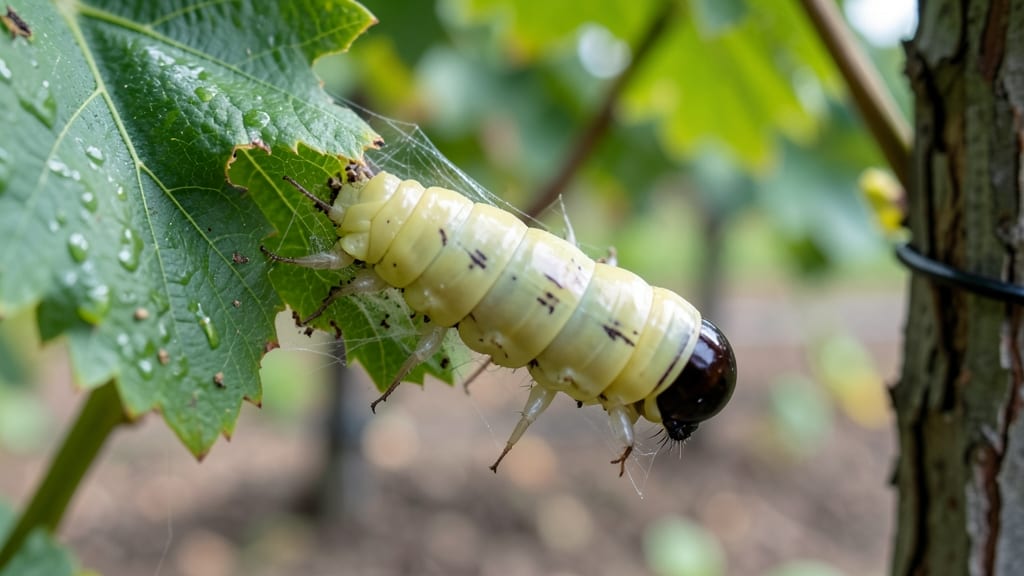
This dangerous grape leaffolder moth can turn your grapevines into a skeleton of chewed leaves and webbing. 🌿 I’ve watched grape leaffolder moths go from a minor nuisance to a full-blown crisis in just a few weeks—if you don’t act early.
The damage starts small but spreads fast, leaving behind curled leaves and stunted fruit.
The real danger isn’t just the damage—it’s how quickly they multiply. A single female lays hundreds of eggs, and her larvae tunnel through leaves, blocking sunlight and starving your vines.
Most gardeners don’t spot the first signs until it’s too late, but there’s a 3-step early detection method that stops them before they take hold.
By the time you see the first folded leaves, it’s already too late for simple fixes. But with the right traps, sprays, and timing, you can protect your harvest before the moths even hatch.
The key is acting in late spring, when the first generation emerges—and before they’ve had a chance to destroy your vines.
Whether you’re growing table grapes, wine grapes, or just a few vines in your backyard, this pest doesn’t discriminate. The good news? With the right approach, you can keep your vines healthy and your harvest intact—no matter how bad the infestation looks.
Root Causes Of Grape Damage
The grape leaffolder moth (Desmia funeralis) isn’t just a nuisance—it’s a stealthy, destructive force that thrives under specific conditions. Understanding why these moths target your vines is the first step in outsmarting them.
Below, we break down the key factors that turn a quiet vineyard into a moth infestation hotspot.
The grape leaffolder moth has a preference for weak hosts. When grapevines are crowded, nutrient-deficient, or water-stressed, their leaves become easier targets. Here’s why:
- Thinner leaves: Stressed vines produce less robust foliage, making it simpler for caterpillars to fold and feed on leaves without resistance.
- Higher sugar content: Under stress, vines may produce leaves with more sugars, which attract egg-laying females seeking nutrient-rich meals for their larvae.
- Reduced natural defenses: Healthy vines secrete volatile organic compounds (VOCs) that repel pests. Stressed vines? Not so much.
Actionable fix: Prune vines for better airflow, ensure consistent irrigation, and fertilize balanced nutrients (especially nitrogen and potassium) to bolster vine health.
Grape leaffolder moths are opportunists, and a messy vineyard is an open invitation. Their life cycle depends on:
- Debris as shelter: Fallen leaves, old fruit, and pruned wood provide hiding spots for pupae and egg-laying sites during winter.
- Overwintering success: If last year’s infestation wasn’t cleaned up, moths emerge earlier and in larger numbers the following spring.
- Alternative hosts: Weeds like blackberry or raspberry nearby can act as moth reservoirs, increasing local populations.
Actionable fix:
- ✂️ Rake and remove all leaf litter, prunings, and mummified fruit after harvest.
- 🔥 Burn or compost debris off-site (don’t leave it near vines!).
- 🌱 Mow or mulch weeds within a 50-foot radius of grapevines.
The grape leaffolder moth loves warmth and moisture—two conditions that accelerate its life cycle. Here’s how climate plays a role:
| Factor | Why It Matters | Moth Response |
|---|---|---|
| 🌡️ Temperature (60–85°F) | Ideal for larval development; speeds up egg hatching and pupation. | More generations per year (up to 3–4 in warm regions vs. 1–2 in cooler areas). |
| 💧 Humidity (60%+) | Keeps eggs and young larvae from drying out; softens leaves for easy folding. | Higher survival rates for caterpillars, leading to larger infestations. |
| 🌧️ Rainfall (moderate to heavy) | Washes away natural predators (like birds and parasitic wasps) and dilutes pheromone traps. | Moths reproduce unchecked with fewer predators around. |
Actionable fix:
- 🌡️ Monitor weather forecasts—deploy early traps when temps hit 55°F+ (moths emerge at this threshold).
- 💧 Improve drainage in vineyards to reduce standing water, which attracts moths.
- 🌿 Use reflective mulch (e.g., aluminum foil) to disrupt moth orientation during flight.
In a balanced ecosystem, grape leaffolder moths face pressure from:
- Parasitic wasps (e.g., Apanteles species) that lay eggs inside caterpillars.
- Birds (like robins and starlings) that snack on larvae.
- Ground beetles and spiders that prey on eggs and pupae.
But when pesticides, monoculture farming, or habitat loss reduce these predators, moth populations explode.
Actionable fix:
- 🐝 Encourage biodiversity—plant flower strips near vineyards to attract predator species.
- 🚫 Avoid broad-spectrum insecticides (e.g., neonicotinoids) that kill beneficial insects.
- 🏡 Install nest boxes for insectivorous birds (e.g., bluebirds, wrens).
Key takeaway: The grape leaffolder moth doesn’t just appear—it’s drawn in by weak vines, poor sanitation, favorable weather, and disrupted ecosystems. By addressing these root causes, you starve the problem at its source before caterpillars even start folding your leaves.
Stopping Grape Leaffolder Moth Damage
When grape leaffolder moths strike, swift action is your best defense. These pests can defoliate vines, reduce yields, and weaken your crop if left unchecked. Below, we’ve mapped out practical solutions tailored to the root causes—whether it’s early detection, organic control, or chemical interventions.
Follow these steps to protect your grapes before the damage spirals out of control.
Catching the problem early is the key to minimizing damage. Grape leaffolder moths lay eggs in spring, and larvae emerge within weeks. Here’s how to stay ahead:
- 🌿 Inspect leaves weekly: Flip grape leaves (especially on new shoots) to spot tiny white eggs or green larvae. Focus on the undersides—that’s where they hide.
- 🕵️ Use pheromone traps: Place traps in your vineyard before moths emerge (typically late April to May, depending on your climate). Check them every 3–5 days.
- 📅 Track degree days: Use a local IPM tool to monitor heat accumulation. Larvae appear when temps hit ~250–400 degree-days (base 50°F). Act before peak egg-laying.
💡 Pro Tip: If you see folded leaves with frass (larval droppings), it’s already too late for that spot—but you’ve got time to treat nearby areas.
For small infestations or organic growers, these methods disrupt the moth’s life cycle without harsh chemicals:
🍃 Prune Strategically
Remove and destroy heavily infested leaves and shoots immediately. Moths overwinter in leaf litter, so:
- Rake up fallen leaves after harvest and compost them away from the vineyard.
- Thin canes in winter to improve airflow—less hiding spots = fewer larvae.
🐛 Introduce Natural Predators
Encourage beneficial insects that prey on leaffolder moths:
- 🕷️ Spider mites & lacewings: Release or attract them with neem oil sprays (use early morning/evening to avoid harming predators).
- 🐝 Bees & wasps: Plant dill, fennel, or yarrow near vines to draw parasitic wasps (like Trichogramma), which lay eggs inside moth eggs.
💦 Water Smartly
Larvae hate dry conditions. Use drip irrigation instead of overhead sprinklers to:
- Reduce humidity in leaf folds (where larvae thrive).
- Avoid wetting foliage at night (moths are most active then).
If organic methods fall short, targeted sprays can save your crop. Timing is critical—apply treatments before larvae hatch.
🔥 Spray at the Right Stage
Use these products when you spot eggs or tiny larvae (1st–2nd instar):
| Product Type | Examples | When to Apply |
|---|---|---|
| Biological | Bacillus thuringiensis (Bt) (e.g., Xentari, Dipel) | At egg hatch (follow local forecasts). Reapply every 7–10 days if rain occurs. |
| Insect Growth Regulators (IGR) | Methoxyfenozide (e.g., Intrepid) | Disrupts larval development. Best in early season before heavy feeding. |
| Conventional | Spinosad (e.g., Success), Kaolin clay (e.g., Surround WP) | Spinosad: Apply at dusk for 2–3 days. Kaolin clay: Creates a physical barrier; reapply after rain. |
⚠️ Warning: Avoid broad-spectrum insecticides (like pyrethroids) late in the season—they can kill beneficial insects and trigger secondary pest outbreaks.
🛡️ Protective Netting
For high-value grapes or organic vineyards, cover young shoots with fine mesh netting (0.6mm) to block adult moths. Secure it tightly—larvae can squeeze through gaps!
Break the moth’s cycle with these year-round habits:
- 🌱 Rotate crops: Avoid planting grapes in the same spot for 3+ years to starve out soil-borne pests.
- 🌡️ Mulch with straw: Keeps soil temps stable and deters overwintering moths.
- 📅 Plant trap crops: Grow mustard or radishes near vineyards to lure moths away from grapes.
- 📝 Keep records: Track moth activity yearly to predict peak risk periods.
🎯 Final Tip: Combine 2–3 methods for best results. For example: Bt spray + pheromone traps + pruning creates a multi-layered defense.
Frequently asked questions
How can I tell if my grapevines have a grape leaffolder moth infestation?
Look for folded leaves with greenish-brown caterpillars inside or frass (droppings) near the folds. Check the undersides of leaves—eggs appear as tiny white dots. Heavy infestations cause webbing and stunted growth. Early signs show up in late spring when new shoots emerge.
Are grape leaffolder moths dangerous to humans or animals?
No, they pose no direct threat to humans or pets. The danger lies in their damage to grapevines—defoliation weakens plants and reduces fruit yield. The caterpillars aren't poisonous, but their feeding habits can stress vines enough to make them vulnerable to diseases like powdery mildew.
What’s the best time of year to treat for grape leaffolder moths?
Act before larvae hatch—typically when temps reach 55°F+ in late spring. Use pheromone traps in April-May to monitor activity. Apply Bt sprays or IGRs at egg stage (check local degree-day models). Waiting until you see folded leaves means you’re already behind the moths!
Can I use neem oil to control grape leaffolder moths?
Neem oil works best on eggs and young larvae but isn't a complete solution. Apply it early morning or evening to avoid harming beneficial insects. For better results, combine it with pruning infested leaves and pheromone traps. Reapply every 5-7 days during active infestation periods.
Will bird feeders help control grape leaffolder moth populations?
Yes! Bird feeders attract insect-eating birds like robins and wrens that prey on caterpillars. Place feeders near vineyards to encourage year-round predator presence. Pair this with native flowering plants to create a balanced ecosystem that naturally keeps moth populations in check.