
Shrubs
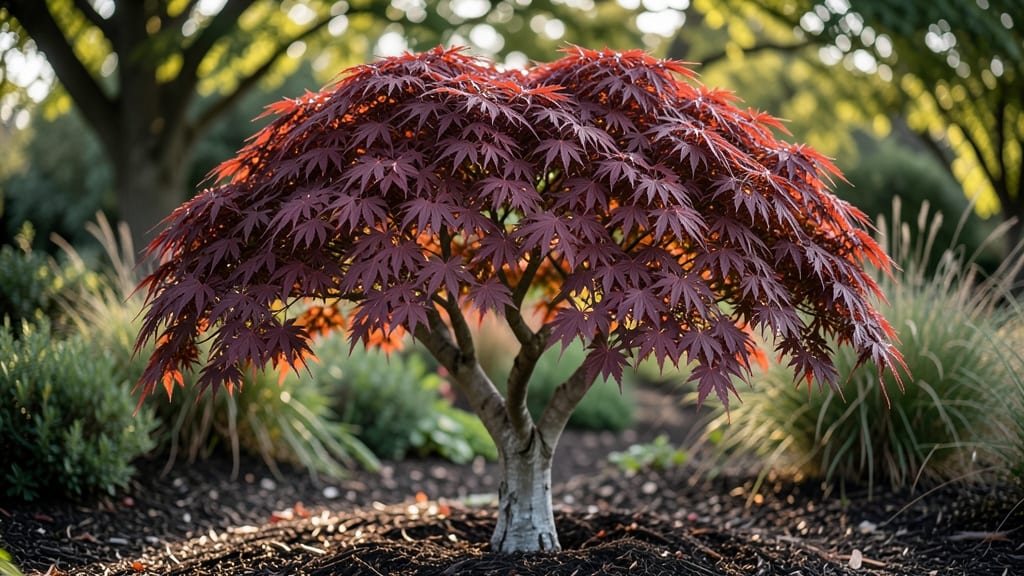
This laceleaf weeping Japanese red maple transforms any yard into a living watercolor painting. 🌿 The cascading branches and fiery red foliage make it the star of both spring and fall displays, while winter brings delicate lace-like branches that catch snow like a winter wonderland.
I planted mine five years ago, and it’s already become the focal point of my garden—without needing constant attention. The secret to its success lies in the right conditions: partial shade to protect its delicate leaves, well-draining soil rich in organic matter, and consistent moisture during its first two years.
Unlike some maples, this variety doesn’t demand perfect soil—it just can’t handle soggy roots. Once established, it’s remarkably low-maintenance, with only occasional pruning needed to shape its graceful form.
You’ll love how it brightens shady corners with its vibrant hues year-round, from bright red spring foliage to deep burgundy in summer and fiery orange-red in fall. Even in winter, its skeletal branches add architectural interest. The best part?
It thrives in containers too, making it perfect for patios or small spaces where you want drama without the fuss. Common challenges like winter burn or spider mites are easily managed with proper care.
A thick layer of mulch and occasional pruning keeps it healthy, while its natural resistance to most pests means fewer headaches. Let’s get yours planted right so it becomes the showstopper of your garden too.
📚 In This Guide
- What you need
- Instructions
- Tips and common mistakes
- Wrapping up and next steps
What you need
- ● Laceleaf weeping Japanese red maple: 1 mature tree (3–5 ft tall, 1–2 ft wide) or 1–2 small container-grown saplings (1–2 ft tall).
- ● Cultivar suggestions: Acer palmatum ‘Bloodgood,’ ‘Shishigashira,’ or ‘Tamukeyama.’
- ● Planting site: Full sun to partial shade (minimum 4–6 hours of sunlight daily).
- ● Well-draining, acidic soil (pH 5.0–6.5). Amend heavy clay with 1–2 inches of organic mulch (e.g., pine bark or compost).
- ● Tools: 1 shovel or spade (for digging).
- ● 1 garden trowel (for delicate root handling).
- ● 1 hose with nozzle or watering can (for post-planting hydration).
- ● 1 pair of pruning shears (sterilized, for shaping).
- ● Soil amendments: 1 bag (40 lb) of peat moss or pine fines (to improve drainage and acidity).
- ● 1 lb of slow-release fertilizer (e.g., 10-10-10 or acid-loving plant blend).
- ● Mulch: 2–3 inches of pine straw, cedar chips, or wood mulch (keep 6 inches away from trunk).
- ● Support: 1 tree stake (if planting in windy areas) + soft tree tie.
- ● Seasonal care: 1 bottle of dormant oil spray (for pest prevention in early spring).
- ● 1 pair of gloves (to protect hands during pruning).
How to plant and maintain a stunning laceleaf weeping Japanese red maple
This tree delivers jaw-dropping color with minimal effort—here's exactly how to plant and nurture it for decades of drama.
🪴 Step 1: Choose the Perfect Planting Spot
Pick a location with partial shade to full sun—this tree tolerates both, but morning sun and afternoon shade brings out the most vibrant reds. The laceleaf variety thrives in zones 5-8, so check your hardiness zone before planting. I always look for a spot with at least 6 feet of clearance all around, since its weeping branches grow 10-15 feet wide over time.
Test your soil's drainage by digging a 12-inch deep hole—if water pools after 30 minutes, amend with 2-3 inches of compost to improve drainage. The roots hate soggy feet, but they also need consistent moisture, so avoid windy areas where soil dries too quickly. I plant mine near a patio where I can enjoy its cascading branches year-round.
🌱 Step 2: Plant at the Right Time and Depth
Spring or early fall are ideal planting times—avoid extreme heat or frost. Dig a hole twice as wide as the root ball but only as deep as the container it came in. The top of the root ball should sit 1-2 inches above ground level—burying too deep suffocates the trunk and causes rot.
Gently remove the tree from its container and loosen any circling roots with your fingers. Place it in the hole, backfill with native soil mixed with 1 part compost, and water deeply to settle everything. I tap the soil lightly with my foot after filling to eliminate air pockets, then create a 2-inch deep watering basin around the base to hold moisture.
☀️ Step 3: Water Deeply and Mulch Properly
Water immediately after planting, then 2-3 times weekly for the first month until the root ball is fully established. You'll know it's settled when you can't easily pull the tree—it should feel anchored. After that, water deeply once weekly, aiming for 1-2 gallons per watering to encourage deep root growth.
Spread 3-4 inches of mulch around the base, keeping it 3 inches away from the trunk to prevent rot. I use shredded bark mulch because it breaks down slowly and improves soil structure over time. Replenish mulch annually in early spring to maintain that protective layer.
✂️ Step 4: Prune for Shape and Health
Prune in late winter or early spring before new growth begins. Remove any dead, diseased, or crossing branches first—these compete with the tree's natural weeping shape. I always look for branches that grow straight up or outward, as these disrupt the graceful cascade. Cut just outside the branch collar where it meets the trunk.
Shape the tree by selectively trimming branches that spoil the weeping effect. Never remove more than 25% of the canopy in one season—this stresses the tree and reduces its vibrant color. After pruning, apply a balanced fertilizer in early spring to support new growth. The goal is to maintain that elegant, flowing silhouette while keeping the tree healthy.
🌿 Step 5: Protect and Enjoy Year-Round Beauty
Young trees need winter protection in colder zones. Wrap the trunk with tree guard or burlap to prevent sunscald and rodent damage. Mature trees handle winter well, but I still check for ice buildup on branches—gentle shaking usually removes it without harm.
This tree rewards patience with year-round interest—bright red foliage in spring, golden hues in fall, and striking bark texture in winter. Feed lightly in early spring with 10-10-10 fertilizer to maintain vibrant color. With proper care, your laceleaf weeping Japanese red maple will become the centerpiece of your landscape for decades.
Tips & tricks for perfect laceleaf weeping Japanese red maple care
These game-changing tips will help you turn your weeping maple into a showstopper with minimal effort.
Location is Everything: That 6-foot clearance isn't just about aesthetics—it prevents branch damage from wind and gives your tree room to develop its stunning weeping habit. I've seen too many trees planted too close to structures where branches get crushed over time. Also, morning sun really does make that red foliage pop—it's like nature's highlighter!
Soil Test Before Planting: The 30-minute drainage test in Step 1 is crucial, but I take it a step further by testing soil pH too. This tree prefers slightly acidic soil (pH 5.5-6.5). If your soil tests higher, mix in peat moss when amending. I've noticed my most vibrant reds come from trees planted in slightly acidic soil—it's like they're wearing their best outfit!
Watering Wisdom: Those 2-3 gallons per week in the first month might seem like a lot, but trust me—it's worth it. I use a rain gauge to track exactly how much water my trees get naturally, then supplement during dry spells. The goal is to keep the root ball consistently moist but never soggy. Overwatering is just as bad as underwatering for these trees.
Pruning Pro Tip: When shaping in Step 4, I always prune just after a rain shower. The branches are more flexible and less likely to snap. Also, use clean, sharp pruners—dull blades crush stems instead of making clean cuts. I sterilize my tools with rubbing alcohol between cuts to prevent disease spread. That 25% canopy rule is non-negotiable—it's the difference between a healthy tree and one that struggles to recover.
Pro Tips for Laceleaf Weeping Japanese Red Maple
- These game-changing tips will help you turn your weeping maple into a showstopper with minimal effort.
- Location is Everything: That 6-foot clearance isn't just about aesthetics—it prevents branch damage from wind and gives your tree room to develop its stunning weeping habit.
- Soil Test Before Planting: The 30-minute drainage test in Step 1 is crucial, but I take it a step further by testing soil pH too.
Frequently asked questions
Got questions about growing and caring for your laceleaf weeping Japanese red maple? You're not alone! Here are some of the most common queries—and their answers—to help you keep this stunning tree thriving with minimal fuss.
How fast does a laceleaf weeping Japanese red maple grow?
This tree grows at a moderate pace, typically adding 12–24 inches per year under ideal conditions. In cooler climates or with less sunlight, growth may slow to 6–12 inches annually. Patience pays off—its dramatic form and vibrant foliage are well worth the wait! For faster results, ensure it’s planted in well-draining, slightly acidic soil with consistent moisture.
Can laceleaf weeping Japanese red maples survive winter?
These maples are hardy in USDA zones 5–8, making them perfect for most temperate climates. In colder regions (zone 5), young trees may need winter mulch (2–3 inches of shredded bark) to protect roots. Avoid heavy snow buildup on branches—gently brush it off to prevent breakage. Pro tip: Water deeply before the first freeze to help roots withstand cold snaps.
Why are the leaves on my laceleaf weeping Japanese red maple turning brown or yellow?
Brown or yellow leaves can signal a few issues. Overwatering (soggy roots) or drought stress (crispy edges) are common culprits. Check soil moisture—it should stay evenly moist but not waterlogged. Yellow leaves in spring? Likely nutrient deficiency (try a balanced fertilizer). Pests like spider mites can also cause discoloration—inspect undersides of leaves and hose them off if needed.
What’s the best alternative if I can’t grow a laceleaf weeping Japanese red maple?
If your climate or space is limiting, consider these stunning low-maintenance alternatives:
- Weeping Higan cherry (Prunus subhirtella): Delicate pink flowers in winter/spring, similar weeping habit.
- Bloodgood Japanese maple (Acer palmatum ‘Bloodgood’): Compact, deep red foliage (non-weeping but dramatic).
- Dwarf Korean lilac (Syringa meyeri ‘Palibin’): Fragrant blooms and compact size for small gardens.
- Weeping Norway spruce (Picea abies ‘Pendula’): Evergreen with a graceful, cascading form.
Each offers year-round interest with less fuss than the laceleaf maple!
How do I prune a laceleaf weeping Japanese red maple for the best shape?
Prune in late winter or early spring (before new growth) to maintain its weeping form. Use sharp, sterilized shears to:
- Remove dead, crossing, or crowded branches at the branch collar.
- Avoid heavy pruning—this tree thrives on natural shape. Trim only to open the canopy and encourage airflow.
- Shape gently by shortening overlong branches (never cut more than ⅓ of the branch length).
Pro tip: Never top the tree—it can stunt growth and weaken the structure.
Wrapping up and next steps
The laceleaf weeping Japanese red maple is a breathtaking, low-maintenance star that brings drama and color to any landscape—year-round. Whether you’re drawn to its fiery foliage, graceful form, or resilience, this tree proves beauty doesn’t require fuss.
Ready to transform your outdoor space? Start by selecting the perfect spot—then watch your garden become the envy of the neighborhood!
🌿 Pro tip: Need help with planting or pruning? Our FAQ section has all the answers!