
Landscaping
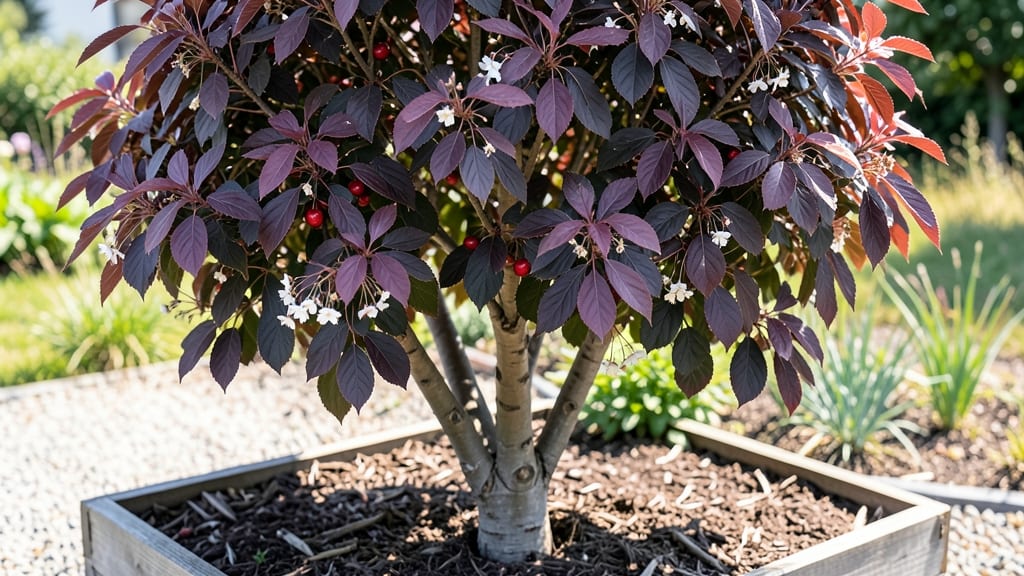
The landscaping purple leaf sand cherry isn’t just another shrub—it’s the star of your garden’s drama. 🌿 This small tree steals the show with its deep purple foliage that deepens in winter, creating a striking contrast against snow or evergreens.
I planted mine as a focal point near the front walk, and it’s become the conversation piece of my landscape, offering four seasons of interest without needing constant attention.
What makes it such a foolproof landscaping choice is its versatility. It thrives in full sun to partial shade, handles most soil types, and grows just 6 to 10 feet tall, making it perfect for small yards or as a border plant.
The delicate white spring blooms add a touch of elegance, while the tiny red cherries (edible but not the focus) bring a pop of color in late summer. It’s the kind of plant that looks intentional no matter where you place it.
You’ll love how it transforms your space with year-round color—purple leaves in summer, fiery orange-red hues in fall, and even deeper tones in winter.
Pair it with silver foliage plants like lamb’s ear or dusty miller to make the purple pop even more, or add a few spring bulbs at its base for early-season color. Maintenance is minimal: just a light pruning after flowering to shape it and remove any dead branches.
Best of all, it’s drought-tolerant once established, so you won’t spend all summer watering. Whether you’re designing a modern minimalist garden or a cottage-style retreat, this tree brings effortless drama. Here’s how to make it work in your space without the guesswork.
📚 In This Guide
- What you need
- Instructions
- Tips and common mistakes
- Wrapping up and next steps
What you need
- ● Purple Leaf Sand Cherry Tree (Prunus x cistena) – 1 mature tree (3-5 years old) or 3-5 young saplings (for spacing flexibility). Choose a dwarf variety (e.g., 'Spire') for smaller spaces.
- ● Well-draining soil mix – 50% native soil + 50% compost or peat moss (amend with sand if your soil is heavy clay). Aim for a pH of 6.0–7.0.
- ● Mulch – 2–3 inches of wood chips or pine straw to retain moisture and suppress weeds.
- ● Slow-release fertilizer – 10-10-10 or balanced organic fertilizer (e.g., 1 lb per tree at planting time).
- ● Staking supplies (if needed) – 2–3 wooden stakes + soft tree ties for young trees in windy areas.
- ● Shovel – For digging planting holes (1.5x wider than the root ball).
- ● Garden trowel – For amending soil and planting small saplings.
- ● Pruning shears – Bypass pruners (for clean cuts) + loppers (for thicker branches).
- ● Wheelbarrow – For hauling soil, mulch, and tools.
- ○ Hose with nozzle – For deep watering (soaker hose optional).
- ● Gloves – Heavy-duty gardening gloves to protect your hands.
- ● Epsom salt – 1 tbsp mixed into planting hole for magnesium boost (enhances purple foliage).
- ● Tree guard or cage – To protect young trees from deer or pets.
- ● Companion plants – Dwarf conifers, heucheras, or ornamental grasses to complement its vibrant hues.
- ● Seasonal fertilizer – Liquid iron supplement (spring/fall) to deepen purple tones.
- ● Weatherproof planters – If growing in containers (ensure 15+ gallon pots for mature trees).
How to plant and care for purple leaf sand cherry trees for stunning year-round color
This hardy small tree delivers bold purple foliage and delicate spring blooms with minimal fuss. Here's how to make it thrive in your landscape.
🪴 Step 1: Select the Perfect Planting Location
Purple leaf sand cherries thrive in full sun to partial shade, but their foliage color intensifies with more sunlight. Choose a spot with at least 4-6 hours of direct sun daily—even morning sun works if afternoon shade is available. The tree's natural shape makes it ideal for small lawns, patios, or as a striking specimen near walkways.
Check soil drainage before planting. These trees hate soggy roots. If your yard has heavy clay, amend with 2-3 inches of compost mixed into the top 12 inches of soil. The tree's shallow root system means it won't compete well with established shrubs, so give it 10-15 feet of clearance from other plants.
🌱 Step 2: Plant at the Right Time and Depth
Spring or early fall planting gives roots time to establish before summer heat or winter cold. Dig a hole twice as wide as the root ball but only as deep. The top of the root ball should sit 1-2 inches above ground level—burying too deep suffocates the tree.
Remove the tree from its container and loosen any circling roots with your fingers. Place it in the hole, backfilling with native soil mixed with a handful of slow-release fertilizer. Water deeply to settle the soil, then create a 2-inch deep watering basin around the base. This prevents water from running off and encourages deep root growth.
☀️ Step 3: Water and Mulch for First-Year Establishment
Water newly planted trees 2-3 times per week for the first month, then taper to once weekly once established. The tree needs 1-1.5 inches of water per week, including rainfall. You'll know it's getting enough when the top 2-3 inches of soil stay consistently moist but not soggy.
Apply 2-3 inches of mulch around the base, keeping it 3 inches away from the trunk to prevent rot. Use shredded bark or wood chips—avoid dyed mulches that can harm roots. Replenish mulch annually to maintain coverage. The tree's vibrant purple leaves will emerge within 4-6 weeks of proper care, signaling healthy growth.
✂️ Step 4: Prune for Shape and Health
Prune in late winter or early spring before new growth begins. Remove any dead, diseased, or crossing branches first. Then shape the tree by cutting back 1/3 of last year's growth to encourage bushier growth. Use clean, sharp pruners to make cuts just above a leaf bud or branch collar.
Never prune more than 25% of the canopy at once—this stresses the tree. The purple leaf sand cherry naturally grows in a rounded shape, so minimal pruning maintains its elegant form. After pruning, apply a balanced fertilizer (10-10-10 ratio) to support new growth.
🌿 Step 5: Maintain Year-Round for Long-Term Vibrancy
Fertilize annually in early spring with a slow-release granular fertilizer spread evenly under the canopy. Water deeply after application. The tree's foliage color deepens in cooler weather, so avoid heavy summer pruning that removes leaves too early in the season.
Watch for pests like scale or spider mites—these trees are generally pest-resistant, but yellowing leaves or sticky residue signals trouble. Spray with horticultural oil if needed. With proper care, your purple leaf sand cherry will reward you with vibrant purple foliage for 10+ years, even in winter.
Tips & tricks for perfect purple leaf sand cherry landscaping
These simple strategies will help you maximize your tree's vibrant color and long-term health with minimal effort.
Sunlight Strategy: While the instructions mention 4-6 hours of sun, I've found that morning sun plus afternoon shade actually preserves the purple foliage longer in hot climates. The intense afternoon rays can sometimes bleach the color, so if you're in a very sunny region, consider planting where it gets morning sun and afternoon shade from nearby structures or taller plants.
Root Zone Protection: The 2-inch deep watering basin mentioned in Step 2 is brilliant, but I've seen even better results when creating a slightly raised mound around the base. This prevents water from pooling and helps prevent root rot, especially in clay-heavy soils. Just mound the soil gently—no more than an inch high—to create a natural drainage channel.
Mulch Upgrade: While 2-3 inches of mulch is perfect, I recommend adding a thin layer of coarse sand or perlite mixed into the top 2 inches of soil before applying mulch. This improves drainage in heavy soils and helps prevent the mulch from compacting over time. The tree's shallow roots will thank you for this extra airflow.
Pruning Timing: Late winter pruning is ideal, but if you miss that window, don't wait until spring growth begins. I've found that pruning in very early spring (just as buds swell) still works well, but avoid pruning after new growth appears—this can stress the tree when it's already putting energy into new foliage. The 1/3 growth rule is perfect for maintaining that gorgeous rounded shape.
Pro Tips for Landscaping Purple Leaf Sand Cherry
- These simple strategies will help you maximize your tree's vibrant color and long-term health with minimal effort.
- Sunlight Strategy: While the instructions mention 4-6 hours of sun, I've found that morning sun plus afternoon shade actually preserves the purple foliage longer in hot climates.
- Root Zone Protection: The 2-inch deep watering basin mentioned in Step 2 is brilliant, but I've seen even better results when creating a slightly raised mound around the base.
Frequently asked questions
Got questions about adding purple leaf sand cherry to your landscape? Here are some of the most common ones—plus quick, practical answers to help you plan with confidence!
How fast does a purple leaf sand cherry grow?
A young Prunus x cistena typically grows 12–24 inches per year under ideal conditions (full sun, well-drained soil, and regular watering). With its multi-stemmed, shrub-like form, it reaches maturity—around 6–10 feet tall and wide—in about 5–7 years. Patience pays off, though, because its vibrant foliage and delicate white flowers are worth the wait!
Is purple leaf sand cherry cold-hardy?
This plant thrives in USDA Zones 3–8, making it a great choice for most U.S. climates. It handles winter well, though young plants may benefit from a light mulch layer (2–3 inches) to protect roots during harsh freezes. Just avoid heavy mulch, which can suffocate the plant or cause rot.
Can I prune purple leaf sand cherry in winter?
Winter is actually the best time to prune (late winter or early spring, before new growth starts). Focus on:
- Removing dead, crossing, or overcrowded branches to improve airflow.
- Thinning out 1/3 of the oldest stems to encourage fresh, vibrant growth.
- Avoiding heavy pruning in fall, as it can stimulate tender new growth that may not survive frost.
What are some good alternatives if I need a lower-maintenance plant?
If you love the purple foliage but want something easier to care for, consider these stunning substitutes:
Plant
Height
Color
Care Level
Weigela florida ('Wine & Roses')
4–6 ft
Deep purple-pink leaves, red flowers
Moderate (drought-tolerant once established)
Cotinus coggygria ('Royal Purple')
6–10 ft
Smoky purple foliage, feathery seed heads
Low (drought-resistant)
Spiraea japonica ('Anthony Waterer')
2–3 ft
Bronze-purple leaves, pink flowers
Very low (great for borders)
Each of these offers year-round interest with less fuss than the sand cherry!
Why are the leaves on my purple leaf sand cherry turning brown or yellow?
Brown or yellow leaves usually signal one of these issues:
- Overwatering: Check soil moisture—soggy roots cause root rot. Let the top 2 inches dry out between waterings.
- Underwatering: Wilting or crispy edges mean it’s thirsty. Water deeply 1–2 times per week (more in extreme heat).
- Pests: Look for aphids or spider mites on undersides of leaves. Spray with neem oil or insecticidal soap.
- Nutrient deficiency: Yellowing between veins? Try a balanced fertilizer (10-10-10) in early spring.
Most issues are fixable—just act fast!
Wrapping up and next steps
Transforming your landscape with purple leaf sand cherry is a rewarding journey—one that delivers year-round drama with minimal fuss! This stunning shrub brings bold color, texture, and low-maintenance charm to any garden, making it a star player in seasonal interest.
Whether you’re a seasoned gardener or just starting, its resilience and adaptability mean you’ll enjoy vibrant foliage for years to come.
Ready to get started? Sketch a simple plan for where you’ll place your purple leaf sand cherry—consider sunlight, spacing, and complementary plants. Then, grab your tools and dive in! Your future self (and your neighbors) will thank you for this easy, eye-catching upgrade.