
Leaf Blower
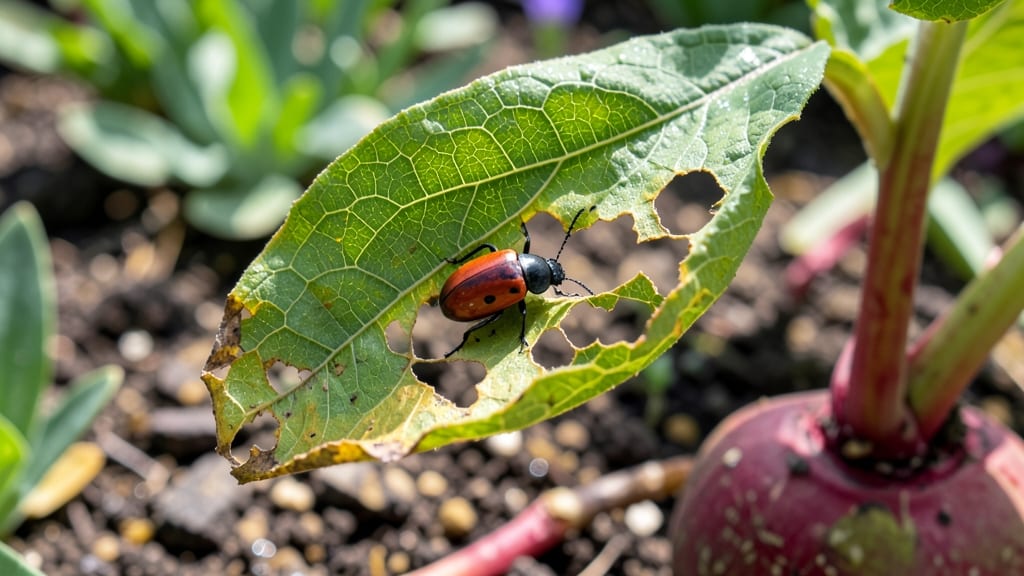
Lily leaf beetle damage turns your prized lilies into skeleton leaves overnight. 🌱 I’ve watched these bright red beetles devour entire plants in just a few hours, and the good news is you can stop them fast with the right moves.
These beetles target lilies, fritillaries, and tulips, leaving behind chewed leaves and shiny black droppings. The key to saving your plants is acting immediately—manual removal, sticky traps, and organic sprays like neem oil can turn the tide in days.
With quick fixes, you’ll see new growth within 10-14 days, and your lilies will rebound stronger than ever. The secret is catching them early before they multiply into an unstoppable swarm.
For long-term protection, focus on companion planting and regular inspections—it’s the only way to keep these pests from crashing your garden again.
Root Causes Of Leaf Destruction
Lily leaf beetles (Lilioceris lilii) don’t just show up in your garden by accident—they’re drawn by a mix of environmental cues, plant chemistry, and human activity.
Understanding why these pests target your lilies (and other host plants) is the first step to stopping them before they devour your foliage. Here’s a breakdown of the key factors that turn your garden into a beetle buffet.
Lily leaf beetles are highly specific feeders—they only dine on plants in the Liliaceae family, which includes:
- True lilies (e.g., Lilium species like tiger lilies, Asiatic hybrids, and daylilies—Hemerocallis)
- Fritillaria (snake’s head fritillary)
- Tulipa (tulips)
- Smilacina (false Solomon’s seal)
- Polygonatum (Solomon’s seal)
These plants produce glycosides (like lily toxins), which are usually toxic to most insects—but lily leaf beetles have evolved to metabolize these compounds, turning them into a nutritional advantage. Their larvae and adults thrive on the high-nitrogen, water-rich leaves, making your prized lilies an all-you-can-eat salad bar. 🍽️
Actionable insight: If you’ve never seen these beetles before but suddenly spot skeletonized leaves, check nearby Liliaceae plants—they’re likely the culprit.
Lily leaf beetles are cold-intolerant and thrive in warmth. Their life cycle accelerates in temperatures above 60°F (15°C), with peak activity between 70–85°F (21–29°C). Here’s how climate plays a role:
| Season | Beetle Activity | Damage Risk |
|---|---|---|
| Spring (50–65°F / 10–18°C) | Adults emerge from overwintering sites (mulch, bark, soil crevices). | Moderate—beetles are sluggish but start feeding. |
| Summer (70–90°F / 21–32°C) | Larvae hatch, pupate, and devour leaves rapidly (2–3 weeks to maturity). | Highest risk—larvae are voracious and can strip plants in days. |
| Fall (50–65°F / 10–18°C) | Adults seek shelter to overwinter; some feed lightly. | Low—but adults may hide in garden debris, returning next year. |
Why it matters: In warmer climates (Zones 7–10), lily leaf beetles can produce 2–3 generations per year, while in cooler regions (Zones 3–6), they may only have 1 generation. This explains why some gardens get hit harder than others.
Pro tip: 🌡️ Monitor your local frost dates—if your last frost is late (e.g., Zone 8+), beetles will emerge earlier and multiply faster.
Lily leaf beetles aren’t just a garden problem—they hitchhike on human activity. Here’s how:
🛒 Buying Infested Plants
Many garden centers unknowingly sell lily leaf beetle-contaminated potted lilies, fritillaries, or tulips. A single plant can carry dozens of eggs or larvae, which then spread to your entire garden.
🌿 Planting Near Wild Hosts
If your yard borders wild lilies, meadows, or unmanaged landscapes, beetles will migrate from these "reservoirs" into your garden. Native Lilium species (like L. canadense) are especially attractive.
🗑️ Poor Garden Cleanup
Beetles overwinter in:
- Leaf litter
- Mulch piles
- Bark mulch
- Under eaves or sheds
- Compost heaps (if they contain lily debris)
Leaving these areas undisturbed means surviving adults will re-infest your plants next spring.
Actionable fix: 🔥 Inspect new plants for tiny black eggs (laid in clusters on leaf undersides) or orange larvae before bringing them home. Quarantine new additions for 2 weeks in a separate area.
In their native Europe, lily leaf beetles face natural predators like birds, parasitic wasps, and ground beetles. But in North America, they’ve fewer enemies, giving them free rein. Here’s why:
- No co-evolution: Local predators don’t recognize lily leaf beetles as prey.
- Chemical defenses: The beetles release a yellow, foul-smelling fluid when threatened, deterring some predators.
- Seasonal timing: Beetles peak in summer when many birds are nesting (and thus less likely to hunt).
Good news: You can encourage predators by:
- 🐦 Installing birdhouses for insect-eating species (e.g., robins, starlings).
- 🌿 Planting native flowers (like dill, fennel, or yarrow) to attract parasitic wasps.
- 🌱 Avoiding broad-spectrum pesticides, which kill beneficial insects too.
Quick Fixes for Beetle-Battered Plants
Now that you know why those pesky lily leaf beetles are turning your garden into a skeleton show, it’s time to roll up your sleeves and reclaim your plants! 🌿💥 The good news? You don’t need a PhD in entomology to tackle this problem—just a few targeted strategies.
Below, we’ve mapped out practical solutions based on the root causes of damage, from immediate fixes to long-term prevention. Let’s get your lilies—and your sanity—back!
If your plants are already looking like Swiss cheese, act fast to minimize further harm and help them recover.
🍳 Prune the Damage
- Why? Severely chewed leaves won’t bounce back, but removing them stops the beetles from spreading and reduces stress on the plant.
- How?
- Use clean, sharp pruners (disinfect with rubbing alcohol to avoid spreading disease).
- Snip off yellow, brown, or skeletonized leaves at the base.
- Don’t worry about aesthetics—focus on healthy green growth below the damage.
- Pro Tip: 💡 If the beetles have munched down to the stems, check for eggs or larvae hiding underneath leaves.
Squish them (gross but effective!) or flush them off with water.
👨🍳 Shield Your Plants
- Why? Physical barriers block beetles from feasting while you deploy other tactics.
- How?
- Row covers: Drape fine mesh netting (like agricultural fabric) over plants before beetles appear (early spring is key!).
Secure edges with soil or stakes. - Collars: For young plants, wrap cardboard collars (cut from a box) around stems.
Beetles can’t climb smooth surfaces! - Aluminum foil trick: Wrap stems in crinkled foil—beetles dislike the texture and will avoid it. - Pro Tip: ✨ If you’re using row covers, remove them on warm days to allow pollinators access (unless you’re dealing with a severe infestation).
Once you’ve protected your plants, it’s time to lure and destroy the beetles before they multiply.
🎯 DIY Beer Traps (Yes, Really!)
- Why? Lily leaf beetles are drawn to fermenting scents—like beer traps for Japanese beetles.
- How?
- Fill a shallow dish (or bury a plastic cup up to the rim) with beer or apple cider vinegar.
- Add a drop of dish soap to break the surface tension so beetles drown.
- Place traps near infested plants in the early morning (beetles are sluggish then).
- Pro Tip: 🔥 Refresh the liquid every 2–3 days—stale beer won’t work!
🔪 Handpick and Drown
- Why? For small infestations, manual removal is the most eco-friendly method.
- How?
- Morning patrols: Beetles are slow after sunrise. Shake them into a bucket of soapy water.
- Check undersides: Flip leaves to spot red eggs (look like tiny orange dots).
Scrape them into water. - Vacuum them up: Use a shop vac with a fine mesh bag to suck them off plants (then dispose of the bag). - Pro Tip: 🌡️ Wear gloves—some gardeners report skin irritation from handling the beetles!
💦 Water Blasts
- Why? Beetles are not fans of high-pressure hoses.
- How?
- On calm, sunny days, spray plants with a strong stream of water to knock beetles off.
- Repeat every few days during peak beetle activity (late spring to early summer).
- Pro Tip: ⏰ Avoid doing this in the evening—wet foliage can attract slugs or fungal diseases.
The best defense is a proactive garden. Here’s how to make your space unappealing to lily leaf beetles.
🌱 Plant Smart: Beetle-Repellent Companions
- Why? Some plants mask the scent of lilies or deter beetles naturally.
- How?
- Interplant with garlic, chives, or onions—their strong odor confuses beetles.
- Add marigolds or nasturtiums—they attract beneficial predators like ladybugs.
- Avoid planting lilies in large monocultures—beetles target dense patches.
- Pro Tip: 💡 Rotate plant locations yearly to disrupt beetle life cycles.
🕷️ Encourage Natural Predators
- Why? Ladybugs, lacewings, and birds love eating lily leaf beetles (and their eggs).
- How?
- Install birdhouses near your garden to attract chickadees and wrens.
- Leave leaf litter in corners of the garden—it shelters ground beetles and spiders.
- Buy ladybug larvae from garden centers and release them in the evening (they’re nocturnal).
- Pro Tip: ✨ Avoid pesticides—they kill beneficial bugs too!
🧴 Organic Sprays (Use Sparingly)
- Why? Chemical sprays can harm pollinators, but targeted organic options work well.
- How?
- Neem oil spray: Mix 1 tbsp neem oil + 1 tsp mild soap + 1 quart water. Spray early morning or late evening to avoid harming bees.
Reapply after rain. - Kaolin clay: A white, sticky powder that coats leaves and deters beetles. Mix 1–2 tbsp clay + 1 gallon water + a drop of soap. - Pyrethrin spray (last resort): Derived from chrysanthemums, it’s fast-acting but toxic to bees.
Use only at dusk and avoid flowering plants. - Pro Tip: 🌡️ Test sprays on a few leaves first—some plants (like ferns) can get leaf burn.
🗓️ Timing Is Everything: Monitor and Strike Early
- Why? Catching beetles before they lay eggs saves you months of damage.
- How?
- Scout weekly from May to July (peak beetle season).
- Look for:
- Adult beetles (red with black spots).
- Orange eggs in clusters under leaves.
- Black larvae (they look like tiny alligators).
- Act immediately—a few beetles can turn into hundreds of larvae in weeks!
If your garden is overrun and DIY methods aren’t cutting it, consider:
- Beneficial nematodes (Heterorhabditis bacteriophora)—microscopic worms that kill larvae in the soil.
- Professional pest control for severe cases (though organic methods are usually enough).
- Replacing heavily infested plants if they’re beyond saving (don’t let them become a beetle breeding ground).
Final Thought: 🎯 With a mix of pruning, trapping, and prevention, you can outsmart lily leaf beetles and keep your garden thriving. The key is consistency—don’t give up after one treatment! Soon, your lilies will be bouncing back with lush, beetle-free foliage. 🌸🚀
Frequently asked questions
What do lily leaf beetle eggs look like?
Lily leaf beetle eggs are tiny, oval, and bright orange-red in color, often clustered in groups of 20-30 on the undersides of leaves. They’re about 1mm long and resemble tiny grains of rice. Look for them in early spring when adult beetles start laying eggs.
How long does it take for lily leaf beetle damage to show?
Damage can appear within 24-48 hours if adults are actively feeding, but full destruction typically takes 7-10 days as larvae hatch and multiply. The key is acting immediately when you spot the first signs—skeletonized leaves or beetles themselves.
Will my lilies recover from heavy beetle damage?
Yes, but it may take 4-6 weeks for new growth to emerge. Prune severely damaged leaves to reduce stress, and focus on protecting remaining foliage. Healthy plants can regrow from the base, but severe defoliation may delay flowering until next season.
Can I use homemade sprays to prevent lily leaf beetles?
Try a neem oil spray (1 tbsp neem + 1 tsp soap + 1 quart water) or garlic spray (blend 1 garlic bulb + 1 quart water, strain, and add 1 tsp soap). Apply in the evening to avoid harming bees, and reapply every 5-7 days during peak season.
Why do I keep seeing lily leaf beetles even after treatment?
Beetles often hide in mulch, leaf litter, or garden debris during the day. They may also come from neighboring gardens or wild lilies. For long-term control, combine treatments with regular inspections and cleanup—remove all plant debris in fall to break their life cycle.