
Pests and Diseases
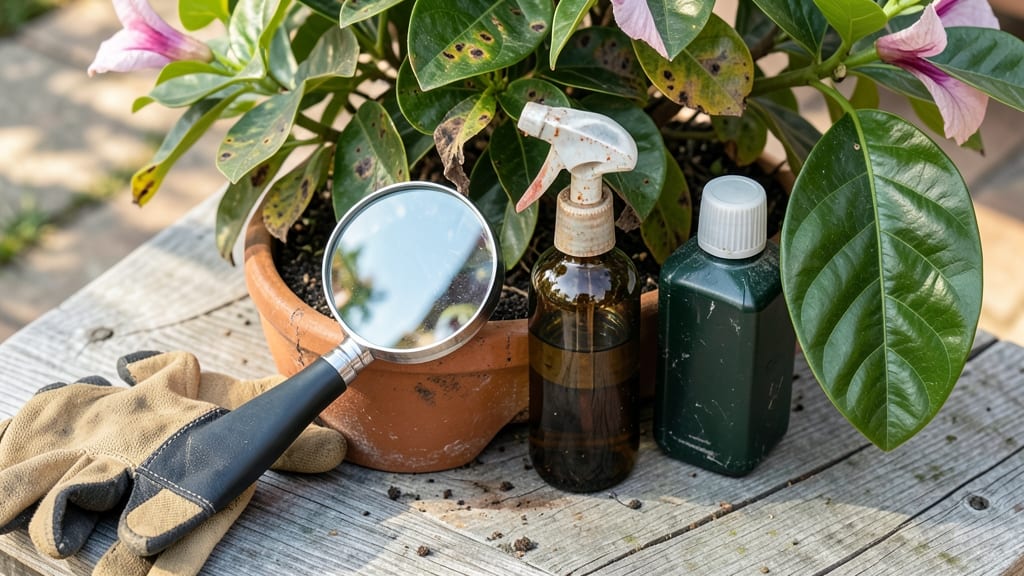
Your mandevilla’s once-glossy leaves now look like they’ve been peppered with dirt. 🌿 Mandevilla leaf spot turns vibrant foliage into a sad, spotted mess—but the good news is you can bring it back with three simple organic steps that work faster than you’d think.
This fungal infection thrives when humidity clings to leaves and air circulation takes a vacation. I’ve saved multiple mandevillas by adjusting care routines: pruning crowded growth, wiping leaves with neem oil, and spacing plants to let airflow do its job.
The key? Act before the spots spread—once they turn black and crunchy, the battle gets harder.
Within 10-14 days, you’ll see new growth pushing through with clean, healthy leaves—no more brown circles or yellowing edges. The secret isn’t fancy sprays; it’s cutting back the damage early and giving your plant the right conditions to bounce back.
Works for both potted mandevillas and in-ground plants, and the same steps prevent future outbreaks. Let’s turn those sad spots into a thing of the past—your mandevilla’s comeback starts now.
Root Causes of Leaf Discoloration
Mandevilla plants are stunning tropical beauties, but their glossy leaves can quickly develop unsightly spots if conditions aren’t just right. Understanding why these spots appear is the first step to preventing—and reversing—them. Below, we break down the key culprits behind leaf spot outbreaks, backed by science and actionable insights.
Most leaf spots on mandevilla are caused by fungal pathogens, particularly Alternaria, Cercospora, or Phyllosticta species. These fungi thrive in warm, humid conditions and exploit weak spots on leaves, leading to:
- Dark, circular spots with feathery edges (common with Alternaria)
- Yellow halos around spots (a sign of Cercospora)
- Premature leaf drop as the infection spreads
💡 Why it happens: Fungal spores lurk in soil, water, or even old plant debris. When leaves stay wet for prolonged periods (e.g., from overhead watering or poor airflow), spores germinate and penetrate leaf tissue through natural openings like stomata or wounds.
Mandevillas are drought-tolerant, but soggy soil creates the perfect breeding ground for fungal leaf spots. Here’s how excess moisture triggers the problem:
- Waterlogged roots weaken the plant’s immune response, making it susceptible to infections.
- Leaf wetness (from overhead irrigation or high humidity) encourages fungal spores to colonize.
- Compacted or clay-heavy soil slows drainage, keeping roots and leaves damp longer.
🌡️ Key red flags: Yellowing leaves, mushy stems, or a musty soil smell are all signs your mandevilla is drowning in moisture.
A stressed mandevilla is like an open invitation for leaf spots. Common stressors include:
| Cause | How It Leads to Spots |
|---|---|
| 🌞 Insufficient sunlight | Leggy growth and thin leaves lack the energy to fend off pathogens. |
| ⚗️ Nutrient deficiencies (e.g., low nitrogen or magnesium) | Weak cell walls make leaves more vulnerable to fungal penetration. |
| 🐛 Pest damage (e.g., spider mites or aphids) | Insect saliva and wounds create entry points for fungi. |
💡 Pro tip: A quick soil test or leaf analysis can reveal deficiencies before spots appear!
Mandevillas are tropical but need balance—too much of a good thing (like humidity or heat) can backfire:
- High humidity (>70%) without airflow traps moisture on leaves, promoting fungal growth.
- Temperature swings (below 50°F or above 95°F) weaken the plant’s defenses.
- Poor air circulation (e.g., crowded pots or dense foliage) creates stagnant, disease-friendly microclimates.
✨ Actionable fix: Space plants 12–18 inches apart and use a fan on low to improve airflow.
Now that you know the why, the next step is identifying the specific type of leaf spot and tackling it organically. Stay tuned!
Revive Your Mandevilla’s Leaves
Mandevilla leaf spot doesn’t have to be a death sentence for your plant—with the right approach, you can nurse it back to health and prevent future outbreaks. Below are targeted solutions based on the most common causes, from quick fixes to long-term prevention. Let’s get your plant thriving again!
If your mandevilla’s leaves are covered in dark, spreading spots (often with yellow halos), fungal leaf spot is likely the culprit. Here’s how to tackle it:
Step 1: Remove the Problem 🔪
- Snip infected leaves with sterilized pruners (wipe with rubbing alcohol between cuts).
- Dispose of infected foliage in the trash (not compost)—fungal spores can linger and reinfect.
- Focus on airflow: Thin out crowded branches to improve circulation.
Step 2: Apply Fungicide 🍄
- Neem oil spray (1 tsp neem oil + 1 tsp mild soap + 1 quart water) – Spray early morning or evening to avoid leaf burn.
- Baking soda solution (1 tbsp baking soda + 1 quart water + a few drops of dish soap) – Spray every 7–10 days until new growth appears.
- Copper fungicide (organic option) – Follow label instructions for best results.
Step 3: Prevent Recurrence 🌡️
- Water at the base (avoid overhead watering to keep leaves dry).
- Space plants 3–4 feet apart to reduce humidity buildup.
- Clean up debris (fallen leaves, mulch) around the plant weekly.
💡 Pro Tip: If spots keep returning, your plant may be stressed—check for overwatering or poor drainage.
If leaf spots appear chewed, skeletonized, or accompanied by tiny bugs, pests like aphids, spider mites, or whiteflies are likely to blame.
Step 1: Quarantine the Plant 🏠
- Move the mandevilla away from other plants to prevent spreading.
- Inspect undersides of leaves and stems for pests.
Step 2: Blast Them Away 💦
- Spray with soapy water (1 tsp mild dish soap + 1 quart water) – Directly hit pests for 2–3 days in a row.
- Introduce beneficial insects (ladybugs, lacewings) for natural control.
- Use horticultural oil (follow label rates) for stubborn infestations.
Step 3: Strengthen Defenses 🛡️
- Fertilize lightly with a balanced organic fertilizer (10-10-10) to boost plant health.
- Mist leaves occasionally (if humidity is low) to deter spider mites.
- Wipe leaves with a damp cloth weekly to remove egg sacs.
🔥 Warning: Avoid chemical pesticides—they can weaken your plant further and harm beneficial insects.
If leaf spots appear after sudden weather changes (heatwaves, cold snaps) or overwatering, your mandevilla is under environmental stress.
Step 1: Check Soil & Water 💧
- Test soil moisture – Stick your finger 2 inches deep; if damp, hold off on watering.
- Ensure well-draining soil – Mix in perlite or sand if soil feels compacted.
- Water deeply but infrequently – Mandevillas prefer dry spells between waterings.
Step 2: Optimize Light & Heat 🌿
- Move to partial shade if leaves are bleached or crispy (too much sun).
- Avoid drafts (AC vents, cold windows) – Mandevillas thrive in 60–85°F.
- Use shade cloth (30–50%) if growing in hot climates.
Step 3: Boost Recovery 🌱
- Trim damaged leaves to redirect energy to new growth.
- Apply a seaweed fertilizer (rich in growth hormones) to revitalize stressed plants.
- Mulch around the base (2–3 inches) to retain moisture and regulate temperature.
✨ Bonus: Mist leaves daily in dry climates to prevent leaf scorch.
To keep your mandevilla leaf-spot-free, follow this monthly maintenance routine: ✅ Inspect leaves weekly for early signs of spots or pests. ✅ Rotate plants every few weeks for even sunlight exposure. ✅ Sanitize pruners before and after trimming. ✅ Avoid wetting foliage when watering (use drip irrigation if possible). ✅ Fertilize every 4–6 weeks with a low-nitrogen, high-potassium blend.
With these organic, actionable steps, your mandevilla should bounce back stronger—and stay spot-free for seasons to come! 🌟
Frequently asked questions
What do mandevilla leaf spots look like?
Leaf spots on mandevilla typically appear as dark brown or black circular marks with feathery edges. You might also see yellow halos around the spots, which indicate fungal activity. In severe cases, the spots may turn crunchy and papery as the infection spreads. Check both leaf surfaces—spots often start small on the undersides before becoming visible on top.
Can I save my mandevilla if the spots are already black and crunchy?
Yes, but you’ll need to act fast! Remove all infected leaves immediately with sterilized pruners, then apply a copper fungicide or neem oil spray to stop further spread. The key is improving airflow by pruning crowded branches and watering at the base (never overhead). With these steps, new growth should emerge clean within 2-3 weeks.
Why does my mandevilla get leaf spots even when I water it properly?
Leaf spots often appear due to factors beyond just watering—like poor air circulation or high humidity (above 70%). Crowded plants or dense foliage trap moisture, creating ideal conditions for fungal spores. Also, check for nutrient deficiencies (like low magnesium) or pest damage, which weaken the plant’s defenses. A fan on low or spacing plants 12-18 inches apart can make a huge difference.
Is baking soda really effective for treating leaf spots?
A baking soda solution (1 tbsp baking soda + 1 quart water + a few drops of dish soap) is a proven organic fungicide. The alkaline nature disrupts fungal growth while the soap helps it stick to leaves. Spray every 7-10 days until new growth appears. For best results, apply in the early morning so leaves dry quickly—this prevents fungal spores from thriving.
How can I prevent leaf spots from coming back next season?
Start with preventive care: Space plants for better airflow, water at the base, and avoid overhead irrigation. Use mulch around the base to regulate soil moisture, and fertilize lightly with a balanced organic blend every 4-6 weeks. Before new growth appears, wipe leaves with a damp cloth to remove spores, and sanitize pruners with rubbing alcohol after trimming.