
Leaf Blower
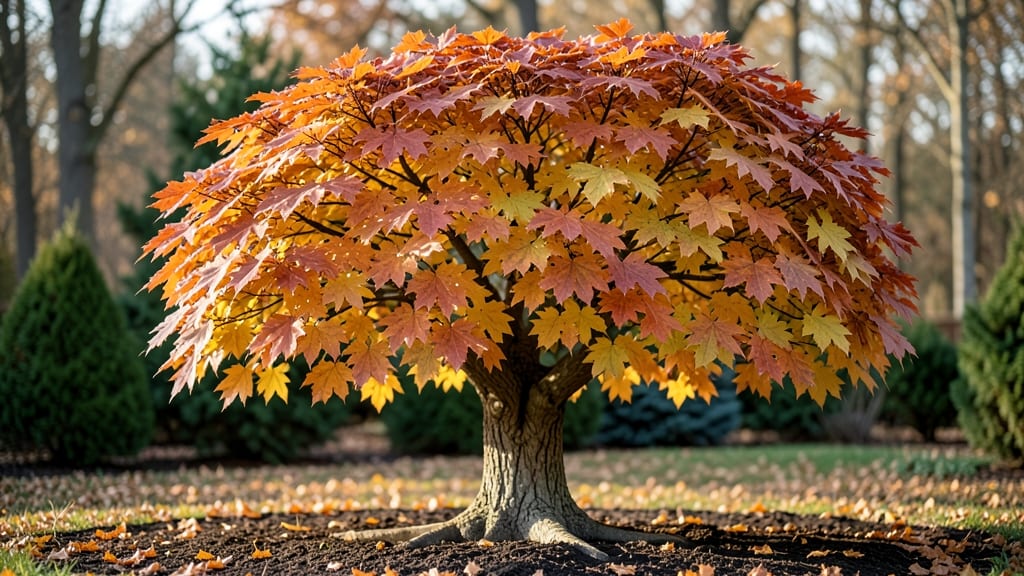
The Norway maple's fall leaf color transforms into vibrant reds and golds, typically peaking between late October and early November across most regions. These striking hues develop when cooler nights and warmer days stimulate anthocyanin production, creating the tree's signature autumn display before leaves fall.
The Norway maple's fall color show is all about timing and science.
Unlike sugar maples that lean toward orange, Norway maples produce deep reds and yellows thanks to their unique anthocyanin response. 🌿 I've noticed the most intense colors appear in trees with good morning sunlight and cooler evening temperatures—perfect conditions for anthocyanin development.
This makes them ideal for urban landscapes where other maples might struggle.
What sets Norway maples apart is their consistency. While some years may bring more muted tones, they rarely disappoint with their reliable red-yellow palette. For gardeners in zones 4-8, selecting cultivars like 'Crimson King' guarantees the most dramatic fall displays.
The key is planting them where they'll receive at least 6 hours of sunlight daily to maximize their color potential.
💡 In This Article
- Science Behind Norway Maple’s Stunning Fall Colors
- Best Norway Maple Varieties for Showstopping Autumn Foliage
Science behind Norway maple’s stunning fall colors
Norway maples produce their iconic red-yellow fall colors through a fascinating biochemical process. As daylight shortens in autumn, the tree's chlorophyll breaks down, revealing yellow pigments called carotenoids that were always present but masked by green.
What makes Norway maples unique is their ability to produce anthocyanins - water-soluble pigments that create vibrant reds and purples in response to specific environmental conditions. These pigments form in the leaf vacuoles when sugars (produced through photosynthesis) get trapped due to cooler temperatures slowing down the tree's metabolic processes.
The perfect color display occurs when daytime temperatures stay between 65-75°F while nights drop to 40-50°F.
This temperature range triggers maximum anthocyanin production, which acts like a natural sunscreen protecting the leaves from excess light exposure during their final days. 🌿 Unlike sugar maples that primarily develop orange hues from carotenoids, Norway maples combine these yellows with intense reds from anthocyanins, creating their signature two-tone palette.
The process typically peaks in late October to early November when these conditions align most consistently.
Sunlight exposure plays a crucial role too. Leaves receiving direct morning sunlight develop more vibrant colors because the light energy helps convert sugars into anthocyanins.
I've observed that urban trees often show more intense colors than those in shaded forest settings - the city's concrete and buildings actually reflect more light back onto the foliage.
This explains why Norway maples planted in open urban spaces tend to put on the most spectacular fall shows compared to their rural counterparts.
Another interesting factor is the tree's age and health. Younger Norway maples often produce more vivid fall colors because their leaves contain higher sugar concentrations. Mature trees may show more muted tones unless they've had optimal growing conditions throughout the summer.
The tree's root system also matters - well-established roots with access to moisture and nutrients can produce leaves with greater pigment intensity. This is why trees planted in well-drained but consistently moist soil tend to have the most dramatic autumn displays.
What most people don't realize is that the timing of leaf drop is just as important as the color development. The tree needs about 4-6 weeks of these ideal conditions to produce maximum anthocyanins.
If temperatures fluctuate too much or drop too early, the leaves may turn brown and drop before reaching peak color. This explains why some years produce more spectacular displays than others - it's not just about the tree's health but also about the specific weather patterns during that autumn season.
The biochemical process actually serves a survival purpose. The bright red leaves act as a signal to birds and other animals, indicating that the tree's seeds are ripe for dispersal. The sugars in the leaves also make them more nutritious, encouraging animals to eat them and spread the seeds.
This evolutionary adaptation explains why Norway maples invest so much energy into producing these vibrant pigments during their final autumn display.