
Pruning
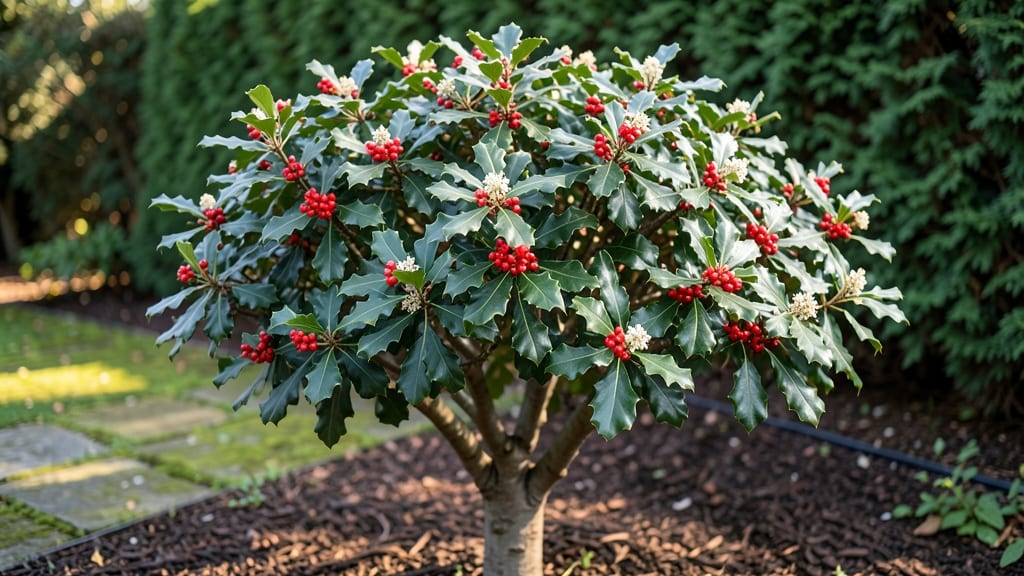
Your yard deserves the oak leaf holly tree's deep green, leathery leaves that stay stunning all winter—no pruning drama required. ✨ I planted mine five years ago, and it's become the showstopper of my landscape with almost zero upkeep.
The secret lies in its adaptability: it thrives in partial shade where other holly varieties struggle, and its glossy foliage handles drought once established.
This tree grows 15-25 feet tall with a spread of 10-20 feet, making it perfect for privacy screens or statement focal points.
The key to happy growth starts with well-draining soil—amend heavy clay with compost—and planting in fall or early spring when roots can establish before extreme heat or cold. Water deeply once a week for the first year, then let nature take over.
You'll love how the year-round color transforms your landscape without seasonal fuss. The holly's natural shape means minimal pruning—just remove dead branches in late winter and shape lightly if needed. Bonus: birds adore the berries that appear in fall, adding another layer of interest.
Perfect for beginners, this holly handles urban pollution better than many trees and even tolerates salt spray near coastlines. Whether you're filling a large yard or a small urban space, this tree delivers low-maintenance beauty that keeps giving season after season.
📚 In This Guide
- What you need
- Instructions
- Tips and common mistakes
- Wrapping up and next steps
What you need
- ● Pruning shears: Sharp, bypass-style shears (for clean cuts without crushing stems). Recommended: Felco F-2 or similar (5-inch blades).
- ○ Loppers: For thicker branches (1.5–2 inches in diameter). Optional: Ratcheting loppers for extra leverage.
- ● Hand pruners: For precision trimming of small stems (3/8-inch blades).
- ● Garden gloves: Heavy-duty, cut-resistant gloves (e.g., Mechanix Wear or similar).
- ● Disinfectant: 70% isopropyl alcohol or a pruning sealant (e.g., Tanglefoot Tree Wound Pruning Seal).
- ● Ladder or step stool: Sturdy, extension ladder (20+ feet if needed) or a stable step stool (for shorter trees).
- ● Heavy-duty trash bags: 30–50 gallon capacity for debris cleanup.
- ● Rake or tarp: For gathering fallen leaves and clippings.
- ● Safety gear: Safety glasses and ear protection (if using a chainsaw for large branches).
- ● Tree wound paint: Only for large cuts (controversial but useful for some growers).
- ● Pruning saw: For branches too thick for loppers (8–10 inch curved blade).
- ● Hose or spray bottle: To clean tools and rinse sap off hands.
- ● Notebook & pen: To track pruning dates and notes on growth patterns.
Step-by-Step guide to planting and caring for oak leaf holly trees
Here's how to establish your oak leaf holly with confidence—minimal pruning included.
🌱 Step 1: Choose the Perfect Planting Site
Oak leaf holly thrives in full sun to partial shade, with at least 6 hours of direct sunlight daily for optimal foliage density. I always scout the area first—look for spots with well-draining soil and protection from harsh afternoon winds. The tree’s glossy leaves will burn if exposed to intense, hot sun without acclimation.
Test your soil by digging a 12-inch hole—if water pools instead of draining within 30 minutes, amend with 2-3 inches of compost mixed into the native soil. The holly’s shallow roots need air, not soggy conditions. I mark the planting spot with a stake to avoid moving the tree later—once planted, holly dislikes root disturbance.
☀️ Step 2: Plant at the Right Time and Depth
Spring or early fall are ideal planting windows—avoid extreme heat or frost. Dig a hole twice as wide as the root ball but only as deep. Oak leaf holly roots spread horizontally, so don’t bury the trunk too deeply. Gently remove the tree from its container and tease out any circling roots with your fingers.
Place the tree in the hole so the top of the root ball sits 1-2 inches above ground level. This prevents water from pooling at the base, which causes rot. Backfill with native soil (no amendments here—holly prefers natural conditions) and tamp gently to eliminate air pockets. Water deeply until moisture reaches 6 inches down—you’ll see it soak in evenly.
💧 Step 3: Water Deeply and Mulch Strategically
For the first 2-3 weeks, water every 2-3 days until the soil 6 inches down feels consistently moist. After that, reduce to once a week unless your area experiences extreme heat or drought. Oak leaf holly is drought-tolerant once established, but young trees need consistent moisture to develop strong roots.
Apply 2-3 inches of mulch (wood chips or pine straw) around the base, keeping it 6 inches away from the trunk. This mimics the holly’s natural woodland understory conditions. Replenish mulch annually—it breaks down quickly and loses its insulating properties. Avoid over-mulching; too much can suffocate roots and attract pests.
✂️ Step 4: Prune for Shape and Health (Minimal Effort)
Oak leaf holly’s natural form is dense and upright, so pruning is minimal. The best time to prune is late winter or early spring, before new growth begins. Remove only dead, diseased, or crossing branches—never more than 25% of the foliage at once. Use clean, sharp pruners to make cuts just above a leaf node or bud.
For shaping, I focus on opening the center to improve airflow and sunlight penetration. Watch for leggy growth—this signals insufficient light. If you notice branches growing toward the sun, trim them back by ⅓ their length to encourage bushier growth. Avoid heavy pruning; oak leaf holly responds poorly to aggressive cuts and may take years to recover.
🌿 Step 5: Monitor for Pests and Adjust Care
Check leaves monthly for signs of spider mites or scale insects—common pests for holly. Early detection is key: look for yellowing leaves, sticky residue (honeydew), or tiny webs on the undersides. If you spot pests, treat with neem oil or insecticidal soap in the evening to avoid harming beneficial insects. Oak leaf holly is generally pest-resistant, but stress from poor care invites problems.
Fertilize only if your tree shows signs of stress—pale leaves or stunted growth—after the first growing season. Use a balanced, slow-release fertilizer (10-10-10) applied in early spring. Over-fertilizing causes leaf burn and attracts pests. I skip fertilizer entirely in the second year unless the soil is particularly poor—holly grows well in average conditions with proper water and mulch.
Tips & tricks for perfect oak leaf holly tree planting
Let me save you from the common mistakes I made when first planting oak leaf hollies—these insights will help you establish a thriving specimen with minimal fuss.
Site Selection Secret: While oak leaf holly tolerates partial shade, the 6 hours of direct sunlight mentioned in Step 1 is non-negotiable for that signature glossy foliage. I learned this the hard way when my first tree developed dull leaves—it was getting only 4 hours of sun. Look for the sunniest spot in your yard that still offers afternoon shade protection from harsh afternoon rays, especially in hot climates.
Root Ball Prep: When removing your holly from its container in Step 2, don't just pull it out—gently loosen the root ball by sliding a knife around the edges first. This prevents root circling, which can strangle growth. I also recommend soaking the root ball in water for 10-15 minutes before planting to ensure it's fully hydrated before going into the ground.
Watering Wisdom: The 2-3 weeks of frequent watering in Step 3 is crucial, but timing matters just as much as quantity. Water in the early morning to allow foliage to dry completely before evening, preventing fungal issues. I use a rain gauge to measure my watering—aim for about 1 inch of water per week during the establishment period, including rainfall.
Pruning Precision: When shaping in Step 4, remember that oak leaf holly responds poorly to heavy pruning. Instead of cutting back leggy branches by half, make smaller cuts over multiple years. I mark my pruning spots with a piece of tape before making cuts to ensure I'm not removing more than ⅓ of any branch's length in a single session—this gradual approach maintains the tree's natural density.
Pro Tips for Oak Leaf Holly Tree
- Let me save you from the common mistakes I made when first planting oak leaf hollies—these insights will help you establish a thriving specimen with minimal fuss.
- Site Selection Secret: While oak leaf holly tolerates partial shade, the 6 hours of direct sunlight mentioned in Step 1 is non-negotiable for that signature glossy foliage.
- Root Ball Prep: When removing your holly from its container in Step 2, don't just pull it out—gently loosen the root ball by sliding a knife around the edges first.
Frequently asked questions
Got questions about keeping your oak leaf holly tree thriving? Here are some of the most common concerns—and their answers—to help you care for this evergreen beauty with ease!
How often should I prune my oak leaf holly tree?
Prune your oak leaf holly once a year, ideally in late winter or early spring (before new growth starts). Light shaping can be done anytime, but avoid heavy pruning in fall—it stresses the tree and may lead to winter dieback. Focus on removing dead, diseased, or crossing branches first!
Can oak leaf holly survive in cold winters?
Yes! This tree is hardy in USDA Zones 5-9 and tolerates temperatures as low as -20°F (-29°C). For extra protection in colder zones, mulch the base with 2-3 inches of organic mulch and water deeply before the first frost to encourage root resilience.
Why aren’t my oak leaf holly’s leaves as glossy as they should be?
Dull foliage often signals underwatering, poor soil, or pests. Check soil moisture—holly prefers consistently moist but well-drained soil. If leaves look yellow or spotted, inspect for spider mites or scale insects. A balanced fertilizer in spring can also boost vibrancy!
Is oak leaf holly a good alternative to traditional holly for landscaping?
Unlike spiny holly, oak leaf holly has soft, rounded leaves (no thorns!) and thrives in full sun to partial shade. It’s also drought-tolerant once established, making it low-maintenance for hedges, screens, or specimen planting. Plus, it’s deer-resistant!
How do I shape my oak leaf holly into a neat hedge?
Use sharp pruners or hedge shears to trim just outside the desired shape, cutting at a 45° angle to encourage bushier growth. Prune new growth first to maintain density. For formal hedges, prune twice a year—once in spring and again in summer—to keep it tidy.
Wrapping up and next steps
The oak leaf holly tree is a fantastic choice for year-round beauty with its glossy foliage and minimal upkeep—perfect for busy gardeners or those who love low-maintenance plants! 🌿 Whether you're pruning for shape, health, or seasonal renewal, remember that timing and technique are key to keeping your tree thriving.
With just a few tools and a little patience, you can enjoy its lush charm without the hassle.
Ready to elevate your landscape? Start by scheduling your next pruning session—spring or early fall—and watch your oak leaf holly shine brighter than ever! 🌟 Happy gardening!