
Diseases
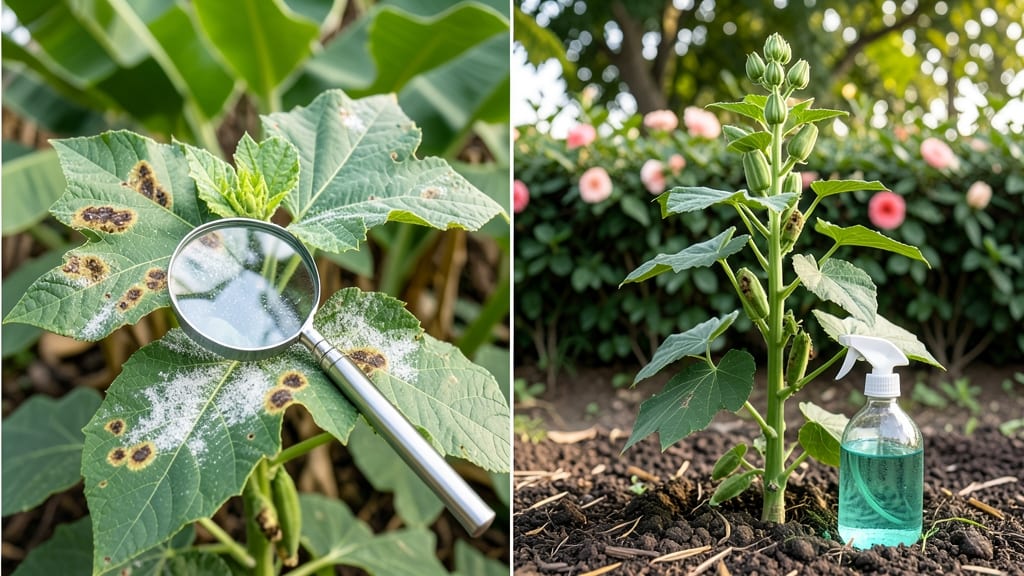
Okra leaf diseases turn vibrant green into a patchwork of spots and curls—something I’ve seen ruin entire harvests before. 🌿 The key to saving your plants isn’t guessing; it’s recognizing the patterns: powdery white films, water-soaked blotches, or twisted leaves that scream "fungus" or "bacteria."
This guide cuts through the confusion with clear visual cues and fixes that actually work.
Most problems start with moisture—too much rain, overhead watering, or crowded plants trapping humidity. I’ve learned the hard way that prevention (like spacing plants and avoiding wet foliage) beats scrambling for treatments.
But when spots appear, organic sprays with neem oil or copper can stop the spread fast—no harsh chemicals needed for home gardens.
You’ll spot the difference within days: leaves stop curling, new growth stays crisp, and those stubborn spots fade. The goal isn’t perfection—it’s keeping your okra productive enough to enjoy those tender pods. Think of it as a quick reset for your plants.
Works for both backyard gardens and container grows, no matter your experience level. Let’s get those leaves healthy again—before the disease spreads further.
Root Causes of Leaf Troubles
Okra leaves don’t just turn spotty or curl out of the blue—they’re sending you a distress signal. Understanding the why behind these symptoms is the first step to saving your crop.
Below, we break down the most common triggers, from invisible invaders to environmental stressors, with the science behind each one.
---
Fungal, bacterial, and viral pathogens are the #1 culprits behind okra leaf diseases. These microscopic troublemakers thrive in warm, humid conditions—making okra’s native tropical environment a perfect breeding ground.
- **Fungi (e.g., Colletotrichum, Alternaria, Phytophthora) - How it spreads: Spores land on leaves via wind, water, or contaminated tools.
Once settled, they germinate in damp conditions, piercing the leaf surface with tiny hyphae (fungal threads). - Why it sticks: Fungi love high humidity (80%+) and poor air circulation.
Overhead irrigation or dense plantings create the perfect petri dish. - Actionable clue: Look for dark, greasy spots (early signs) or powdery/moldy growth (later stages).
- Bacteria (e.g., Xanthomonas, Pseudomonas) - How it spreads: Bacteria hitch rides on water splashes, insects, or infected plant debris. They enter through wounds (e.g., pruning cuts, hail damage) or natural openings like stomata. - Why it spreads fast: Unlike fungi, bacteria multiply rapidly in warm, wet weather.
A single infected leaf can contaminate an entire row in days. - Actionable clue: Watch for water-soaked lesions that ooze a yellowish bacterial slime when pressed.
- Viruses (e.g., Okra Mosaic Virus, Cucumber Mosaic Virus) - How it spreads: Viruses need vectors—usually aphids or whiteflies—to jump from plant to plant.
They don’t spread via water or soil. - Why they’re tricky: Once inside a plant, viruses hijack its DNA, altering growth patterns.
Infected plants may show mosaic patterns (light/dark green patches) or stunted growth before leaf symptoms appear. - Actionable clue: Check for distorted, curled leaves or unusual vein patterns—classic virus red flags.
--- Okra is tough, but push it too far, and its leaves will revolt. Extreme weather, poor soil health, or even your watering habits can trigger disease-like symptoms—without a single pathogen in sight.
- Excess Moisture (Overwatering or Poor Drainage) - Why it happens: Okra hates soggy roots. Waterlogged soil cuts off oxygen, weakening roots and making leaves susceptible to rot** (Phytophthora thrives here). - Actionable clue: Yellowing leaves starting from the bottom?
That’s classic root stress. Check for mushy stems or blackened roots when pulled gently.
- Temperature Swings (Too Hot or Too Cold) - Why it happens: Okra thrives in 75–90°F (24–32°C). Drops below 50°F (10°C) or spikes above 100°F (38°C) shock the plant, weakening its defenses. - Actionable clue: Sudden leaf curl or bronzing (brownish discoloration) often signals heat stress.
Cold snaps may cause blackened leaf edges (like frostbite).
- Nutrient Imbalances (Too Much or Too Little)
- Why it happens: Okra needs balanced NPK (Nitrogen, Phosphorus, Potassium). Too much nitrogen = soft, sappy growth (fungi’s dream). Too little magnesium or iron = yellowing between veins (chlorosis).
- Actionable clue:
Symptom
Likely Cause
Fix It With
Yellow leaves (whole leaf)
Nitrogen deficiency
Compost or blood meal
Yellow between veins
Magnesium/iron deficiency
Epsom salt (magnesium) or chelated iron
Purple stems/leaves
Phosphorus deficiency
Bone meal or rock phosphate
--- Some pests don’t kill leaves directly—but their feeding weakens plants, making them vulnerable to diseases. Here’s how they set the stage:
- Sap-Sucking Insects (Aphids, Whiteflies, Spider Mites) - Why they matter: These pests inject toxins while feeding, causing stunted growth and leaf curl.
More critically, they spread viruses (like Okra Mosaic Virus) from plant to plant. - Actionable clue: Look for sticky residue (honeydew) on leaves or fine webbing (spider mites). Shake plants over a white sheet—bugs will reveal themselves.
- Caterpillars & Leaf Miners - Why they matter: Chewing pests create open wounds, giving fungi/bacteria a foothold. Leaf miners (larvae inside leaves) destroy tissue, making leaves look blotchy or translucent. - Actionable clue: Holes in leaves or serpentine tunnels (leaf miners) are dead giveaways.
--- Sometimes, your gardening habits accidentally invite diseases. Here’s how:
- Overcrowding Plants - Why it happens: Dense okra reduces airflow, trapping moisture on leaves. Fungi like Alternaria love this environment. - Fix: Space plants 18–24 inches apart and prune for open canopies.
- Ignoring Sanitation - Why it happens: Leaving infected debris (fallen leaves, old pods) in the soil or compost pile preserves pathogens for next season. - Fix: Remove and destroy diseased plant parts (don’t compost them!). Rotate crops yearly.
- Using Contaminated Tools - Why it happens: Pruners or hoes carrying fungal spores from one plant can infect healthy ones. - Fix: Disinfect tools with 70% rubbing alcohol or a 10% bleach solution between uses.
--- Stop diseases before they start by breaking the chain of infection: 1. Remove infected leaves/debris immediately (🗑️). 2. Improve airflow (prune, space plants, avoid overhead watering 💦). 3. Boost plant health (balanced fertilizer, proper watering 🌱).
Remember: Okra leaf diseases rarely attack one healthy plant. They exploit weakness. Fix the root cause (literally and figuratively), and your okra will bounce back faster.
Fixing Common Okra Leaf Troubles
Okra leaf diseases can be a real headache, but with the right approach, you can nurse your plants back to health—or even prevent future outbreaks. Below, we’ve mapped out practical solutions for the most common issues, from fungal infections to viral attacks.
Follow these steps to restore your okra’s vibrancy and keep your garden thriving.
---
#### 🔥 Remove Infected Leaves Immediately Fungal spores spread like wildfire—literally. As soon as you spot yellowing, brown spots, or wilting, snip off the affected leaves with sterilized scissors (wipe with rubbing alcohol between cuts). Dispose of them in the trash (not compost) to prevent reinfection.
#### 🍳 Apply Fungicidal Sprays (Organic or Chemical) - For early-stage infections (powdery mildew, downy mildew): - Mix 1 tbsp baking soda + 1 tsp dish soap + 1 gallon water.
Spray leaves early in the morning (avoid direct sunlight to prevent leaf burn). - Repeat every 7–10 days until symptoms disappear. - For severe cases (target spot, anthracnose): - Use a copper-based fungicide (like Bordeaux mixture) or a neem oil solution (2 tbsp neem oil + 1 tsp mild soap per gallon of water). - Pro tip: 🌡️ Water in the morning to let foliage dry quickly—fungi love dampness!
#### 👨🍳 Improve Air Circulation & Spacing Fungal diseases thrive in crowded, humid conditions. Space okra plants 18–24 inches apart and prune nearby weeds. If growing in containers, ensure proper drainage—soggy roots = fungus paradise.
#### ⏰ Rotate Crops & Sterilize Tools - Avoid planting okra in the same spot for at least 2–3 years to break fungal cycles. - Sterilize garden tools (pruners, hoes) with bleach or alcohol before use.
---
#### 🔪 Remove & Destroy Infected Plants Completely Viruses (like okra mosaic virus) and bacteria (e.g., bacterial leaf blight) have no cure. If you spot: - Yellowing with green veins (mosaic pattern) - Crinkled, distorted leaves (curl) - Water-soaked spots turning brown (bacterial blight)
Pull the entire plant (roots and all) and burn or bag it to stop spread. Do not compost!
#### 🛡️ Prevent Future Outbreaks - Control aphids & whiteflies (common virus vectors) with soapy water sprays or neem oil. - Use resistant varieties like ‘Emerald’ or ‘Clemson Spineless’ if your area is prone to viral diseases. - Rotate crops with non-host plants (e.g., legumes, grasses) to disrupt bacterial buildup.
---
#### 💡 Adjust Watering Practices - Overwatering? Let the top 1–2 inches of soil dry before watering again. - Underwatering? Okra wilts fast—deep water 1–2 times per week (more in extreme heat). - Pro tip: 🎯 Drip irrigation keeps leaves dry, reducing fungal risk.
#### 🥗 Boost Soil Health - Test soil pH (ideal: 6.0–6.8). Amend with lime (to raise pH) or sulfur (to lower it) if needed. - Fertilize with compost or balanced 10-10-10 when plants are 6–8 inches tall (avoid excess nitrogen—it weakens plants).
#### 🌿 Provide Shade in Extreme Heat If leaves yellow or scorch, okra may be heat-stressed. Use shade cloth (30–50%) during peak afternoon sun in 90°F+ temps.
--- | Task | How Often | Why It Works | |-------------------------|---------------------|-------------------------------------------| | Inspect leaves weekly | Every 5–7 days | Catches diseases before they spread. | | Prune lower leaves | Every 2 weeks | Improves airflow & sunlight penetration. | | Mulch with straw | Once at planting | Keeps soil moist but reduces humidity. | | Crop rotation | Every 2–3 years | Stops soil-borne pathogens from building up. |
--- Final Thought: 🌱 An ounce of prevention is worth a pound of cure—but if your okra is already struggling, act fast and decisively. With these fixes, your plants should bounce back in 2–4 weeks (or you’ll be planting a fresh batch with zero drama!).
Frequently asked questions
What’s the difference between fungal and bacterial okra leaf spots?
Fungal spots usually appear as powdery white or dark, greasy-looking patches that spread slowly. Bacterial spots show up as water-soaked lesions that ooze yellowish slime when pressed. Fungi thrive in humidity, while bacteria spread faster in warm, wet conditions.
Can I still harvest okra pods if the leaves have diseases?
Yes, but only if the pods are healthy and disease-free. Remove all infected leaves immediately to prevent spread. If the disease is viral (like mosaic patterns), avoid harvesting from infected plants entirely—they can contaminate your pods.
How often should I spray neem oil to prevent fungal diseases?
Apply neem oil every 7–10 days during humid seasons or when you first notice symptoms. Mix 2 tbsp neem oil + 1 tsp mild soap per gallon of water and spray in the early morning. Avoid spraying when flowers are open to protect pollinators.
Will my okra recover if I treat fungal diseases late in the season?
Probably not completely, but you can still salvage the crop. Focus on removing infected leaves, improving airflow, and applying fungicides like copper spray. For next season, prioritize crop rotation and resistant varieties to prevent recurrence.
Can I use homemade remedies like milk spray for okra leaf diseases?
Yes! A milk spray (1 part milk to 9 parts water + a drop of dish soap) works well for powdery mildew. Spray leaves thoroughly every 5–7 days until symptoms disappear. The lactic acid in milk helps suppress fungal growth naturally.