
Blooming
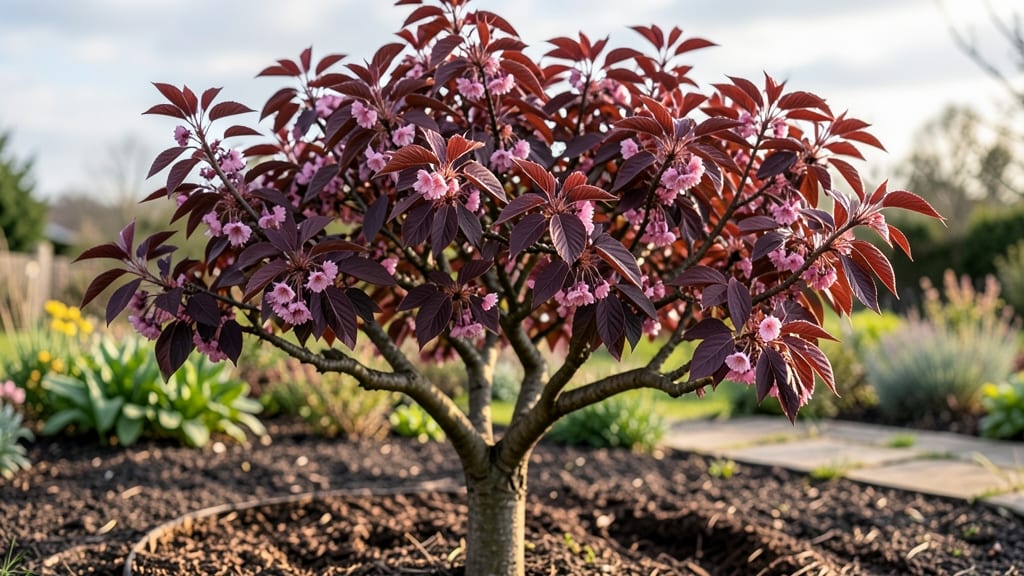
My purple leaf plum bloom secrets start with one simple fact: pruning isn't just about shaping—it's about reviving that deep purple foliage and unlocking those springtime white blossoms that smell like cherry blossoms. 🌸 I've watched this tree go from a sad, leggy mess to the showstopper of my front yard, all because I learned when and how to cut.
The key is timing: prune in late winter or early spring before new growth starts, and you'll trigger fresh, vibrant leaves that stay purple all season. Avoid heavy pruning in summer—it stresses the tree and dulls those signature colors.
Even a little strategic cutting opens up the center for better airflow and sunlight, which means fewer pests and more blooms next spring.
What you end up with is a tree that looks stunning in every season: purple foliage in summer, snowy blossoms in spring, and even orange-red berries in fall. The best part? It thrives in small spaces, making it perfect for urban gardens or as a focal point in any landscape.
Here's the thing—this tree is foolproof once you get the pruning right. Even if you've never pruned before, these simple steps will transform your purple leaf plum into the star of your garden.
📚 In This Guide
- What you need
- Instructions
- Tips and common mistakes
- Wrapping up and next steps
What you need
- ● Pruning shears: Bypass pruners (sharp, clean, and 5-inch blades for precision cuts). 1 pair required.
- ● Loppers: For thicker branches (10–12-inch handles, 2–3 pairs for larger trees).
- ● Hand saw: Curved-tooth pruning saw (for stubborn, thick branches 1–2 inches in diameter).
- ● Disinfectant: 70% isopropyl alcohol or bleach solution (1 part bleach to 9 parts water) to sterilize tools before and after use.
- ● Gloves: Heavy-duty gardening gloves (cut-resistant, 1 pair) to protect hands from thorns.
- ○ Pruning sealant: Optional but helpful (for cuts larger than ½ inch to prevent disease).
- ● Timing: Prune after flowering (late spring to early summer) or dormant season (late winter). Avoid pruning during active growth.
- ● Weather: Choose a dry, overcast day (humidity slows wound healing).
- ● Tree health check: Inspect for diseased or dead branches (brown, mushy, or oozing sap). Remove these first.
- ○ Safety gear: Safety glasses (optional but recommended for debris-prone areas).
- ● ✨ Sharpen tools monthly—dull blades tear bark, inviting pests.
- ● 🌡️ Work in layers—start with 10–20% of the canopy to avoid shocking the tree.
- ● 🎯 Label cuts with masking tape if unsure—revisit in 6 months to assess healing.
Step-by-Step guide to pruning purple leaf plums for stunning color
Here's how I keep my purple leaf plums looking vibrant all year—no guesswork, just proven techniques.
✂️ Step 1: Prune in Late Winter Before Bud Break
Wait until late winter when the tree is still dormant but just before buds begin to swell. This timing ensures you remove last year's growth without sacrificing new blooms. I like to prune in February or early March in most climates—check your local frost dates to be safe.
Start by removing any dead, diseased, or crossing branches first. These are easy to spot—they'll be brown, brittle, or growing inward toward the center of the tree. Use sharp, clean pruners to make cuts at a 45-degree angle just outside the branch collar. This prevents water from pooling and rotting the wound.
🌿 Step 2: Thin Out Overcrowded Branches
Look for branches that are rubbing against each other or growing straight up. These compete for sunlight and nutrients, which weakens the tree's overall vibrancy. I aim to remove about 20-30% of the canopy total, focusing on the oldest wood first. This opens up the center and lets light reach all the purple foliage.
For each branch you remove, cut back to a strong outward-facing bud or lateral branch. You'll see the tree's natural shape emerge as you work—this is your guide. Avoid "heading back" (cutting back to a stub)—it encourages weak, bushy growth that fades in color.
☀️ Step 3: Shape for Year-Round Color Exposure
Step back and assess the tree's overall form. Purple leaf plums need good airflow to maintain deep color, so avoid creating a dense canopy. I focus on creating an open vase shape—this lets sunlight reach all the leaves, keeping that rich purple hue vibrant even in winter.
Trim back any overly long branches to about 1/3 of their length, cutting just above a leaf bud that faces outward. This encourages new growth that will fill in gaps while maintaining the tree's natural silhouette. Avoid heavy pruning in one spot—distribute cuts evenly around the tree.
🌱 Step 4: Clean Up and Monitor for New Growth
After pruning, collect all debris and dispose of it in the trash—not your compost pile. Diseased branches can spread pathogens, and you don't want to reinfect your tree. I like to sterilize my pruners with rubbing alcohol between cuts to prevent spreading any hidden infections.
Watch for new growth in 4-6 weeks—you'll see fresh green shoots emerging from the pruned areas. This is your signal that the tree is responding well. If you notice any yellowing leaves or stunted growth, you may have pruned too aggressively. The tree should show strong, healthy new foliage by summer.
Tips & tricks for pruning purple leaf plums
These pruning secrets will help you maintain that stunning purple foliage all year long—without the guesswork.
Timing is Everything: That late winter window (February or early March) is critical because it lets you prune while the tree is dormant but before new buds swell. I've learned this the hard way—pruning too early can expose the tree to late frosts, while waiting too late risks cutting off potential blooms. Check your local frost dates to pinpoint the perfect moment in your area.
Branch Selection Matters: When thinning out overcrowded branches in Step 2, focus on removing branches that are rubbing against each other or growing straight up. These branches compete for sunlight and nutrients, which actually dulls that vibrant purple color. I aim to remove about 20-30% of the canopy total—this might seem aggressive, but it's what creates that open vase shape that lets sunlight reach all the leaves.
Cutting Technique Prevents Problems: Those 45-degree angles in Step 1 aren't just for show—they prevent water from pooling at the cut site, which can lead to rot. Always cut just outside the branch collar (that swollen area where the branch meets the trunk). I sterilize my pruners with rubbing alcohol between cuts to prevent spreading any hidden infections that could compromise your tree's health.
Monitoring Growth Tells the Story: After pruning, watch for new growth in 4-6 weeks—those fresh green shoots are your tree's way of saying "thank you!" If you notice yellowing leaves or stunted growth, you may have pruned too aggressively. The ideal result is strong, healthy new foliage that maintains (or even deepens) that beautiful purple hue by summer.
Pro Tips for Purple Leaf Plum Bloom
- These pruning secrets will help you maintain that stunning purple foliage all year long—without the guesswork.
- Timing is Everything: That late winter window (February or early March) is critical because it lets you prune while the tree is dormant but before new buds swell.
- Branch Selection Matters: When thinning out overcrowded branches in Step 2, focus on removing branches that are rubbing against each other or growing straight up.
Frequently asked questions
Got questions about keeping your purple leaf plum bloom stunning? Here are some of the most common queries—plus expert answers to help you prune like a pro!
When is the best time to prune a purple leaf plum for blooms?
Prune your purple leaf plum right after flowering (late spring) to encourage vibrant blooms the following year. Avoid pruning in fall or winter, as this can stimulate new growth that won’t harden off before cold weather. Light shaping in early spring is fine, but never cut back more than 25% at once to prevent stress.
How do I prune to keep the purple foliage vibrant?
The key is selective pruning—focus on removing dead, crossing, or overcrowded branches while preserving the plant’s natural shape. Thin out dense areas to improve airflow, which helps maintain that rich purple hue. Avoid heavy pruning, as it can reduce foliage color intensity. Pro tip: Use sharp, sterilized tools to prevent disease.
What if my purple leaf plum isn’t blooming?
Lack of blooms often stems from over-pruning or poor timing. Ensure you’re pruning after flowers fade (not in dormancy). Check for pests (like scale or spider mites) or fungal issues, which can stress the tree. If needed, apply a balanced fertilizer in early spring to support growth. Patience is key—some plums take 2–3 years to rebound after heavy pruning.
Can I prune a purple leaf plum in cold climates?
Yes, but time it carefully! In cold regions, prune in early spring (before buds swell) to avoid frost damage. Wait until temperatures are consistently above freezing (around 40°F/4°C). If pruning in late winter, cover fresh cuts with pruning sealant to protect against harsh winds. Hardiness matters: Purple leaf plums thrive in USDA zones 5–9.
What’s a good alternative if I don’t have space for a purple leaf plum?
If space is limited, consider these compact, colorful alternatives:
- Dwarf Japanese maple (Acer palmatum): Stunning purple foliage, great for containers.
- Red twig dogwood (Cornus sericea): Vibrant winter stems + spring blooms.
- Ninebark (Physocarpus opulifolius): Purple leaves, low-maintenance, and drought-tolerant.
- Smoke bush (Cotinus coggygria): Fuzzy purple plumes + burgundy foliage.
Wrapping up and next steps
The purple leaf plum bloom isn’t just a seasonal spectacle—it’s a year-round promise of color and vitality with the right care! By mastering pruning techniques, you’ll unlock lush foliage, stunning flowers, and even better fruit (if you’re growing a fruiting variety).
Remember, timing, sharp tools, and a little patience are your best friends.
Now that you’re armed with the secrets, go ahead and transform your yard! Grab those pruners, step outside, and give your purple leaf plum the love it deserves. Happy pruning—and may your garden bloom brighter than ever! 🌸✂️