
Companion Plants
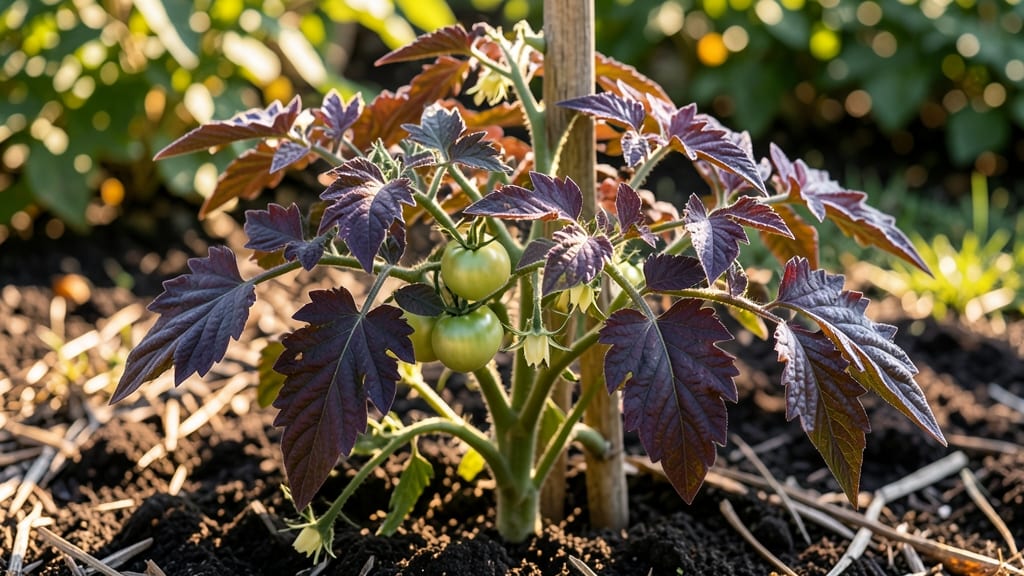
Growing purple leaf tomato plants turns your garden into a living art piece while keeping care simple. 🌿 These striking varieties—like 'Indigo Rose' or 'Black Krim'—bring bold foliage that thrives in containers or beds, and their unique color actually helps deter pests naturally.
The secret to their success? Matching their moderate care needs to their vibrant personality. Start with well-draining soil mixed with compost, and plant in full sun for at least 6-8 hours daily. Their purple leaves love warmth but appreciate afternoon shade in hot climates.
Water consistently at the base—never overhead—to preserve that stunning foliage color and prevent fungal issues. A balanced organic fertilizer every 4-6 weeks keeps growth steady without overwhelming the plant. You’ll harvest glossy purple-black fruits that taste sweeter than red tomatoes, and the foliage stays vibrant all season.
Prune aggressively to focus energy on fruit production, but leave some leaves for that signature color. The plants handle heat and humidity better than most varieties, making them perfect for summer gardens. For advanced gardeners, try interplanting with basil or marigolds to boost flavor and repel pests.
Even beginners will love how forgiving these plants are—just avoid overwatering, and you’ll have a showstopper that doubles as a productive crop. Ready to grow something truly unique?
📚 In This Guide
- What you need
- Instructions
- Tips and common mistakes
- Wrapping up and next steps
What you need
- ● Purple leaf tomato seeds or seedlings: Choose disease-resistant varieties like 'Purple Calabash' or 'Black Krim' for best results. (1-2 plants per person or 4-6 plants for a small family harvest).
- ● Well-draining potting mix: A high-quality blend (e.g., Miracle-Gro Potting Mix) or homemade mix (50% compost, 30% coconut coir, 20% perlite). 10-20 lbs depending on container size.
- ● Containers or garden space: Containers: 5-gallon pots or larger (minimum 12" diameter per plant). Ensure pots have drainage holes.
- ● Garden beds: Full sun (6+ hours/day) and loose, fertile soil with a pH of 6.0–6.8.
- ● Fertilizer: Balanced organic fertilizer (e.g., 10-10-10) or slow-release granules (e.g., Osmocote). 1 tbsp per plant at planting, then monthly.
- ● Stakes or cages: 5-6 ft tall tomato cages or bamboo stakes to support vines.
- ● Mulch: Straw or shredded leaves (2–3 inches) to retain moisture and suppress weeds.
- ● Pruning shears: For trimming suckers and shaping plants.
- ● pH test kit: To monitor soil acidity (especially in containers).
- ● Drip irrigation or hose with nozzle: For consistent watering (purple leaf tomatoes hate soggy roots!).
- ● Compost tea or liquid fertilizer: For a nutrient boost during flowering/fruiting.
- ● Row covers: Lightweight fabric to protect seedlings from pests or frost.
Step-by-step guide to growing stunning purple leaf tomato plants
Here's my foolproof method for cultivating vibrant purple foliage while still enjoying delicious fruit.
🌱 Step 1: Select and Prepare Your Purple Leaf Variety
Choose a purple-leaf tomato variety like 'Purple Majesty' or 'Indigo Rose'—these maintain their striking foliage while producing flavorful fruit. Start with healthy 4-6 week old seedlings rather than seeds to ensure vibrant color development. I always inspect the undersides of leaves for spider mites before bringing plants home, as these pests thrive on stressed purple foliage.
Before transplanting, harden off seedlings by placing them outside in partial shade for 2-3 hours daily over 7-10 days. Watch for wilting—this signals they're ready for full sun exposure. Purple leaf varieties need 6-8 hours of direct sunlight daily to maintain their rich coloration, so choose a south-facing location or supplement with grow lights if needed.
🪴 Step 2: Plant in Well-Draining Soil with Proper Spacing
Amend your garden bed with 2-3 inches of compost mixed into the top 12 inches of soil to provide essential nutrients while maintaining good drainage. Purple leaf tomatoes perform best in slightly acidic soil with a pH between 6.0-6.8. Test your soil before planting—if it's too alkaline, add sulfur to adjust the pH.
Plant seedlings 18-24 inches apart in rows spaced 3 feet apart to allow for proper air circulation. The deeper purple foliage develops, the more susceptible plants become to fungal issues from poor airflow. Bury stems up to the first set of true leaves—this encourages stronger root development and better stability for the plant's eventual height.
☀️ Step 3: Water Strategically to Preserve Foliage Color
Water at the base of plants in the morning to allow foliage to dry quickly, preventing fungal diseases that thrive in damp conditions. Purple leaf varieties are more sensitive to moisture stress than green-leaf types, so maintain 1-1.5 inches of water per week, including rainfall. Check soil moisture by inserting your finger 1-2 inches deep—water when it feels dry but not powdery.
Never let purple leaves wilt—they'll lose their vibrant color permanently. Mulch with 2-3 inches of straw around plants to retain moisture and regulate soil temperature. The mulch also prevents soil-borne diseases from splashing onto the striking purple foliage when it rains.
✂️ Step 4: Prune and Support for Maximum Color Impact
Remove suckers (the shoots that grow in the leaf axils) regularly to redirect the plant's energy toward maintaining vibrant foliage and producing fruit. Purple leaf varieties benefit from aggressive pruning—keep only the main stem and 2-3 strong branches to maintain airflow and prevent disease. I prune in the morning when plants are turgid, making cuts just above a leaf node.
Install sturdy cages or stakes immediately after planting to support the plant's weight as it grows. The purple foliage is heavier than green varieties, so provide extra support. Train vines gently along the support structure—rough handling can bruise leaves and cause color fading. Harvest fruit regularly to encourage continuous foliage production.
🌿 Step 5: Fertilize for Color Maintenance and Fruit Production
Feed plants with a balanced 10-10-10 fertilizer every 3-4 weeks starting when flowers appear. Purple leaf varieties need consistent nutrients to maintain their striking color while producing fruit. I mix the fertilizer into the soil at planting time, then top-dress with a light application of compost every month to avoid burning sensitive purple foliage.
Watch for nitrogen deficiency signs like pale purple leaves—this indicates the plant needs more nitrogen. For a quick fix, apply a diluted fish emulsion fertilizer. However, avoid over-fertilizing with nitrogen, as this can dilute the purple color intensity. The key is balance—purple leaf tomatoes need nutrients for both vibrant foliage and productive fruit.
Tips & tricks for growing stunning purple leaf tomato plants
Common pitfalls—and how to sidestep every one when cultivating these showstopping plants.
Seedling Selection: When choosing your 4-6 week old seedlings, focus on plants with deep, rich purple hues—not just any purple tint. The most vibrant varieties like 'Purple Majesty' develop their full coloration when they've received consistent sunlight for at least 4-6 weeks. I've learned the hard way that pale seedlings often stay pale, so invest in quality plants from reputable nurseries. The underside leaf check for spider mites is non-negotiable—these pests will turn your purple foliage into a sad, speckled mess if left unchecked.
Hardening Off Strategy: The 2-3 hours of daily hardening off might seem short, but it's critical for these sensitive plants. I've found that gradually increasing exposure—starting with just 1 hour on day one—reduces shock. Watch for wilting as your cue: if leaves droop but perk up within minutes, they're ready for more sun. Never skip this step—purple leaf varieties are particularly prone to transplant shock when moved directly from indoor conditions to full sun.
Soil Preparation Insight: That 2-3 inches of compost isn't just about nutrients—it's about creating the perfect moisture-retaining environment these plants crave. I always mix in a handful of perlite to improve drainage, especially in heavy clay soils. The pH test is worth every penny: purple leaf tomatoes are divas about their soil acidity. If your soil tests above 6.8, add sulfur gradually—too much at once can actually make the problem worse by creating toxic conditions.
Pruning Precision: When maintaining just 2-3 strong branches, focus on keeping the main stem clean of all suckers below the first flower cluster. I use sharp pruning shears and make clean cuts at a 45-degree angle just above a leaf node—this prevents disease entry points. The morning pruning window is ideal because the plants are fully turgid, making cuts cleaner and reducing stress. Never prune more than 20% of the plant's foliage at once, or you'll shock the system and dull that vibrant purple color.
Pro Tips for Purple Leaf Tomato Plants
- Common pitfalls—and how to sidestep every one when cultivating these showstopping plants.
- Seedling Selection: When choosing your 4-6 week old seedlings, focus on plants with deep, rich purple hues—not just a...
- Hardening Off Strategy: The 2-3 hours of daily hardening off might seem short, but it's critical for these sensitive ...
Frequently asked questions
Got questions about growing purple leaf tomato plants? You're not alone! Here are some of the most common queries—plus quick, actionable answers to keep your garden thriving.
When is the best time to plant purple leaf tomato plants?
For most climates, plant purple leaf tomato seeds indoors 6–8 weeks before your last frost date (around March–April in temperate zones). Transplant seedlings outdoors after soil warms to 55°F (13°C) and nighttime temps stay above 50°F (10°C). In warmer regions, direct-sow seeds in spring or fall to avoid summer heat stress.
How long does it take for purple leaf tomato plants to bear fruit?
Expect 60–90 days from transplanting to first fruit, depending on variety and growing conditions. Purple leaf tomatoes (like 'Indigo Rose' or 'Black Krim') may take slightly longer than red varieties due to their slower maturation. Pro tip: Prune suckers early to redirect energy to fruit production—this can shave off 1–2 weeks!
Can I grow purple leaf tomatoes in containers? If so, what size pot do I need?
These compact plants thrive in containers 12–18 inches deep with drainage holes. Use a 5-gallon pot for 1–2 plants, or 7+ gallons for larger varieties. Ensure pots get 6+ hours of sun and fertilize weekly with a balanced tomato feed (10-10-10 or 5-10-10). Bonus: Containers make them mobile—rotate pots weekly for even growth!
Why are my purple leaf tomato leaves turning yellow or spotted?
Yellowing or spotted leaves often signal overwatering, nutrient deficiencies (like nitrogen or magnesium), or pests/diseases. Check soil moisture—purple leaf tomatoes prefer consistently moist but not soggy soil. Yellow edges? Likely calcium deficiency (try crushed eggshells). Spots with yellow halos? Early blight—remove affected leaves and apply copper fungicide preventatively.
What are the best companion plants for purple leaf tomatoes?
Pair purple leaf tomatoes with basil, marigolds, or onions to repel pests like aphids and whiteflies. Avoid planting near brassicas (cabbage family) or corn, as they compete for nutrients. Herbs like thyme or oregano also thrive nearby, improving flavor and deterring hornworms. Pro tip: Interplant with radishes or lettuce to maximize space and shade young tomato roots!
Can purple leaf tomatoes survive winter outdoors?
Most purple leaf tomato varieties are annuals and won’t survive frost. However, in USDA Zones 8–10, you can extend the season by mulching heavily and protecting plants with row covers during cold snaps. For year-round harvests, grow them in containers and move indoors during winter (they’ll need 12+ hours of grow light).
Wrapping up and next steps
Growing purple leaf tomato plants is a rewarding way to add vibrant color and flavor to your garden with surprisingly low effort! Their striking foliage and delicious fruit make them a standout choice, whether you're a seasoned gardener or just starting out.
With the right companion plants and minimal care, you can enjoy their beauty—and tasty harvests—all year long.
Ready to get started? Plant your seeds or seedlings today and watch your garden transform into a stunning, edible masterpiece! 🌱 Whether you’re growing in containers or your backyard, the next step is simple: pick your spot, prep your soil, and let nature do the rest.