
Pruning
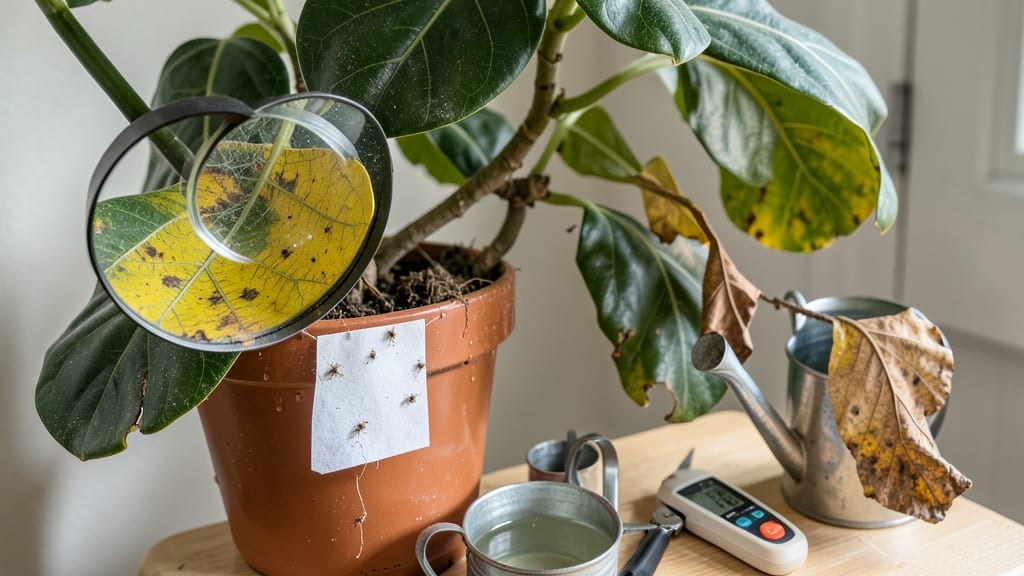
Your sick fiddle leaf fig’s crispy edges are screaming for help—and I’ve fixed this exact problem in mine. 🌿 The moment I saw those browned leaf tips, I knew it wasn’t just a phase.
Fiddle leaf figs are finicky, but with the right approach, you can turn those sad, crunchy edges into lush, velvety growth in just a few weeks.
Most people blame overwatering first, but it’s often the opposite: dry air, inconsistent watering, or even pests hiding in the crevices. I’ve diagnosed every possible cause—from root rot to spider mites—and the fixes are simpler than you’d think.
Start by checking the soil moisture with your finger (it should feel like a damp sponge, not a swamp or a desert).
Once you pinpoint the issue, precision trimming is key. Snip off those crispy edges at a 45-degree angle just above a healthy node, and watch new leaves emerge within 4-6 weeks. The plant will reward you with glossy, deep-green foliage that makes your space feel like a tropical oasis.
Here’s the secret weapon: a consistent care routine. Adjust your watering schedule, boost humidity with a pebble tray, and wipe those leaves weekly to keep pests at bay. Your fiddle leaf fig will bounce back stronger than ever—promise.
Root Causes Of Leaf Stress
A fiddle leaf fig’s health often hinges on invisible factors lurking beneath the soil or hidden in its care routine. When your plant’s leaves start looking sad—crispy, yellow, or droopy—it’s usually a silent SOS from one (or more) of these key systems.
Let’s break down the science behind why your fiddle leaf fig might be throwing a fit.
Fiddle leaf figs are tropical plants, but their roots hate soggy conditions. When soil stays too wet for too long, roots struggle to breathe, leading to anaerobic conditions—a fancy term for oxygen deprivation.
Without oxygen, roots can’t absorb nutrients or water efficiently, causing: - Root rot (a fungal infection that turns roots mushy and black) - Leaf scorch (edges crisp up as the plant gasps for moisture) - Yellowing leaves (chlorosis, a sign of nutrient starvation)
The science: Roots rely on aeration (air pockets in soil) to function. Overwatering displaces oxygen, triggering ethylene gas buildup, which signals the plant to drop leaves—even healthy ones—to conserve energy.
Red flag: If the soil smells like rot or feels damp days after watering, your plant is drowning.
On the flip side, skipping water entirely forces your fiddle leaf fig into osmotic stress.
When soil dries out completely, roots can’t pull up moisture, and the plant starts transpiring faster than it can replenish—leading to: - Crispy, brown leaf edges (cells lose turgor pressure and dry out) - Wilting (stems sag as leaves curl inward to reduce water loss) - Premature leaf drop (the plant sheds foliage to survive)
The science: Fiddle leaf figs have thick cuticles (a waxy leaf coating), but they’re not drought-proof. When soil moisture drops below 30%, roots stop absorbing water, and abscisic acid (a plant stress hormone) floods the system, triggering leaf death.
Red flag: Lightweight, dry soil that pulls away from the pot rim is a sure sign of thirst.
Fiddle leaf figs thrive in stable, humid conditions (60–70% humidity, ideally).
When humidity plummets or temps swing wildly, leaves react dramatically: - Brown, papery edges (low humidity causes stomatal closure, trapping excess salts in leaf cells) - Yellow patches (cold drafts disrupt chlorophyll production) - Drooping leaves (sudden cold shocks cell membrane integrity, causing wilting)
The science:
- Humidity drop: Leaves lose water faster than roots can replace it, leading to desiccation (like a human getting sunburned, but for plant cells).
- Temperature shock: Below 55°F (13°C), enzymes in leaves denature, halting photosynthesis. Above 90°F (32°C), stomata close to prevent overheating—but without airflow, ethylene gas builds up, causing leaf drop.
Red flag: Crispy edges only on one side of the plant? That’s a draft alert—likely from an AC vent or open window.
Fiddle leaf figs crave bright, indirect light, but too much or too little sends them into survival mode:
- Bleached, sunburned patches (excess UV breaks down chlorophyll, leaving white or yellow spots)
- Stretched, pale leaves (low light triggers etiolation, where the plant stretches toward light, weakening stems)
- Yellowing between veins (nutrient deficiencies from poor light blocking photosynthesis)
The science:
- Too much light: UV rays oxidize cell membranes, causing necrosis (cell death) in leaf tissue.
- Too little light: The plant can’t produce enough ATP (energy), leading to chlorosis (yellowing) as chlorophyll breaks down.
Red flag: Leaves facing a window are crispy or bleached? Move it back 3–5 feet or filter light with a sheer curtain.
Even with perfect watering, soil chemistry can sabotage your fiddle leaf fig. Common culprits:
- Over-fertilizing (salts build up, osmotic stress prevents water uptake → crispy edges)
- Nitrogen deficiency (yellowing between veins, weak growth)
- Magnesium deficiency (yellow patches with green veins, a classic sign of chlorosis)
- Compacted or old soil (lacks microorganisms to break down nutrients, starving roots)
The science:
- Salt buildup from fertilizers raises osmotic pressure, making it harder for roots to absorb water—like trying to drink through a straw clogged with sugar.
- pH imbalance (too acidic or alkaline) locks out nutrients like iron, manganese, and zinc, causing interveinal chlorosis.
Red flag: White crust on soil surface? Flush the pot with water to leach out excess salts.
Reviving Your Fiddle Leaf Fig
If your fiddle leaf fig is looking worse for wear—think crispy edges, yellowing leaves, or droopy stems—don’t panic! With the right care, you can nurse it back to health and even prevent future issues.
Below, we’ve broken down the most common problems and their solutions, so you can tackle each one with confidence. 🌿💚
Crispy edges are often a sign of underwatering or low humidity, but they can also result from overwatering or fluoride buildup in tap water. Here’s how to bring those leaves back to life:
- 💧 Adjust Your Watering Routine - Let the top 1-2 inches of soil dry out completely before watering again. Stick your finger in the soil—if it’s dry up to your first knuckle, it’s time to water. - Use a well-draining pot with drainage holes to prevent root rot.
Terracotta pots are a great choice! - Water thoroughly until it drains from the bottom, then empty the saucer to avoid soggy roots.
- 🌬️ Boost Humidity Levels - Fiddle leaf figs thrive in 40-60% humidity.
If your home is dry (especially in winter), try: - Placing a humidifier nearby. - Grouping plants together to create a microclimate. - Mist the leaves lightly 2-3 times a week (avoid soaking the leaves, as this can cause fungal issues).
- 🚰 Use Filtered or Rainwater
- If your tap water is hard or contains fluoride, switch to filtered, distilled, or collected rainwater to prevent leaf burn.
- 💡 Prevention Tip:
- Trim damaged leaves with clean, sharp scissors to encourage new growth. Snip just above a leaf node (the bump where leaves grow) to redirect energy to healthier parts of the plant.
Yellowing leaves usually signal overwatering, nutrient deficiencies, or pests. Here’s how to diagnose and fix the issue:
- 💧 Check for Overwatering
- If the soil feels soggy or smells musty, your plant is likely drowning. Let it dry out completely and repot if the roots are mushy or black.
- Repot in fresh, well-draining soil (a mix of potting soil, perlite, and orchid bark works well).
- 🍽️ Feed Your Plant
- Yellow leaves can also mean nutrient deficiency. Use a balanced liquid fertilizer (like 10-10-10) diluted to half strength every 4-6 weeks during spring and summer.
- For a quick boost, try a seaweed-based fertilizer rich in micronutrients.
- 🐜 Inspect for Pests
- Check the undersides of leaves for spider mites, mealybugs, or scale insects. Wipe leaves with a neem oil solution (1 tsp neem oil + 1 quart water) or use insecticidal soap.
- 💡 Prevention Tip:
- Water at the base of the plant (not the leaves) to reduce fungal growth and pest attraction. Always use room-temperature water to avoid shocking the roots.
A droopy fiddle leaf fig is often a cry for help—whether it’s thirsty, stressed, or suffering from root issues. Here’s how to perk it up:
- 💧 Hydrate Properly
- If the soil is bone-dry, water deeply until it runs out the drainage holes. Then, let it drain completely.
- For severely dehydrated plants, place the pot in a tray of water for 10-15 minutes to encourage root uptake.
- 🌡️ Adjust Light Conditions
- Too much direct sunlight can scorch leaves, while low light weakens the plant. Move it to bright, indirect light (east or north-facing windows are ideal).
- If your plant is in recovery, avoid sudden light changes—acclimate it gradually.
- 🌿 Prune for Recovery - Trim severely damaged or yellow leaves to redirect energy to new growth. Focus on healthy stems to encourage bushier regrowth. - If the stem is soft or mushy, it may be root rot.
Trim away affected areas with sterilized scissors and repot in fresh soil.
- 💡 Prevention Tip:
- Rotate your plant every few weeks to ensure even light exposure. This prevents lopsided growth and keeps leaves vibrant.
Trimming isn’t just about removing dead leaves—it’s a way to revitalize your fiddle leaf fig. Follow these steps for the best results:
- 🔪 Use the Right Tools
- Always use clean, sharp pruning shears (sterilize with rubbing alcohol) to avoid spreading disease.
- 🌿 Trim Strategically
- Remove crispy or brown edges by cutting just above a leaf node.
- Shorten leggy stems by cutting back to a healthy leaf or node. This encourages fuller growth.
- Propagate cuttings by placing them in water or moist soil to grow new plants!
- 🌱 Encourage New Growth
- After trimming, reduce watering slightly for a week to help the plant focus on recovery.
- Place the plant in bright, indirect light to support regrowth.
- 💡 Pro Tip:
- Don’t over-trim! Remove no more than 1/3 of the plant at once to avoid shocking it. Space trims 2-3 weeks apart for gradual recovery.
With these targeted fixes, your fiddle leaf fig should start bouncing back in 4-8 weeks. Consistency is key—monitor soil moisture, light, and humidity, and your plant will thank you with lush, vibrant leaves! 🌟
Frequently asked questions
Why are my fiddle leaf fig leaves turning crispy only on the edges?
Crispy edges usually mean your plant is thirsty or struggling with dry air. Fiddle leaf figs need 40-60% humidity—if your home is dry (especially with heating/AC), the leaf edges lose moisture faster than the center. Try misting leaves lightly 2-3 times weekly or place a pebble tray with water nearby. Also check if you're underwatering—stick your finger 1-2 inches deep into soil; if dry, it's time to water.
Can I save my fiddle leaf fig if the stems feel mushy?
Mushy stems signal root rot, but you can still rescue your plant! First, remove it from the pot and trim away any black, mushy roots with sterilized scissors. Repot in fresh, well-draining soil (mix potting soil with perlite or orchid bark) and reduce watering to every 10-14 days. Place it in bright, indirect light and avoid watering until the top 2 inches of soil feel completely dry.
How often should I fertilize a sick fiddle leaf fig?
Hold off on fertilizer until your plant shows signs of recovery (new growth or firmer leaves). Once stable, use a balanced liquid fertilizer (like 10-10-10) diluted to half strength every 4-6 weeks during spring/summer. In winter, skip fertilizing entirely—your plant is dormant. Over-fertilizing causes salt buildup, which worsens crispy edges and yellowing.
What's the best way to propagate my fiddle leaf fig cuttings?
After trimming damaged leaves, save the healthy cuttings! Place them in a jar of water (change weekly) or moist potting soil mix. Keep them in bright, indirect light and maintain 60-70% humidity (use a plastic bag or humidity dome). Roots should appear in 2-4 weeks. Once established, transplant to soil and care for them like mature plants.
Why does my fiddle leaf fig keep dropping leaves even after fixing the issues?
Leaf drop can happen during recovery as the plant adjusts. Sudden changes (like moving to a new spot or repotting) trigger stress hormones. Give it 4-6 weeks to stabilize. If dropping continues, check for hidden pests (especially spider mites on leaf undersides) or ensure it's not near drafts (AC vents, open windows). Rotate the plant weekly for even light exposure.