
Planting
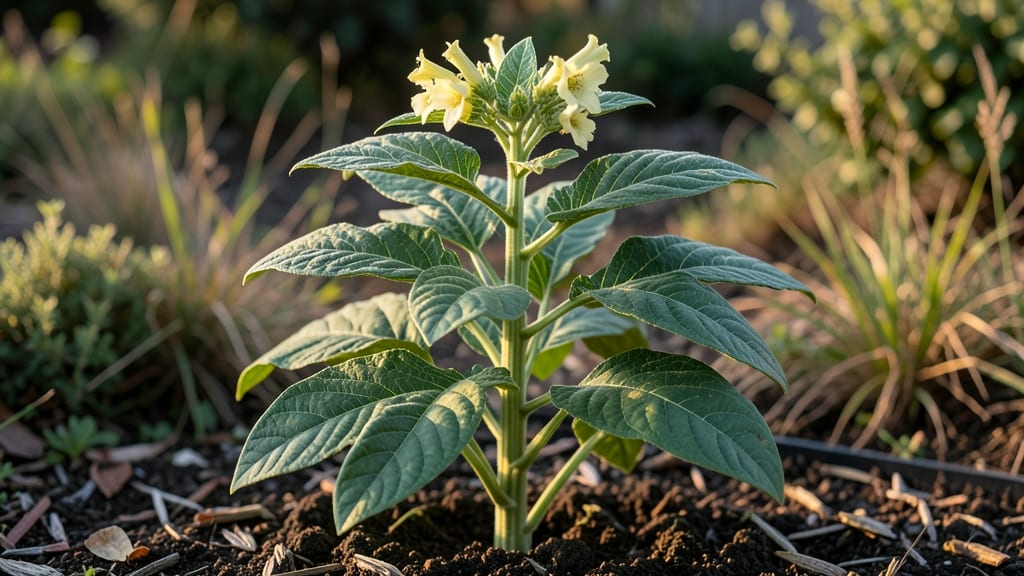
Mastering three-leaf plant identification can save your garden—or your skin. 🌿 That trifoliate shape appears on everything from clover to poison ivy, and knowing the difference isn’t just smart—it’s essential.
I’ve spent years sorting through seedlings and weeds, and the key lies in leaf arrangement, texture, and subtle details most people miss.
The most common trio-leafers include white clover (soft, rounded leaves with a faint white center), poison ivy (shiny, pointed leaves with a smooth edge), and blackberry seedlings (sawtooth edges and a reddish stem).
The trick? Look at the leaflet shape, stem hairiness, and how they grow—poison ivy climbs, clover stays low, and blackberry has thorns. One wrong guess could mean a rash or a wasted season.
Once you master these visual cues, you’ll spot them instantly—no more guessing games in the garden. You’ll know which seedlings to keep (like edible microgreens) and which to pull (like invasive bindweed). The payoff? Confidence every time you see that familiar three-leaf pattern.
This skill scales from backyard gardens to wild landscapes, whether you’re weeding, foraging, or just curious. Let’s break down the secrets so you never second-guess a leaf again.
📚 In This Guide
- What you need
- Instructions
- Tips and common mistakes
- Wrapping up and next steps
What you need
- ● Magnifying glass (5x-10x zoom) – For inspecting fine details like leaf veins, edges, and textures.
- ● Ruler or measuring tape – To measure leaf length, width, and spacing (inches or centimeters).
- ○ Field guidebook or plant ID app – Optional but helpful: Apps like iNaturalist or PictureThis for on-the-go comparisons.
- ● Notebook & pencil – To sketch leaf shapes, note colors, and jot down observations.
- ● Camera (smartphone or DSLR) – Capture close-ups of leaves, stems, and flowers for later reference.
- ● Gloves (nitrile or garden gloves) – Protects hands when handling plants in the wild or garden.
- ● Small trowel or hand shovel – For gently digging up plants (if ethical and permitted) to check roots.
- ● Basic botany knowledge – Familiarity with terms like whorled, palmate, and alternate leaf arrangements.
- ● Access to three-leaf plants – Local gardens, parks, or a small potted collection to practice on.
- ● Patience & curiosity – Some plants require seasonal observation (e.g., flowers vs. leaves).
- ● Ethical considerations – Avoid uprooting protected species; stick to photography or non-destructive ID methods.
How to master three-leaf plant identification through leaf shape
Leaf shape holds the key to recognizing plants—once you learn these patterns, identification becomes second nature.
🌿 Step 1: Observe the Basic Leaf Structure
Begin by examining whether the plant has simple or compound leaves. Simple leaves attach directly to the stem with a single blade, like those of hostas or maples. Compound leaves, however, divide into multiple leaflets along a central stem—think clover or black walnut. Hold the leaf up to light to see veins clearly; the arrangement of veins often reveals the plant family.
Pay special attention to the leaf margin—the edge. Is it smooth (entire), jagged (serrated), or lobed like a oak? I always start by tracing the leaf outline with my finger—this trains your brain to recognize shapes quickly. Notice whether the leaf base is symmetrical or asymmetrical; this can distinguish between poison ivy (three leaflets with smooth margins) and virginia creeper (five leaflets with serrated edges).
🌱 Step 2: Count and Compare Leaflets
Three-leaf plants often belong to the Fabaceae (legume) family, but not all three-leaf plants are legumes. Start by counting the leaflets—true trifoliate leaves (three leaflets) appear in clover, raspberry, and poison ivy. However, some plants like shamrock (three distinct leaves) or oxalis have separate leaves rather than leaflets.
Check the arrangement: Are the leaflets evenly spaced or clustered? In poison ivy, the middle leaflet has a longer stalk, while in black locust, the leaflets are arranged opposite each other. I keep a small notebook nearby to sketch leaf patterns—I’ve caught mistakes this way. If the leaflets feel fuzzy or hairy, note that too; lamb’s ear has woolly leaves, while stinging nettle has jagged, serrated edges.
☀️ Step 3: Examine Leaf Arrangement and Stem
The way leaves attach to the stem (phyllotaxy) is a game-changer. Alternate leaves (one per node) appear on willow or birch, while opposite leaves (pairs at each node) are common in mint or ivy. Palmate leaves (three or more leaflets radiating from a single point) are classic in horse chestnut, while pinnate leaves (leaflets along a central axis) dominate in ash or hawthorn.
Run your fingers along the stem to feel for hairs, spines, or glands. Poison ivy stems often have a reddish tint, while raspberry canes are armed with thorns. I’ve learned to trust my sense of touch—sometimes texture reveals more than color. If the leaf has a strong scent (like mint or citrus), that’s another clue. Never rely on smell alone, though; some toxic plants (like oleander) have fragrant leaves.
✂️ Step 4: Cross-Reference with Flower and Fruit
While leaf shape is your starting point, flowers and fruit seal the deal. Clover has white or purple flowers, while poison ivy produces white berries in clusters. Black locust blooms with fragrant white flowers, and its seed pods resemble tiny beans. I always check for these secondary features—leaf shape alone won’t distinguish between poison ivy and Virginia creeper.
If you’re unsure, snap a photo and compare it to a field guide or app like iNaturalist. Note the plant’s height, habitat (shady vs. sunny), and soil type—hostas thrive in shade, while yarrow loves full sun. Real talk: I’ve misidentified plants for years because I ignored the whole plant. Leaf shape is your first clue, but context is your confirmation.
📸 Step 5: Build a Reference Library
Collect leaves from known plants—press them between heavy books for a week, then store them in a binder. Label each with the plant name, location, and date. Over time, you’ll recognize patterns. For example, three-leaf plants with serrated edges often belong to the Rosaceae family, while smooth-edged trifoliates might be Fabaceae.
Use a magnifying glass to study veins, hairs, and glandular dots. Some leaves, like those of stinging nettle, have stinging hairs that feel like tiny needles. Others, like lamb’s ear, have a velvety texture. I’ve kept a digital scrapbook of leaf photos for years—it’s become my go-to reference. The more you observe, the more intuitive identification becomes.
Tips & tricks for mastering three-leaf plant identification
Took me years of field trips and a few embarrassing misidentifications before I realized these details make all the difference.
Leaf Texture Matters: Beyond shape, leaf texture is your secret weapon. Run your fingers across the surface—some leaves feel smooth like maple, while others have fuzzy coatings (like lamb's ear) or sharp hairs (like stinging nettle). I've caught more errors by touch than by sight alone. Pay special attention to the underside of leaves, where many plants develop unique characteristics like glandular dots or woolly growths that aren't visible from above.
Veins Tell the Story: In Step 1, you're told to examine veins, but here's what nobody mentions: the vein pattern often reveals the plant family. Raspberry leaves have prominent central veins with fine lateral veins creating a network, while black locust shows parallel secondary veins. For three-leaf plants, count the primary veins—most trifoliates have three main veins extending from the base, but oxalis often shows five or more. This is your hidden clue when leaflets look similar.
Seasonal Variations: Leaf characteristics change throughout the year. New spring growth often appears more tender and lighter in color than mature leaves. In autumn, poison ivy turns a brilliant red while raspberry may retain its green longer. I've learned to collect samples in all seasons—my spring clover looks completely different from my fall specimens, but both share that distinctive trifoliate shape. Always note the season when building your reference library.
Photography Pro Tips: When photographing leaves for identification, use natural light and include a reference object (like a coin) for scale. Focus on the leaf attachment point—the junction where leaf meets stem often reveals crucial details. I've developed a habit of taking three photos per plant: a close-up of the leaf shape, a mid-range of the whole leaf including stem, and a wide shot showing the plant's habitat. This three-photo approach has solved more identification puzzles than any single image ever could.
Pro Tips for Three Leaf Plant Identification
- Took me years of field trips and a few embarrassing misidentifications before I realized these details make all the d...
- Leaf Texture Matters: Beyond shape, leaf texture is your secret weapon. Run your fingers across the surface—some leav...
- Veins Tell the Story: In Step 1, you're told to examine veins, but here's what nobody mentions: the vein pattern ofte...
Frequently asked questions
Got questions about identifying three-leaf plants? You’re not alone! Here are some of the most common queries—and their quick, expert answers—to help you master the art of leaf recognition.
What are the most common plants with three leaves?
Classic examples include shamrock (Trifolium), clover, and three-leaf yam. However, many plants (like some hostas or begonias) can have three leaves at a growth stage—so focus on leaf shape, texture, and plant structure for accuracy.
Can a plant naturally have three leaves, or is it always a sign of disease?
Three leaves can be normal in early growth stages (e.g., seedlings or certain tropical plants). But if mature plants suddenly sprout three leaves instead of the usual five or seven, check for nutrient deficiencies (like nitrogen) or root stress. Yellowing or stunted growth? Time to troubleshoot!
How do I tell the difference between a three-leaf plant and a compound leaf?
Compound leaves (like maple or rose) have multiple leaflets attached to a single stem. Three-leaf plants (e.g., clover) have three distinct leaves emerging from the same point (a trifoliate pattern). Hold the stem up to light—compound leaves have visible veins running through the stem.
Are there toxic three-leaf plants I should avoid?
Yes! Castor bean (Ricinus communis) has trifoliate leaves but is highly toxic. Other risky plants include poison ivy (though it usually has three leaflets, not always three full leaves) and water hemlock. When in doubt, research the plant’s full structure or consult a local nursery.
When is the best time to identify a plant by its leaves?
Morning or late afternoon is ideal—leaves are fully hydrated and easier to examine. Avoid midday when leaves may wilt or appear distorted. For flowering plants, wait until buds open to cross-reference with leaf shape. Pro tip: Take photos in natural light for clarity!
What if my plant’s leaves keep growing in threes but it’s not a known three-leaf species?
It might be a mutant growth pattern due to genetics, pruning, or environmental stress. Try repotting with fresh soil, adjusting sunlight, or fertilizing with a balanced mix. If the issue persists, share photos with plant forums—experts love a mystery!
Wrapping up and next steps
Mastering three-leaf plant identification unlocks a world of easy-care greenery and stunning botanical diversity! 🌿 Whether you’re deciphering clover’s trifoliate charm or spotting a poison ivy warning, these leaf shape secrets make plant recognition effortless.
Now that you’ve got the tools, confidence, and know-how, why not put your skills to the test?
🌱 Your Next Step: Plant a New Discovery!
Head outdoors or to your local nursery and spot a three-leaf plant in the wild. Snap a photo, compare it to your newfound knowledge, and share your ID with fellow plant lovers—you’ve got this! 🌟