
Pests and Diseases
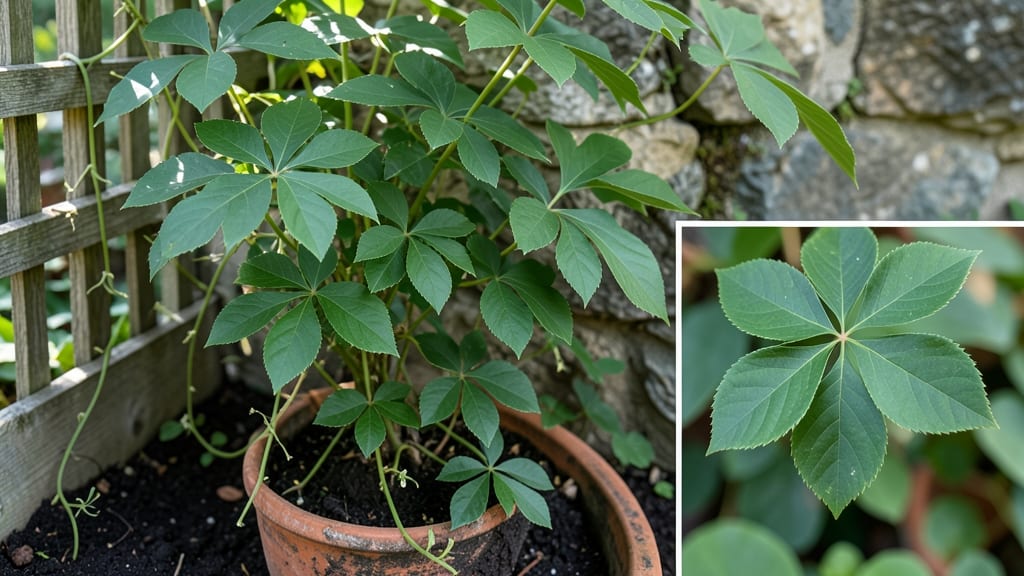
When comparing the Virginia creeper with the five-leaf poison ivy, the Virginia creeper has smooth-edged, glossy leaves arranged in palmate clusters with climbing tendrils, while poison ivy features jagged-edged leaflets that grow as shrubs or vines without tendrils. Examining leaf arrangement and plant structure is key to telling them apart.
Both plants share that classic five-leaf pattern, but their growth habits and leaf details reveal all the differences. 🌿 Virginia creeper's leaves are always arranged in a single cluster at the stem end, while poison ivy's leaflets grow in pairs along a central stem.
The Virginia creeper's leaves also turn brilliant red in fall, making identification even easier during autumn months. I've seen many gardeners confuse the two until they noticed these subtle but critical differences in how the leaves attach to the stem.
What's interesting is how these plants use their leaves differently. Virginia creeper's smooth edges and glossy finish help it thrive in shady areas, while poison ivy's jagged edges create more surface area for photosynthesis.
This adaptation explains why you'll often find poison ivy in sunnier spots, where its rougher texture helps it absorb more light. 🌱
💡 In This Article
- Leaf Structure: Virginia Creeper vs Poison Ivy Key Visual Clues
- Growth Habits: How Virginia Creeper Climbs vs Poison Ivy Spreads
Leaf structure: Virginia creeper vs poison ivy key visual clues
The most reliable way to distinguish these plants starts with their leaf arrangement. Virginia creeper's leaves grow in a single, palmate cluster at the end of each stem—all five leaflets radiate from one central point like fingers on a hand.
This arrangement creates a perfect circle when viewed from above, with each leaflet typically measuring 2-5 inches long and featuring smooth, rounded edges. The leaf surface is glossy and deep green, almost waxy to the touch, which helps repel water and pests.
Poison ivy, on the other hand, has leaflets that grow in pairs along a central stem, forming what botanists call a "pinnate" pattern. Each leaflet has jagged edges with 12-16 teeth per inch, creating a saw-like appearance that's immediately noticeable upon close inspection.
The leaf color can vary dramatically—some plants have shiny green leaves, while others appear dull or even slightly grayish, especially in dry conditions. This variation makes color a less reliable identifier than leaf arrangement or edge texture.
Seasonal changes offer another critical clue. Virginia creeper leaves turn brilliant red in autumn, creating a striking contrast against its usual green.
Poison ivy, however, typically shifts to yellow or orange hues, though some varieties may develop reddish tones. 🍂 What's fascinating is how these color changes reflect different chemical compositions—Virginia creeper's anthocyanins produce that vivid red, while poison ivy's carotenoids create more muted autumn colors.
The leaf stems provide one final distinguishing feature. Virginia creeper's petioles (leaf stems) are smooth and often slightly hairy, while poison ivy's petioles frequently develop small bumps or glands.
These tiny structures can sometimes secrete an oily substance that may cause skin irritation upon contact, even without touching the leaves themselves—a useful warning sign when identifying plants in the field.
Here's a quick visual checklist to confirm your identification:
- Leaf arrangement: Single cluster (Virginia creeper) vs paired leaflets (poison ivy)
- Edge texture: Smooth (Virginia creeper) vs jagged (poison ivy)
- Surface shine: Glossy (Virginia creeper) vs dull/shiny (poison ivy)
- Autumn colors: Bright red (Virginia creeper) vs yellow/orange (poison ivy)
Remember that these differences become more pronounced as the plants mature. Young plants of both species may appear similar, but their growth patterns and leaf structures will quickly reveal their true identities. 🌿