
Leaf Blower
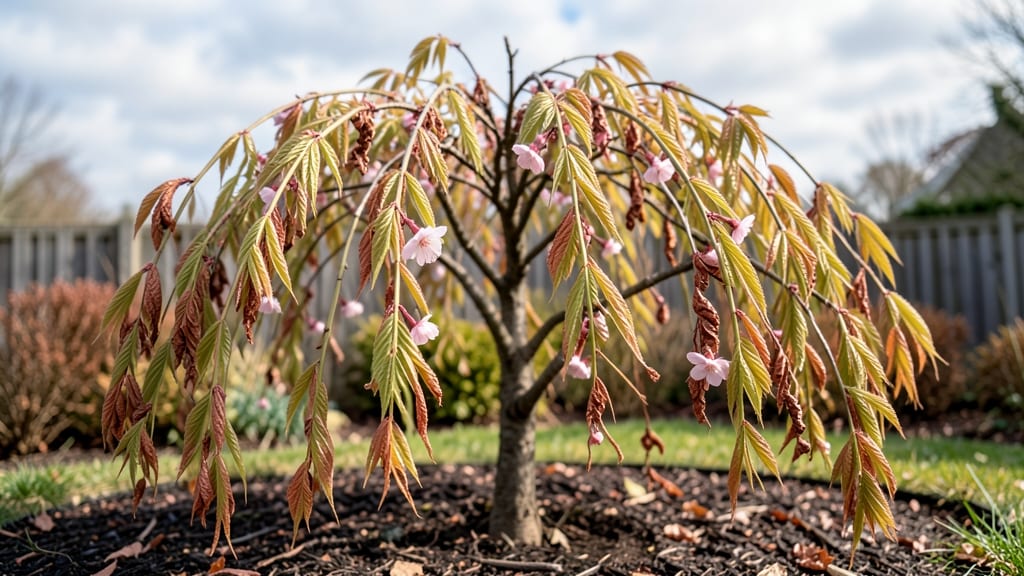
Your weeping cherry’s leaves look like they’ve been curled into crispy little cups—🌿 and that’s exactly what leaf curl disease does. This fungal infection turns fresh spring growth into thick, puckered messes, and without action, it weakens your tree year after year.
The good news? Copper spray can stop it in its tracks within 24 hours of application, and proper pruning keeps future outbreaks under control.
Most gardeners spot the problem too late, when leaves are already curled and distorted. The fungus Taphrina deformans thrives in wet springs, and once it takes hold, it spreads through rain-splashed spores.
The real damage? Stunted growth, fewer blooms, and a tree that looks like it’s struggling just to stay alive. But here’s the secret: early treatment saves the season.
With copper spray, you’ll see leaves unfurl and regain their normal shape within days. Prune out infected branches in late winter (before buds swell), sterilize your tools, and apply copper fungicide as soon as you spot the first curled leaf. The key is acting fast—before the fungus gets comfortable.
This method works for weeping cherries, standard cherries, and even ornamental trees with similar symptoms. The goal isn’t just to fix the damage but to break the cycle so your tree stays healthy for years. Let’s get those leaves back to normal—and keep them that way.
Root Causes of Leaf Distortion
Weeping cherry trees are prized for their graceful, drooping branches and stunning spring blooms—but when their leaves develop unsightly curls, puckers, or crispy edges, it’s often a sign of underlying stress. Understanding the why behind these symptoms is the first step to restoring your tree’s health.
Below, we break down the most common triggers, from fungal invaders to environmental missteps, with actionable science-backed explanations.
Leaf curl in weeping cherries is most famously tied to Taphrina deformans, a fungus that thrives in cool, wet conditions. Here’s how it hijacks your tree:
- Spore Spread: The fungus overwinters in infected leaves or buds. When spring arrives, spores splash onto new growth via rain or overhead irrigation, germinating within 24–48 hours if humidity exceeds 70%.
- Cellular Hijacking: Taphrina secretes enzymes that disrupt the leaf’s meristem (growth tissue), causing cells to swell asymmetrically. This creates the signature curled, thickened edges.
- Nutrient Theft: Infected leaves can’t photosynthesize efficiently, starving the tree of energy. Severe cases lead to premature leaf drop and weakened branches.
💡 Pro Tip: Identify fungal curl by checking the underside of leaves for olive-green, powdery fungal growth. Unlike bacterial spots, fungal curl rarely causes dark lesions.
Weeping cherries are finicky about their climate. Extreme swings or prolonged stress from weather can trigger curl without any pathogen involvement:
| Cause | Mechanism | Actionable Fix |
|---|---|---|
| Late-Freeze Damage | Bud break followed by a 28°F or lower snap causes cells to rupture. Leaves emerge curled or distorted as they struggle to repair. | Plant in microclimates (e.g., south-facing slopes) or use frost cloth during bloom. |
| Overhead Watering | Wet foliage for >12 hours/day creates ideal conditions for fungal spores and weakens leaf cuticles, making them prone to curling. | Switch to drip irrigation or water at the base in early morning. |
| Drought Stress | Soil moisture <30% triggers abscisic acid (ABA) production, a hormone that causes leaves to curl inward to reduce water loss. | Mulch with 3–4 inches of wood chips and water deeply twice weekly in dry spells. |
Weeping cherries are heavy feeders, but imbalances—especially with boron or zinc—can warp leaves long before other symptoms appear:
- Boron Deficiency: Leaves curl upward at the edges due to disrupted cell wall formation. Boron is critical for calcium uptake; without it, new growth becomes brittle.
- Zinc Toxicity: Excess zinc (from over-fertilized soil or well water) blocks iron uptake, causing interveinal chlorosis (yellowing between veins) and curled, stunted leaves.
- Nitrogen Burn: Sudden spikes in nitrogen (e.g., fresh manure or synthetic fertilizers) force rapid growth, but leaves can’t keep up, leading to cupping and crispy margins.
🔥 Quick Test: Send a soil sample to your local extension office for a pH + micronutrient analysis. Weeping cherries prefer pH 6.0–7.0.
While less common than fungi, pests like spider mites or cherry leafroll viruses (transmitted by aphids) can cause curling:
- Spider Mites: Their saliva contains toxic enzymes that disrupt leaf cell membranes, leading to stippling and curl. Severe infestations cause bronzing (reddish-brown patches).
- Leafroll Virus: Spread by green peach aphids, this virus alters leaf morphology by hijacking plant hormones, causing upward curling and reduced vigor.
🕵️♂️ Scout for Signs: Check for fine webbing (mites) or sticky honeydew (aphids) on the undersides of leaves.
Revive Your Tree’s Health Now
Weeping cherry trees are stunning when healthy, but leaf curl can turn their lush foliage into a sad, crispy mess. The good news? Most cases are treatable—and often, you can see improvements in just a few days with the right approach.
Below, we break down the most common causes of leaf curl and the easy, actionable fixes to restore your tree’s beauty. Plus, we’ll share pro tips to keep it thriving long-term.
If your weeping cherry’s leaves are curling, yellowing, or developing dark spots, a fungal infection (like leaf spot or anthracnose) is likely the culprit. Copper fungicide is your best friend here—it’s organic, effective, and works in as little as 24 hours.
🔥 Step-by-Step Copper Spray Treatment
- 🍳 Choose the Right Spray
- Use a copper fungicide (like Copper Soap or Bordeaux Mixture).
- Avoid homemade remedies (like vinegar or baking soda)—they’re too harsh for delicate cherry leaves.
- 👨🍳 Apply at the Right Time
- Spray early morning or late evening (when the sun isn’t intense) to prevent leaf burn.
- Focus on the undersides of leaves (where fungi love to hide) and stems.
- ⏰ Follow the Schedule
- Apply every 7–10 days until new growth appears healthy.
- For severe cases, add a second spray in 2–3 weeks.
- 🌡️ Boost Recovery with Good Care
- Water at the base of the tree (not overhead) to keep leaves dry.
- Mulch around the trunk to improve soil health and reduce stress.
✨ Pro Tip: If your tree is young or weak, mix in a seaweed fertilizer (like Maxsea) to strengthen its defenses.
Leaf curl can also signal watering woes. Too much or too little water stresses the tree, causing edges to crisp and curl.
💡 Fix It Fast
| Problem | Solution | Prevention Tip |
|---|---|---|
| Overwatering | Let the top 2–3 inches of soil dry between waterings. | Install a soil moisture meter. |
| Underwatering | Water deeply 2–3 times per week (not daily light sprinkles). | Mulch with wood chips to retain moisture. |
| Poor Drainage | Amend soil with compost or perlite to improve airflow. | Plant on a slight slope if possible. |
🔥 Quick Test: Stick your finger in the soil—if it’s soggy past 2 inches, cut back on watering. If it’s bone-dry, it’s time to hydrate!
Wind, extreme heat, or harsh chemicals (like herbicides drifting from lawns) can also trigger leaf curl. Here’s how to protect your tree:
🌡️ Adjust for Weather & Location
- 🌬️ Wind Damage? Wrap the tree in burlap or plant a windbreak (like a shrub row).
- ☀️ Too Much Sun? Prune nearby structures or add shade cloth during peak heat.
- 🧴 Chemical Burn? Avoid spraying herbicides or pesticides near the tree. If accidental drift occurs, rinse leaves with water immediately.
🎯 Prevention Bonus: Plant weeping cherries in partial shade if you live in a hot, dry climate—they’ll thank you with fewer stress curls!
Crowded branches trap moisture and fungi. A little strategic pruning can prevent leaf curl before it starts.
✂️ How to Prune Like a Pro
- 🔪 Remove Dead/Diseased Branches First
- Cut back any blackened, mushy, or curling branches to the nearest healthy growth.
- 🌿 Thin Out the Canopy
- Focus on inner branches that block airflow. Aim for a 20–30% reduction in density.
- 🌱 Shape for Sunlight
- Open up the center so light reaches all leaves (fungi hate sunlight!).
⏰ Best Time to Prune: Late winter or early spring (before new growth starts). Avoid pruning in fall—it stresses the tree when fungi are most active.
With these fixes, your weeping cherry should bounce back in weeks—not seasons. Start with the most likely cause (usually fungi or watering), then layer in prevention tips to keep it lush. Happy growing! 🌿
Frequently asked questions
Can copper spray harm beneficial insects like bees?
Copper fungicides are generally safe for bees when applied correctly. Use it only when flowers aren't open (early morning or late evening), and avoid spraying during peak bee activity. The copper particles don't stick to pollinators like some chemical fungicides do, but always follow label instructions for timing.
How do I tell if my weeping cherry has leaf curl from fungus or just drought stress?
Check the leaf undersides for olive-green fungal growth (fungal curl) or examine the soil moisture (drought stress). Fungal curl often appears on new growth first, while drought stress causes uniform curling across older leaves. Also, fungal curl rarely causes dark spots - those suggest bacterial issues instead.
Is it safe to prune infected branches during rainy weather?
Never prune during wet conditions! Damp tools and branches spread fungal spores faster. Wait for dry weather, sterilize your pruners with rubbing alcohol between cuts, and dispose of infected branches in the trash (not your compost pile) to prevent reinfection.
Will my weeping cherry recover completely if I treat leaf curl early?
With prompt treatment, most trees make a full recovery! New growth typically appears healthy within 2-3 weeks of consistent copper applications. The key is catching it before the fungus spreads to more than 20% of the canopy. Even severely affected trees often bounce back with proper care.
Can I use the same copper spray on my other fruit trees?
Yes, copper fungicides are safe for most fruit trees when used according to label rates. However, avoid using it on stone fruits (like peaches) during bloom - copper can damage pollen. For weeping cherries, apply copper sprays preventatively in early spring before bud break for best results.