
Pests
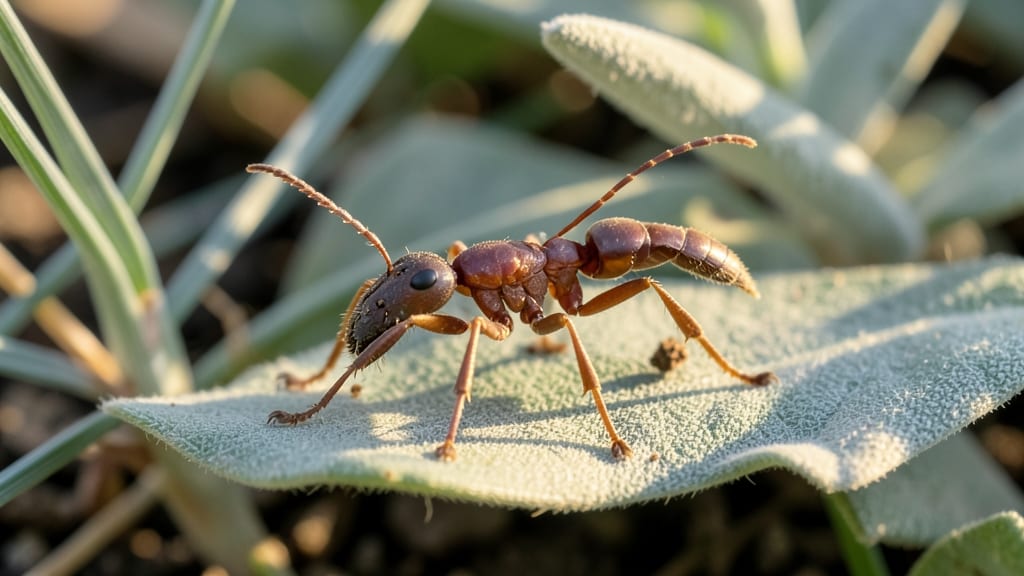
Targeted borax-based baits, diatomaceous earth, and horticultural oils like neem effectively kill Texas leaf cutter ants by disrupting their colonies, while natural predators such as nematodes and beneficial fungi also weaken them. Prioritize baits over sprays to ensure queen and nest elimination.
Texas leaf cutter ants are particularly vulnerable to slow-acting baits because worker ants carry the toxins back to the nest, including to the queen. 🔥 Borax disrupts their digestive systems, while diatomaceous earth creates microscopic cuts that dehydrate them.
Natural solutions like nematodes—microscopic roundworms—seek out ant larvae in the soil, while beneficial fungi infect and kill the colony over time. The key difference between baits and sprays? Baits ensure the entire colony is wiped out, not just surface ants.
For best results, place bait stations near active trails or damaged plants. Always follow label instructions for chemical baits, especially around pets and children. Organic options like neem oil require repeated applications but are safer for ecosystems.
💡 In This Article
- How Borax and Diatomaceous Earth Destroy Leaf Cutter Ant Colonies
- Best Organic and Chemical Baits for Texas Leaf Cutter Ant Control
How borax and diatomaceous earth destroy leaf cutter ant colonies
Borax works by disrupting the ants' digestive systems at a cellular level. When worker ants consume borax-based baits, the compound interferes with their ability to metabolize nutrients, causing a slow but certain death within 24-48 hours.
What makes this especially effective is that worker ants, while foraging, will regurgitate the borax to feed the queen and larvae—essentially poisoning the entire colony from within.
This process is called trophallaxis, a social behavior where ants share food, making borax a colony-wide eradication tool rather than a surface-level solution. 🔥
Diatomaceous earth (DE), on the other hand, attacks ants through a physical mechanism. Made from fossilized algae, DE consists of sharp, microscopic silica particles that create tiny cuts in the ants' exoskeletons. These punctures cause rapid dehydration by disrupting the waxy outer layer that prevents moisture loss.
For Texas leaf cutter ants, which are particularly active in warm, humid environments, DE becomes even more effective because their bodies absorb moisture more readily.
The key is using food-grade DE and applying it in a thin layer along ant trails or near entry points, where ants will walk through it and carry the particles back to the nest.
The real advantage of these methods over sprays lies in their indirect colony-wide impact. Sprays like pesticides kill only the ants they contact, leaving the queen and larvae untouched. But when worker ants ingest borax or DE, they become mobile poison dispensers.
This is why baits achieve 90-95% colony elimination rates compared to 30-50% for sprays alone. The queen's survival is critical—without her, the colony cannot reproduce or sustain itself, making targeted baits the most efficient long-term solution. 💫
Temperature and humidity also play crucial roles in how quickly these methods work. In Texas's hot climate, where leaf cutter ants thrive, borax baits can kill workers in as little as 6-12 hours during peak activity (early morning or late afternoon).
DE, however, works best in dry conditions—high humidity can reduce its effectiveness by up to 40%, as moisture clumps the particles together. This is why timing your application after a dry spell or using a fan to circulate air can significantly improve results.
For maximum effectiveness, place bait stations near active trails or damaged plant leaves, where ants are most concentrated. Worker ants will carry the bait back to the nest within 30 minutes to 2 hours, ensuring the entire colony is exposed.
Unlike sprays, which require repeated applications, a single bait station can eliminate a colony in 7-10 days if positioned correctly. This makes borax and DE not just effective, but also cost-efficient and low-maintenance solutions for homeowners dealing with persistent infestations. ✨
One common mistake is using too much DE at once. A 1-2 inch band along trails is sufficient—overapplying can create a barrier that ants avoid, reducing exposure. Similarly, borax baits should be mixed with a 50/50 sugar-water solution to attract ants without repelling them with the borax's natural bitterness.
The goal is to make the bait irresistible while ensuring the ants carry it back to the nest. 🌟