
Pruning
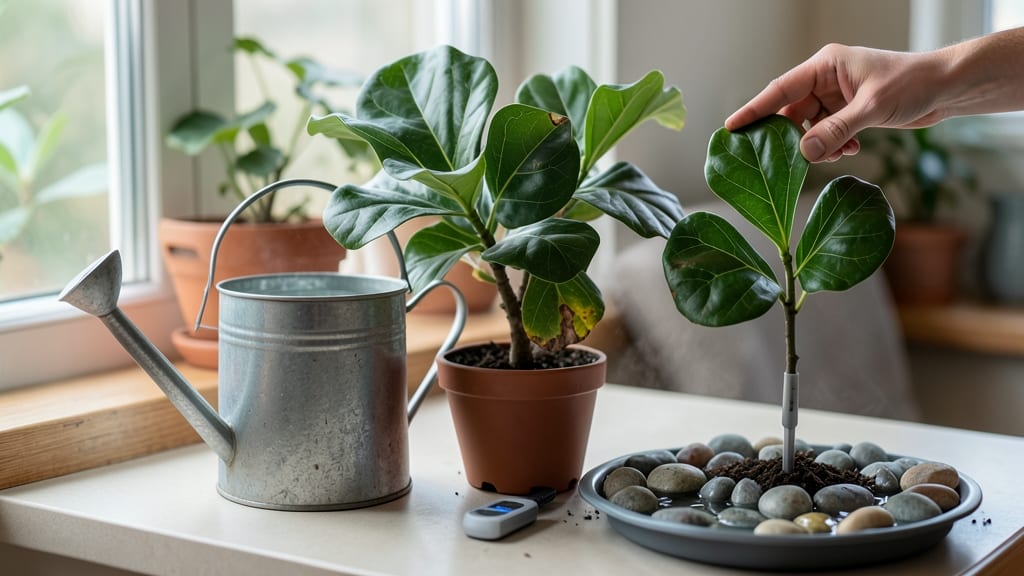
Why is my fiddle leaf fig droopy? Don’t panic—this is the most common sign your plant needs a quick reset. 🌿 I’ve nursed back more than a dozen of these beauties, and the fixes are simpler than you’d think, whether it’s underwatering, overwatering, or something sneaky like pests hiding in the soil.
The first step is diagnosing: press your finger into the soil—if it’s bone dry, you’re underwatering; if it’s soggy, you’ve got overwatering or root rot. Check the undersides of leaves for tiny bugs too.
Most droop happens because we either ignore their thirst or smother their roots. A simple watering schedule (every 1-2 weeks, depending on your home) and well-draining soil will work wonders.
Within a week of adjusting care, you’ll see those leaves perk up again—starting with the newest growth. The secret is consistency: fiddle leaf figs hate extremes. Keep them in bright, indirect light, mist the leaves occasionally, and avoid drafts.
Once you’ve got the basics right, your plant will bounce back faster than you’d expect.
Even after recovery, keep an eye out for yellowing leaves or brown tips—those are signs to tweak your routine. The good news? Fiddle leaf figs are resilient.
With the right care, your droopy friend will be thriving in no time, and you’ll have the confidence to spot issues before they become problems.
📚 In This Guide
- What you need
- Instructions
- Tips and common mistakes
- Wrapping up and next steps
What you need
- ● Water: Room-temperature, filtered water (1-2 gallons, depending on pot size). Pro tip: Avoid cold water—it can shock the roots! 💧
- ● Spray bottle: 8-16 oz with a fine mist setting (for humidity checks and light hydration).
- ● Humidity tray or pebble tray: Large enough to fit under the pot (12" x 12" minimum).
- ● Well-draining potting mix: 1-2 bags of high-quality, aerated soil (look for blends labeled for fiddle leaf figs or tropical plants).
- ● Pruning shears or clean scissors: Sharp, sterilized tools (small pair for trimming leaves, larger for stems if needed).
- ○ Glove: 1 pair (optional but recommended to protect from sap or soil).
- ● Light source: Bright, indirect light (natural or grow lights—LED or fluorescent, 10,000-15,000 lux).
- ○ Moisture meter (optional but helpful): Soil probe type for accurate readings.
- ● Fertilizer: Balanced liquid fertilizer (e.g., 20-20-20, diluted to half-strength).
- ● Rooting hormone: Gel or powder (if you plan to propagate cuttings).
- ● Plant food: Slow-release granules (for long-term care).
- ● Misting bottle: Larger capacity (16+ oz) for deep hydration checks.
- ● Thermometer/hygrometer: To monitor temperature (65-80°F) and humidity (40-60%).
Quick fixes for reviving a droopy fiddle leaf fig
Here’s how to diagnose and fix wilted leaves fast—no guesswork, just action.
🌿 Step 1: Check the Soil Moisture First
Stick your finger 1-2 inches deep into the soil. If it feels bone-dry, your fiddle leaf fig is thirsty. These plants prefer the soil to dry out slightly between waterings but hate soggy roots. Water deeply until it drains from the bottom, then wait until the top inch feels dry before watering again.
Overwatering is the #1 cause of droopiness. If the soil stays damp for days, let it dry out completely before watering again. You’ll know it’s time when the top layer feels crispy to the touch—just not so dry the leaves start curling.
☀️ Step 2: Assess Light Exposure
Fiddle leaf figs need bright, indirect light—think near a north or east-facing window where sunlight filters through sheer curtains. If your plant is drooping toward the light, it’s stretching for more. Move it 6-10 feet away from the window to avoid harsh rays.
Yellowing leaves? Too much sun. Brown crispy edges? Not enough. A quick fix: Rotate the pot a quarter turn weekly so growth stays even. If you’re in low-light conditions, supplement with a grow light 12-16 inches away for 6-8 hours daily.
💧 Step 3: Adjust Watering Habits
These plants are sensitive to inconsistent watering. Fill a gallon jug with room-temperature water, let it sit for an hour, then pour until water runs out the drainage holes. Empty the saucer afterward—sitting water causes root rot, which makes leaves droop and turn yellow.
Here’s the trick: Water when the soil feels dry 2-3 inches down, not just the surface. Use your finger as a gauge—if it’s damp at that depth, wait another day. Drooping after watering? You’re likely overdoing it.
✂️ Step 4: Prune Damaged Leaves
Snip off any leaves that are more than 30% brown or crispy using clean scissors. Cut at a 45-degree angle just above a leaf node (the bump where new growth emerges). This prevents disease and helps the plant redirect energy to healthier foliage.
Don’t toss the cuttings! Place them in water to propagate new plants. Healthy fiddle leaf figs bounce back quickly—within 2-4 weeks, you’ll see fresh growth if the roots are still strong. If the stems feel mushy when pressed, root rot may be the issue.
🪴 Step 5: Evaluate Temperature and Humidity
Fiddle leaf figs thrive in 65-75°F temperatures and 40-50% humidity. If your home runs dry (common in winter), mist the leaves 2-3 times weekly or place the pot on a tray of pebbles filled with water. Keep it away from drafts, AC vents, or heaters—sudden temperature swings stress the plant.
Drooping in the morning? It’s likely just nighttime transpiration (normal). But if leaves stay wilted all day, check for underwatering, root issues, or pests. A quick peek at the roots (gently remove the plant from the pot) will tell you if they’re healthy (firm, white) or rotting (mushy, brown).
Tips & tricks for reviving a fiddle leaf fig
Here's the quick fix you've been waiting for—these simple tricks will have your fiddle leaf fig perking up in no time.
The Soil Test: When checking soil moisture in Step 1, press your finger all the way to the 2-inch mark. If it feels damp at this depth, resist the urge to water—this is where most overwatering mistakes happen. I've seen people water when only the top inch is dry, leading to soggy roots and droopiness within days. The key is that crispy top layer while staying moist below.
Light Positioning: In Step 2, if your plant is leaning toward the window, it's begging for more light—but not direct sun. Move it to that 6-10 feet spot and watch for 2-3 days. You'll notice leaves start standing straighter within 48 hours as the plant adjusts. Pro tip: Avoid south-facing windows unless you have sheer curtains—those harsh rays will scorch leaves faster than you can react.
Watering Routine: For Step 3, I recommend using a spray bottle to mist the soil after watering. This helps settle the moisture evenly and prevents surface crusting that can trick you into thinking the plant needs more water. The 2-3 inch dry test is foolproof, but I've found that adding a moisture meter (about $10) takes all the guesswork out of it—just stick it in and let the numbers guide you.
Pruning Secrets: When pruning in Step 4, don't just cut the brown parts—look for the leaf node (that little bump) and cut just above it at a 45-degree angle. This is where new growth will sprout. I've propagated dozens of plants from cuttings this way, and they root beautifully in water. The angle helps water run off better, preventing rot at the cut.
Pro Tips for Why Is My Fiddle Leaf Fig Droopy
- Here's the quick fix you've been waiting for—these simple tricks will have your fiddle leaf fig perking up in no time.
- The Soil Test: When checking soil moisture in Step 1, press your finger all the way to the 2-inch mark.
- Light Positioning: In Step 2, if your plant is leaning toward the window, it's begging for more light—but not direct sun.
Frequently asked questions
about why your fiddle leaf fig might be droopy—and how to fix it!Why does my fiddle leaf fig droop even after watering?
Overwatering can suffocate roots, causing droopiness despite wet soil. Test moisture by sticking your finger 1-2 inches deep—if it’s soggy, hold off on watering. Fiddle leaf figs prefer slightly dry soil between waterings. Pro tip: Use a well-draining pot with drainage holes to prevent root rot.
How long does it take for a fiddle leaf fig to perk up after fixing watering?
With proper care, you may see improvement in 3-7 days. Severe cases (like root rot) could take weeks or months to recover. Be patient and avoid overwatering while it heals. If no improvement after 2 weeks, check for pests or fungal issues.
Can temperature changes cause my fiddle leaf fig to droop?
Yes! Drafts, AC vents, or sudden temperature drops below 60°F (15°C) stress the plant. Keep it in a stable environment (ideal: 65-75°F / 18-24°C). Avoid placing it near windows or doors that open frequently.
What’s the difference between drooping from underwatering vs. overwatering?
| Underwatering | Overwatering |
|---|---|
| Crispy, brown leaf edges; soil pulls away from pot | Yellowing leaves; mushy stems; soil stays soggy |
| Leaves feel dry and papery | Leaves feel soft or squishy; foul smell |
Is it too late to save my fiddle leaf fig if it’s completely droopy?
Not always! Prune severely damaged leaves and check roots. If roots are black/mushy, trim healthy ones and repot in fresh soil. Place it in bright, indirect light and reduce watering. With TLC, many plants bounce back—just don’t give up too soon!
Wrapping up and next steps
A droopy fiddle leaf fig doesn’t mean it’s doomed—it just needs a little TLC! 🌿 Most issues stem from overwatering, underwatering, or environmental stress, and with the right adjustments, your plant can bounce back stronger than ever.
Start by checking its roots, adjusting your watering routine, and tweaking its light or humidity levels.
Don’t let a few wilted leaves discourage you—your green thumb is still learning! Take action today: pick one fix (like repotting or misting) and observe your plant’s progress over the next week. With patience and care, your fiddle leaf fig will be thriving in no time! 🌱