
Leaf Blower
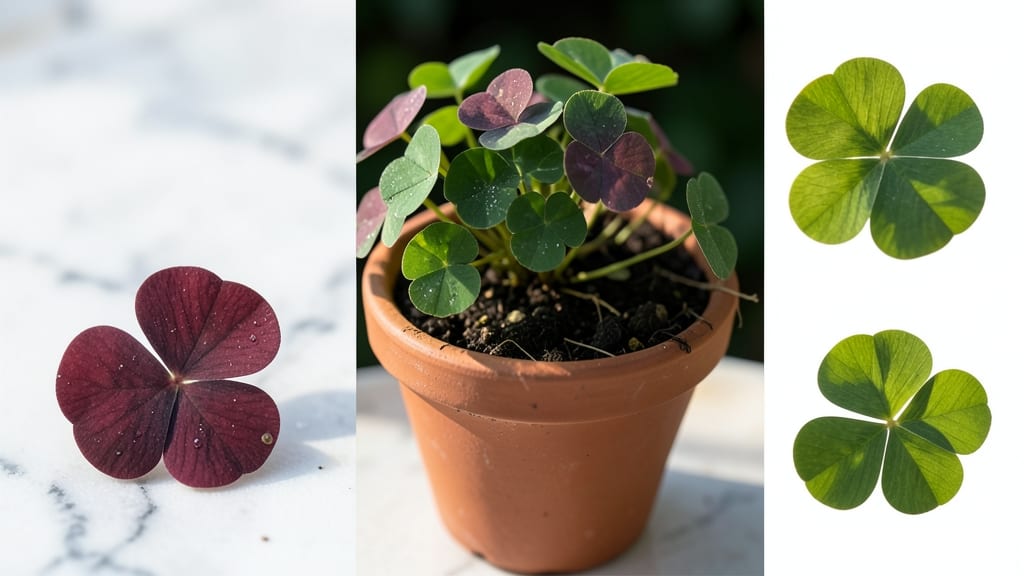
Yes, five-leaf clovers are real but occur as a rare genetic mutation in white clover (Trifolium repens). This anomaly makes them highly sought-after in folklore and gardening, though they remain uncommon in nature.
These extra-leaf clovers form when a chromosomal variation causes an additional leaflet to develop, creating that coveted fifth leaf. 🌿 Unlike the more common four-leaf variety, true five-leaf clovers are even rarer—estimated to appear in about 1 in 10,000 plants.
Gardeners often hunt for them in dense clover patches, where mutations are slightly more likely to emerge due to environmental stressors or cross-pollination.
What makes them special isn't just their rarity but their cultural significance. Many believe finding one brings good luck, though botanically they're simply a fascinating quirk of nature's genetic diversity. If you're growing clover intentionally, maintaining healthy soil and avoiding herbicides can increase your odds of spotting these unusual plants.
💡 In This Article
- The Science Behind Five-Leaf Clover Mutations
- How to Grow and Spot Five-Leaf Clovers
The science behind five-leaf clover mutations
Five-leaf clovers emerge from a fascinating genetic quirk in white clover (Trifolium repens), where an extra leaflet develops due to a chromosomal mutation. Normally, white clover grows with three leaflets arranged in a trifoliate pattern, controlled by specific genes regulating leaf formation.
The fifth leaf appears when an extra meristem (growth point) activates during development, often triggered by environmental stressors like drought or poor soil conditions.
This anomaly occurs at a rate of roughly 1 in 10,000 plants—far rarer than the more common four-leaf clover (1 in 10,000 to 1 in 5,000). 🌱
The mutation isn't hereditary in the traditional sense; it's a spontaneous somatic change that affects only that specific plant. Scientists classify this as a "chimeral mutation," where different cells within the same plant exhibit varying genetic expressions.
This explains why you might find five-leaf clovers growing alongside perfectly normal three-leaf varieties in the same patch. The extra leaflet doesn't alter the plant's reproductive capabilities, so it won't produce offspring with five leaves—each new generation starts fresh with the standard three-leaf pattern.
What makes five-leaf clovers botanically intriguing is how their development mirrors other plant mutations, like those seen in some varieties of roses or maples. The additional leaflet forms from the same genetic blueprint but with an extra activation signal during the plant's early growth stages.
This process is similar to how some flowers develop extra petals—a phenomenon called "pleiotropy," where a single genetic change affects multiple traits. In clovers, this mutation doesn't harm the plant; it simply adds an extra leaflet without disrupting its overall health or growth pattern. 🌿
Environmental factors play a crucial role in triggering these mutations. Research shows that clover plants grown in nutrient-poor soils or exposed to mild stress (like occasional drought) have slightly higher mutation rates.
This is because the plant's DNA repair mechanisms may become less precise under stress, leading to rare genetic variations. Gardeners in cooler climates often report finding more five-leaf clovers, possibly because the slower growth rates in temperate zones allow mutations to manifest more visibly.
The key takeaway? While you can't control mutations, creating optimal growing conditions might just increase your chances of spotting one of nature's rarest botanical curiosities.
It's worth noting that five-leaf clovers aren't a separate species—they're still Trifolium repens, just with an extra leaflet. This sets them apart from four-leaf clovers, which sometimes result from different genetic mechanisms (like chromosome doubling) and can occasionally be hereditary.
The five-leaf variety remains purely a fluke of nature's genetic experimentation, making each discovery a temporary marvel in an otherwise uniform plant population. 🌟