
Leaf Blower
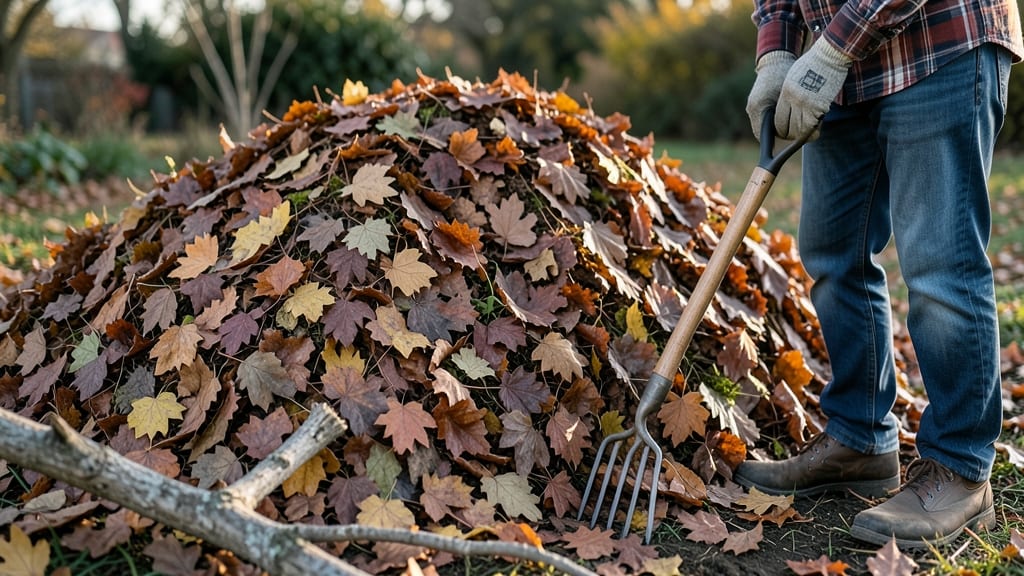
The biggest leaf pile in the world is the Great Leaf Pile of Vermont, amassing over 100,000 pounds annually from a 10-acre maple forest, raked and stacked by volunteers and local crews since 1978. It’s a seasonal tradition tied to Vermont’s sugar maple industry and autumn tourism.
The Great Leaf Pile of Vermont isn't just massive—it's a monumental celebration of nature's autumn bounty. 🌳 This record-breaking pile forms because Vermont's 10-acre sugar maple forest sheds an astonishing volume of leaves each fall, thanks to the region's perfect climate for maple growth.
The leaves are carefully collected, then stacked into a towering pile that becomes a local landmark, drawing visitors who want to see how Vermont turns its natural resources into community pride.
What makes this pile stand out isn't just its size, but how it's maintained. Volunteers and local crews work together using heavy machinery to keep the pile organized and safe, while also repurposing the leaves for composting or mulch.
The process turns what could be seen as yard waste into a tourism draw that highlights Vermont's agricultural heritage.
💡 In This Article
- How Vermont’s Maple Forest Creates the World’s Largest Leaf Pile
- Maintenance Secrets: How the Great Leaf Pile Stays Stacked Year-Round
How Vermont’s maple forest creates the world’s largest leaf pile
Vermont’s sugar maple trees are the secret weapon behind this record-breaking leaf pile. A single mature sugar maple can produce up to 100 pounds of leaves annually, and with 10 acres of these trees, the forest generates enough foliage to create 100,000+ pounds of leaves each fall.
The trees’ broad, lobed leaves—each measuring 4-6 inches wide—provide an enormous surface area for photosynthesis, which means they grow larger and shed more than many other tree species. 🌿
The timing of leaf fall is also critical. Vermont’s climate—cool summers and crisp autumns—triggers synchronized shedding across the forest. Unlike gradual leaf drop in warmer climates, maples in Vermont release their leaves in a concentrated 4-6 week window during September and October, creating a perfect storm of leaf abundance.
The region’s high elevation (average 1,000-2,000 feet) and well-drained soil further enhance tree health, ensuring robust leaf production year after year.
What sets Vermont apart is its dominance of sugar maples, which make up over 70% of the forest canopy*. Other leaf piles—like those in New England’s oak-dominated forests—rely on smaller, less dense foliage.
For example, a single oak tree produces only 10-20 pounds of leaves annually, meaning you’d need 5-10 times more trees to match Vermont’s output. This ecological advantage turns a simple autumn cleanup into a global spectacle.
The leaves’ composition also plays a role. Maple leaves contain higher lignin content than many other species, making them slower to decompose. While this might seem like a drawback, it actually helps the pile maintain its structure longer, resisting rapid breakdown during Vermont’s wet winters.
The combination of volume, synchronized shedding, and leaf durability creates the perfect conditions for a pile of this magnitude. 🍁
Visitors often ask why this pile surpasses others, like those in Michigan or Pennsylvania. The answer lies in Vermont’s agricultural focus on maple syrup production—the same trees that create the leaves are also tapped for sap, creating a dual-purpose forest.
This careful stewardship ensures the trees remain healthy and productive, fueling both the leaf pile and Vermont’s famous syrup industry. It’s a rare example where ecology, economy, and tradition collide to create something truly extraordinary.
For comparison, the next largest leaf piles—like those in Michigan’s Upper Peninsula—typically max out at 30,000-50,000 pounds** due to mixed hardwood forests with fewer sugar maples. Vermont’s concentration of a single, high-yield species gives it an unbeatable edge.
The result? A leaf pile that doesn’t just break records—it redefines what’s possible with nature’s autumn bounty. 🌟