
Shrubs
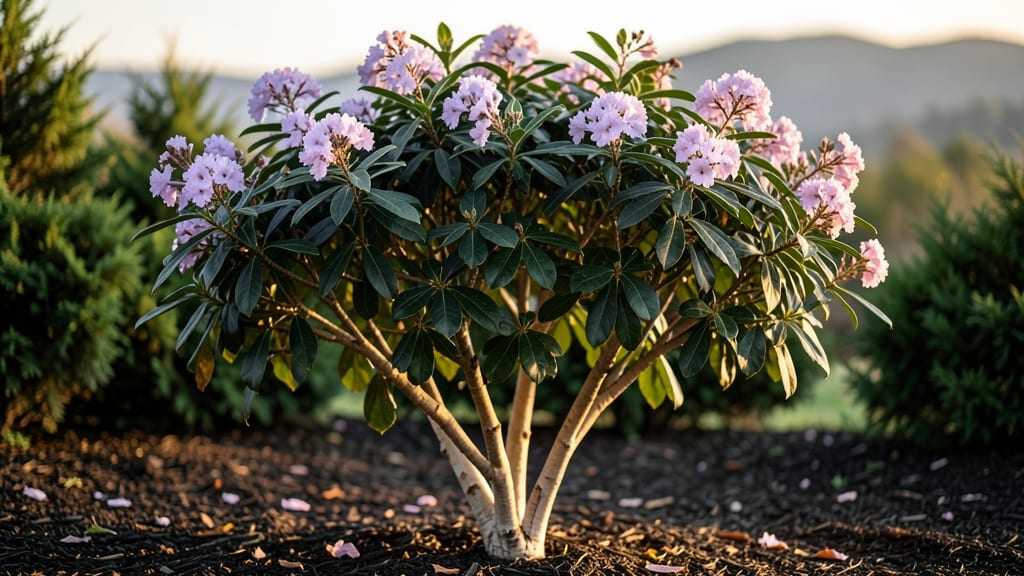
Growing a black leaf crepe myrtle (Lagerstroemia) means year-round drama in your yard—deep purple-black foliage that glows in summer and fiery reds in fall. 🌿 I learned the hard way that these shrubs aren’t just pretty; they’re tough, thriving in zones 5-9 where other plants fail.
The key? Full sun, well-drained soil, and smart pruning to keep them healthy and bushy. These shrubs handle drought like a champ once established, but they hate soggy roots.
Plant in spring or fall with 3-5 feet of space between plants, and watch them grow into small trees or privacy screens. My neighbor’s black leaf crepe myrtle now stands taller than our fence, and it’s only been three years!
The real magic happens in late summer when tiny white flowers bloom, followed by winter’s bold red stems. Prune in late winter to shape it and encourage new growth—just avoid cutting into old wood. Avoid overwatering; these plants are tougher than they look.
Perfect for mixed borders, foundation plantings, or even as a standalone specimen. They’re low-maintenance but high-impact, giving you color and structure all year. Let’s get yours planted!
Understanding Blackened Foliage Causes
If your crepe myrtle’s leaves are turning black, it’s often a distress signal from the plant. While some causes are harmless, others can signal serious health issues. Let’s break down the most common reasons behind this unsightly symptom—and how to identify them.
Fungal diseases like tar spot, anthracnose, or powdery mildew thrive in warm, humid conditions and can cause leaves to blacken rapidly. These pathogens often appear as:
- Tar spot: Tiny, black, tar-like spots with yellow halos, often on upper leaves.
- Anthracnose: Dark, sunken lesions that may ooze or drop out, leading to leaf death.
- Powdery mildew: White, powdery patches that later turn brown or black as spores mature.
Why it happens: Fungi spread via spores carried by wind, water, or contaminated tools. Overhead watering, poor air circulation, and dense foliage create the perfect breeding ground. Crepe myrtles are particularly susceptible when stressed from drought, poor soil, or over-fertilization.
While crepe myrtles are drought-tolerant, excessive moisture can suffocate roots, leading to root rot (often caused by Phytophthora or Pythium fungi). Blackened leaves paired with yellowing or wilting are classic signs.
Why it happens: Waterlogged soil cuts off oxygen to roots, triggering anaerobic bacteria and fungi. Heavy clay soils, compacted ground, or containers without drainage holes worsen the problem. Overwatering in cooler months (when growth slows) is especially risky.
Bacterial leaf spot (Xanthomonas or Pseudomonas) causes greasy, black, or brown spots with water-soaked edges. Unlike fungal spots, bacterial infections often have yellow halos and may ooze when wet.
Why it happens: Bacteria thrive in wet conditions and spread via splashing water, tools, or even rain. Crepe myrtles under stress (from heat, drought, or injury) are more vulnerable. Unlike fungi, bacteria can’t be controlled with fungicides—copper-based bactericides are the only defense.
Crepe myrtles are cold-hardy, but sudden temperature swings, late frosts, or scorching heat can shock the plant, causing leaves to blacken. Look for:
- Cold damage: Blackened edges or tips on new growth after a hard freeze (<32°F).
- Heat stress: Scorched, crispy black patches on leaves exposed to direct sun without acclimation.
- Windburn: Ragged, blackened leaf edges from harsh winds.
Why it happens: Young leaves are most sensitive. Cold damage occurs when cells freeze and rupture, while heat stress leads to protein denaturation in leaf tissues. Wind desiccates leaves by increasing transpiration rates faster than roots can replace moisture.
Pests like aphids, scale insects, or spider mites feed on sap, injecting toxins that cause leaves to blacken or develop sooty mold (a black, fuzzy fungus that grows on their honeydew). Check for:
- Sticky residue on leaves (honeydew).
- Visible bugs or webbing on undersides.
- Black mold-like growth on upper leaves.
Why it happens: Pests weaken the plant, making it susceptible to secondary fungal infections. Sooty mold thrives on the sugary honeydew excreted by sap-suckers, blocking sunlight and further stressing the foliage.
While crepe myrtles tolerate poor soil, severe deficiencies in iron, manganese, or magnesium can cause interveinal chlorosis (yellowing between veins) followed by blackening as tissues die. Common in:
- Alkaline soils (pH >7.0): Locks out iron and manganese.
- Compacted or clay soils: Restrict root access to nutrients.
- Over-fertilization with nitrogen: Burns roots, preventing uptake.
Why it happens: Micronutrients are essential for chlorophyll production and enzyme function. In alkaline conditions, iron becomes insoluble, while manganese and magnesium deficiencies disrupt photosynthesis, leading to leaf necrosis (death) and blackening.
Fixing Darkened Crepe Myrtle Leaves
Blackened or dark leaves on your crepe myrtle can be a frustrating sight, but the good news is that most issues are fixable with the right approach. Whether the problem stems from disease, pests, or environmental stress, these targeted solutions will help restore your shrub’s vibrant health.
Let’s tackle the most common causes—and how to reverse them—step by step.
Signs: Yellowing leaves, wilting, or dark, mushy foliage that may smell foul.
How to Fix It: 🔥 Adjust Your Watering Routine Cut back on watering immediately. Crepe myrtles prefer dry soil between waterings—aim for 1–1.5 inches of water per week, including rainfall. Water deeply but infrequently to encourage strong root growth.
👨🍳 Improve Soil Drainage If your shrub is planted in heavy clay or compacted soil, amend the area with compost or organic matter to loosen the soil. For containers, ensure pots have drainage holes and use a well-draining potting mix.
🥘 Prune Affected Foliage Remove any dark, soggy leaves with sterilized pruners to prevent fungal spread. Focus on lower branches first, as these are most prone to rot.
💡 Prevention Tip: Plant crepe myrtles in mounds of soil (raised beds) to improve drainage, especially in low-lying areas where water pools.
Signs: Dark spots with yellow halos, grayish powdery coating, or leaves curling upward.
How to Fix It: 🔥 Remove Infected Leaves Prune away all diseased foliage and dispose of it in the trash (not compost). Avoid wetting leaves when watering—water at the base instead.
🍳 Apply Fungicide Use a copper-based fungicide or neem oil spray (follow label instructions). For organic solutions, mix 1 tsp baking soda + 1 quart water + a few drops of dish soap and spray every 7–10 days.
👨🍳 Boost Air Circulation Thin out overcrowded branches to improve airflow. If your shrub is planted too closely to a fence or wall, consider transplanting it to a sunnier, more open spot.
🌡️ Prevention Tip: Water in the early morning to allow leaves to dry quickly. Avoid overhead sprinklers, which spread fungal spores.
Signs: Sticky residue (honeydew), tiny webs, or blackened leaves with tiny bugs clinging to stems.
How to Fix It: 🔥 Blast Off Pests with Water Use a strong hose spray to dislodge scale insects and aphids. Repeat every few days for severe infestations.
🍳 Introduce Beneficial Insects Ladybugs, lacewings, and parasitic wasps naturally control pests. Purchase them from garden centers or attract them with neem oil sprays.
👨🍳 Use Insecticidal Soap Mix 1.5 tbsp mild castile soap + 1 quart water and spray directly on pests. Reapply every 5–7 days until they’re gone.
💡 Prevention Tip: Prune regularly to remove pest hiding spots. Wrap tree trunks with sticky bands to trap crawling insects before they reach the leaves.
Signs: Dark, crispy edges on leaves (especially in late summer) or blackened tips after a hard freeze.
How to Fix It: 🔥 Protect from Late Frost If your crepe myrtle is young or in a frost-prone zone, cover it with frost cloth during late spring frosts. Avoid overhead watering before cold snaps, as wet leaves freeze more easily.
🍳 Provide Afternoon Shade If your shrub is in a hot, exposed location, install light shade cloth (30–50% shade) during peak afternoon sun (1–4 PM). Mature crepe myrtles tolerate full sun, but young plants benefit from gradual acclimation.
👨🍳 Mulch for Insulation Apply 2–3 inches of mulch (wood chips or pine straw) around the base to regulate soil temperature. Keep mulch 6 inches away from the trunk to prevent rot.
🌡️ Prevention Tip: Choose cold-hardy varieties (like ‘Natchez’ or ‘Tonto’) if you live in Zone 5 or colder. Avoid planting in low spots where cold air settles.
- Fertilize Lightly: Use a balanced, slow-release fertilizer (10-10-10) in early spring to encourage new growth.
- Prune for Health: Remove dead, diseased, or crossing branches in late winter or early spring to improve airflow and sunlight penetration.
- Monitor Regularly: Check leaves weekly for early signs of stress, pests, or disease.
With these fixes, your crepe myrtle should bounce back to its glorious, lush green in no time. 🌿✨ Most problems are reversible—just act quickly and stay consistent!
Frequently asked questions about black leaf crepe myrtle
How fast does a black leaf crepe myrtle grow?
These shrubs grow at a moderate rate—about 12–24 inches per year under ideal conditions. With proper care, they can reach 10–15 feet tall within 5–7 years, making them perfect for quick privacy screens or statement plants. Prune annually to control height and shape.
Can black leaf crepe myrtle grow in containers?
Yes! They thrive in large containers (at least 18–24 inches wide) with drainage holes. Use well-draining potting mix and repot every 2–3 years to refresh the soil. Place in full sun and water when the top 1–2 inches of soil dry out. Just be prepared for slower growth compared to in-ground plants.
Why are my crepe myrtle leaves turning black?
Blackened leaves usually signal fungal disease, overwatering, or pest damage. Check for signs like tar spots, powdery mildew, or sticky honeydew (from aphids). Adjust watering, improve airflow, and prune affected branches. Fungal issues often appear in humid summer months—water at the base, not overhead.
Do black leaf crepe myrtles lose their leaves in winter?
Yes, they’re deciduous and drop leaves in fall, but the striking red stems remain through winter, adding winter interest. In spring, new foliage emerges in deep purple-black shades. Unlike evergreens, they’re perfectly adapted to cold climates—just avoid planting in frost pockets where cold air settles.
How do I prune a black leaf crepe myrtle for maximum blooms?
Prune in late winter or early spring before new growth starts. Remove dead, crossing, or weak branches, then cut back 1/3 of the oldest stems to encourage fresh growth. Avoid "crepe murder" (cutting into old wood)—this shrub blooms on new wood, so prune lightly to maintain shape and flowering potential.