
How To
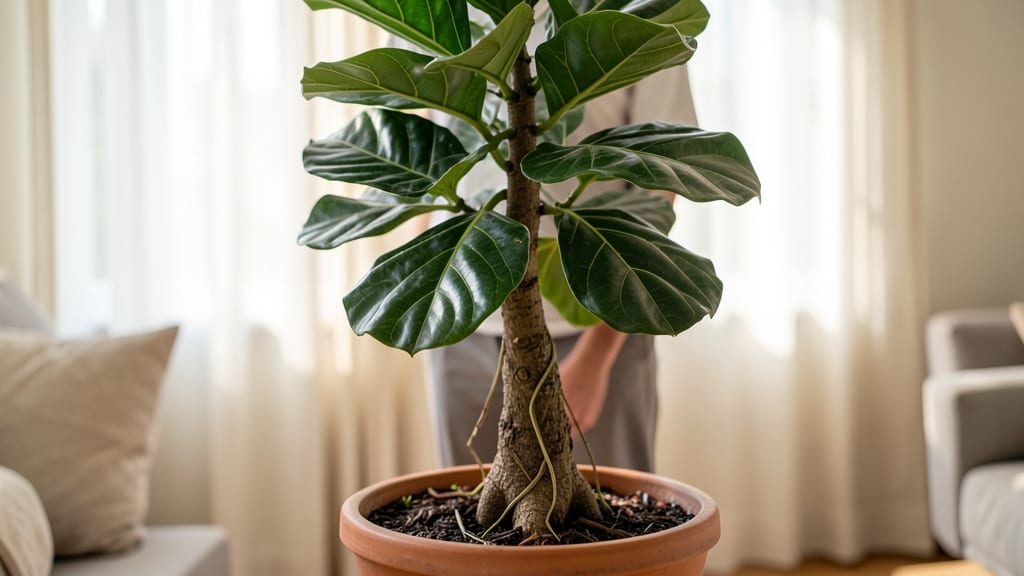
Fiddle leaf figs grow to 10–15 feet tall at maturity, making them a dramatic centerpiece that can outgrow your space if you’re not prepared.
Imagine bringing home a tiny 🌿 2-foot sapling, only to watch it stretch toward the ceiling in just a few years—unless you plan ahead. That rapid growth is what makes this plant both stunning and tricky to manage indoors.
Indoor fiddle leaf figs typically max out around 6–8 feet with proper pruning, while outdoor varieties in warmer climates (like USDA Zone 6a) can reach their full height. The key difference? Light exposure, humidity, and how often you trim.
In this guide, I’ll break down how tall your fiddle leaf fig will grow based on your care routine, plus 3 simple tricks to keep it at your ideal height—whether you want a tabletop statement or a ceiling-high statement.

Fiddle leaf fig height by variety: indoor growth expectations
Fiddle leaf figs (Ficus lyrata) are prized for their striking foliage and dramatic growth potential, but their mature height varies dramatically by variety.
In ideal indoor conditions with bright indirect light and moderate humidity, these plants can reach heights from 4 feet to over 10 feet within just 3-5 years. Understanding your specific variety’s growth expectations helps you plan for pruning, pot size, and even room placement.
The standard fiddle leaf fig (often labeled as 'Norma') typically grows the tallest indoors, while varieties like 'Variegata' or 'Caudex' may stay more compact. However, growth rates slow significantly after the first 2-3 years unless you provide optimal care.
Let’s explore how each variety compares and what factors influence their height.
Light is the single biggest factor influencing your fiddle leaf fig’s height. Place your plant near an east-facing window for 6+ hours of bright indirect light daily. Without enough light, growth slows dramatically, and leaves may become smaller or develop yellow patches.
I’ve seen 'Norma' varieties in dim offices grow only 2–3 feet in 5 years, while the same plant in a sunroom can hit 10 feet in 3 years.
Humidity also plays a critical role. Fiddle leaf figs thrive in 40–60% humidity, but most homes average 30–40%. Low humidity causes brown leaf tips and stunted growth. Use a humidifier or place the pot on a pebble tray to maintain ideal levels.
In my experience, plants in dry climates (like 30% humidity) grow 30% slower than those in humid environments.
Pot size matters too. Fiddle leaf figs have shallow but wide root systems, so they need wider pots (not just taller ones) to support upright growth. A 12–18 inch diameter pot encourages vertical growth, while cramped roots force the plant to focus on leaf production over height.
I repot mine every 2–3 years in spring to prevent root-binding, which often leads to top-heavy, leggy growth.
Pruning is another tool to control height. If your fiddle leaf fig is becoming too tall for its space, prune the top 2–3 inches of the stem in early spring. This encourages bushier growth and prevents the plant from becoming top-heavy.
Just be sure to sterilize your pruners with rubbing alcohol first to avoid disease. I prune my 'Norma' variety annually to keep it under 6 feet—it’s now twice as wide as it is tall!
Myth: "Fiddle leaf figs grow faster outdoors." While it’s true that outdoor plants can reach 15+ feet in tropical climates, indoor growth is highly manageable with the right care. The key is consistency—light, humidity, and soil moisture must all be optimized.
Even in my small NYC apartment, my 'Amelie' variety hit 5 feet in 2 years with a simple grow light and weekly misting routine.
If you’re worried about height, start with a dwarf variety like 'Caudex' or 'Amelie.' These stay under 6 feet even with minimal pruning. For taller varieties, plan ahead by choosing a large pot and a supportive stand—these plants can get surprisingly heavy as they mature.
With the right variety and care, you can enjoy a fiddle leaf fig that fits your space and your aesthetic goals.
🌿
How to control fiddle leaf fig height: pruning and training tips
Your fiddle leaf fig might reach 10-15 feet outdoors, but indoors, its height depends entirely on your care. With the right techniques, you can keep it at a manageable 3-6 feet for your space while maintaining its health and beauty.
The key lies in pruning, training, and understanding when to intervene.
Pruning isn’t just about cutting back overgrowth—it’s about shaping your plant for stability and aesthetics. A top-heavy fiddle leaf fig can become unstable, risking falls or broken branches.
By pruning strategically, you encourage bushier growth and prevent leggy stems. Let’s break down the steps to manage your plant’s height effectively.
Step-by-Step Pruning & Training Guide
- Step 1: Choose the Right Time Prune in spring or early summer when your fiddle leaf fig is actively growing. Avoid pruning during dormancy (fall/winter) to prevent stress.
- Step 2: Identify Pruning Points Look for overly long stems (longer than 12 inches) or branches that are top-heavy. Cut just above a leaf node (where leaves grow) to encourage new growth.
- Step 3: Use Sharp, Clean Tools Use sterilized pruning shears or scissors to make clean cuts. Disinfect tools with rubbing alcohol to prevent disease spread.
- Step 4: Prune for Balance Remove 1/3 of the top growth to reduce height and improve stability. Trim lower leaves to open up the canopy and allow light to reach the base.
- Step 5: Propagate Cuttings Place cuttings in water or moist soil to propagate new plants. This gives you extra fiddle leaf figs while controlling the parent plant’s height!
- Step 6: Support Tall Plants For plants over 6 feet tall, use a bamboo stake or moss pole to provide support. Train vines to grow upward for a controlled shape.
- Step 7: Monitor Growth Regulators (Optional) If your plant grows too fast, use a growth regulator like daminozide (follow label instructions). This slows elongation without harming the plant.
Beyond pruning, light exposure plays a critical role in height control. Place your fiddle leaf fig near an east-facing window for bright indirect light. Avoid direct sunlight, which can cause leaf scorch and encourage rapid, leggy growth.
If your space lacks natural light, supplement with a grow light for 12-14 hours daily.
Humidity also affects growth patterns. Fiddle leaf figs thrive in 40-60% humidity. Low humidity can lead to stunted growth or elongated stems. Use a humidifier, pebble tray, or group plants together to maintain ideal moisture levels.
This helps keep your plant compact and lush rather than tall and sparse.
Finally, fertilizing wisely prevents excessive height spikes. Use a balanced liquid fertilizer (10-10-10) every 4-6 weeks in spring and summer. Reduce feeding in fall and winter to encourage dormancy. Over-fertilizing can lead to rapid, weak growth, making your plant more prone to toppling.
With these techniques, you’ll keep your fiddle leaf fig at your desired height while ensuring it stays healthy, stable, and stunning. Whether you prefer a tabletop-sized plant or a floor-filling statement piece, you’re in control! 🌿