
How To
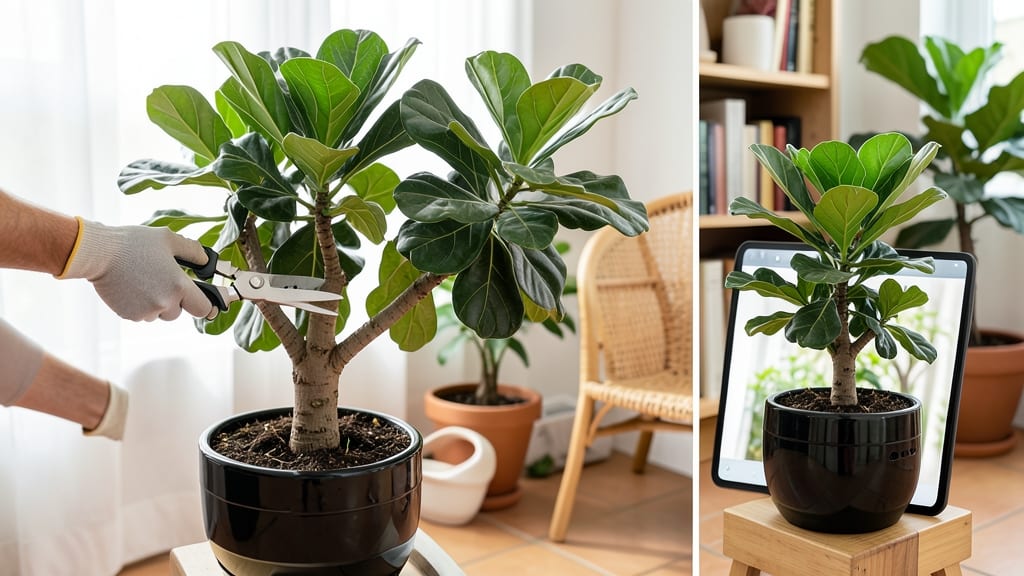
Pruning a fiddle leaf fig transforms it from a leggy mess into a vibrant, bushy showstopper—and the best time is spring or early summer when growth is active. 🌿 I’ve seen these plants go from sparse and sad to lush and full in just a few months after a proper trim.
The key is cutting at the right spots and avoiding overdoing it, which can stress the plant.
You’ll need clean, sharp pruners (sterilized with rubbing alcohol) and a plan: aim to remove 10-20% of the plant’s height or length at most. Focus on cutting just above a leaf node—this is where new growth will sprout—and avoid leaving stubs.
After pruning, give your plant a little extra water and keep it in bright, indirect light to help it recover and push out fresh leaves.
📚 In This Guide
- What you need
- Instructions
- Tips and common mistakes
- Wrapping up and next steps
What you need
- ● Sharp, clean pruning shears or bypass pruners – Must be sterilized with rubbing alcohol to prevent disease. (1 pair)
- ○ Garden gloves – Optional but recommended to protect hands from sap and sharp edges. (1 pair)
- ● Rubbing alcohol (70% or higher) or hydrogen peroxide – For sterilizing tools before and after use. (Small bottle)
- ● Small container or tray – To collect pruned leaves or cuttings for propagation. (1)
- ○ Rooting hormone (optional) – Boosts success rate if propagating cuttings. (Small tube)
- ● Water spray bottle – To mist cuttings or clean tools. (1)
- ● Healthy plant – Prune only if the fig is mature (1+ years old) and shows signs of overgrowth or leggy stems.
- ● Good lighting – Choose a well-lit area (natural or bright indoor light) to minimize stress on the plant.
- ● Patience – Pruning stimulates new growth, so avoid over-trimming in one session.
Step-by-Step guide for pruning a fiddle leaf fig
Let’s shape your fiddle leaf fig into a thriving, bushier beauty—no green thumb required.
🌿 Step 1: Gather Your Tools and Assess the Plant
Start by cleaning a pair of sharp pruning shears (sterilized with rubbing alcohol) to avoid crushing stems or spreading disease. You’ll also want a small spray bottle filled with water and a dusting of cinnamon powder (optional, for cuts). Before touching a single leaf, examine your plant closely—look for yellowing leaves, leggy stems, or branches growing away from the center. These are your pruning targets.
I always prune in the spring or early summer when the plant is actively growing. Avoid pruning during dormancy (fall/winter) or right after repotting—your fig needs energy to recover. If your plant has long, bare stems, that’s a sign it’s ready for a hard prune to encourage new growth from the base.
✂️ Step 2: Remove Dead or Damaged Leaves
Start with the easy stuff: dead, yellow, or brown leaves. Snip them off at the base where the stem meets the leaf—no need to overthink this. If a leaf is still green but crispy or curling, it’s struggling and should go too. Healthy leaves should feel firm, slightly leathery, and vibrant green. Avoid pruning leaves that are just small or slow-growing; fiddle leaf figs naturally grow slower as they mature.
Here’s the thing—don’t panic if you cut a little too much. Fiddle leaf figs are forgiving. Just avoid cutting into the woody stem unless you’re intentionally pruning for shape. If you accidentally cut into the stem, dust the wound with cinnamon to prevent rot and let it callus over naturally.
🌱 Step 3: Prune for Shape and Airflow
Now for the fun part: shaping! Fiddle leaf figs grow tall and leggy if left unchecked, so your goal is to encourage bushier growth. Look for branches growing away from the center—these are called "suckers" and can be pinched off just above a leaf node (the bump where leaves grow). This redirects energy to the main trunk and encourages new growth from the sides.
If your plant is too tall or top-heavy, you can prune the top just above a leaf node (again, that little bump). This will stimulate new branches to grow from lower down. Never cut into the woody stem—this won’t regrow. Instead, focus on leafy stems where new growth can sprout easily.
💧 Step 4: Care for Your Fig After Pruning
After pruning, water lightly to help the plant recover. Avoid heavy watering for 3-5 days—this gives the cuts time to callus over and reduces the risk of rot. Place your fig in bright, indirect light (no direct sun for a week) to minimize stress. You’ll notice new leaves emerging from the pruned areas within 4-6 weeks—that’s your reward for a job well done.
Real talk: If you prune too aggressively, your fiddle leaf fig might take longer to bounce back. Stick to removing no more than 20-30% of the plant at once. Over-pruning stresses the plant and can lead to leaf drop. Keep an eye on the soil—dry to the touch is the sweet spot for recovery.
⏰ Step 5: Monitor and Repeat as Needed
Watch your plant over the next few weeks. If you see new shoots growing from the base or sides, that means your pruning worked! These new growths are your future branches, so let them grow strong before pruning again. I like to prune lightly every 3-4 months to maintain shape and encourage fullness. Avoid heavy pruning more than once a year unless your plant is severely leggy.
If your fiddle leaf fig starts dropping leaves after pruning, don’t panic—it’s adjusting. Keep the environment stable (no drafts, consistent light, and 65-75°F temperatures) and water only when the top 1-2 inches of soil are dry. With patience, your fig will reward you with lush, vibrant growth in no time.
Tips & tricks for pruning a fiddle leaf fig
Here's what nobody tells you about pruning—these tricks will keep your fiddle leaf fig thriving after you cut.
Timing is Everything: The spring or early summer timing in Step 1 is non-negotiable. This is when your fiddle leaf fig is in its active growth phase, making it much more resilient to pruning. If you prune during dormancy (fall/winter), your plant won't have the energy to recover properly. Think of it like giving your plant a haircut when it's feeling its best—not when it's tired.
Visual Cues for Perfect Cuts: When pruning for shape in Step 3, focus on those little bumps called leaf nodes—they're your target spots. These nodes are where new growth will emerge, so cutting just above them is key. For a quick check, imagine you're making a tiny "V" cut above the node. This technique ensures you're not cutting into the woody stem, which won't regrow. If you're unsure, take a closer look with a magnifying glass.
Post-Prune Recovery Hack: After you've finished pruning, the 3-5 day watering pause in Step 4 is crucial. This gives the cuts time to callus over, which acts like a natural bandage. During this time, keep your plant in bright, indirect light—think of it as giving your fig a cozy recovery room. You'll know you're on the right track when you see new leaves emerging from the pruned areas within 4-6 weeks. This is your plant's way of saying "thank you" for the trim!
Pruning Percentage Rule: The 20-30% pruning guideline in Step 4 is a golden rule for a reason. This percentage keeps your plant from getting stressed while still encouraging new growth. If you're unsure how much to cut, try this: hold up your hand and estimate if the amount you're removing would cover about one-third of your palm. If it's more than that, you're probably cutting too much. Remember, fiddle leaf figs are forgiving, but they're not indestructible.
Pro Tips for Prune A Fiddle Leaf Fig
- Here's what nobody tells you about pruning—these tricks will keep your fiddle leaf fig thriving after you cut.
- Timing is Everything: The spring or early summer timing in Step 1 is non-negotiable.
- Visual Cues for Perfect Cuts: When pruning for shape in Step 3, focus on those little bumps called leaf nodes—they're your target spots.
Frequently asked questions
Got questions about pruning your fiddle leaf fig? You’re not alone! Here are some of the most common concerns—plus clear answers to keep your plant thriving.
When is the best time to prune a fiddle leaf fig?
Prune your fiddle leaf fig in spring or early summer when it’s actively growing. Avoid pruning in fall or winter, as the plant enters dormancy and may struggle to recover. If you spot dead or yellowing leaves anytime, remove them promptly to prevent disease.
Can I prune a fiddle leaf fig too much?
Yes! Over-pruning—cutting back more than 20-30% of the foliage at once—can stress the plant and stunt growth. Stick to selective pruning (removing only dead, damaged, or overly leggy stems) unless you’re doing a major shape-up. Always use clean, sharp tools to minimize damage.
What should I do with the cuttings from pruning?
Don’t toss those cuttings! They can root easily in water or soil. For water propagation, place 4-6 inches of the stem in a jar of water (change weekly) until roots form (4-6 weeks). For soil, dip the cut end in rooting hormone and plant in moist potting mix. Keep humidity high for best results!
Why is my fiddle leaf fig dropping leaves after pruning?
Leaf drop can happen if you prune too aggressively or stress the plant (e.g., overwatering afterward). To recover, reduce watering, place the plant in bright, indirect light, and avoid fertilizing for 4-6 weeks. Most plants bounce back within a few weeks with proper care.
Do I need to sterilize my pruning tools?
Absolutely!
Dirty tools can spread bacteria or fungi, leading to infections like root rot or leaf spot. Wipe blades with rubbing alcohol or a 10% bleach solution before and after pruning. For extra safety, use a fresh pair of scissors or shears for each plant to avoid cross-contamination.
Wrapping up and next steps
Pruning your fiddle leaf fig doesn’t have to be intimidating—it’s all about confidence, patience, and a little green thumb love. 🌿 With the right tools, timing, and technique, you’ll encourage healthier growth, fuller foliage, and even propagate new plants!
Remember, less is more, so take your time and trust the process.
Now that you’re armed with knowledge, why not give it a try? Grab your shears, pick a sunny day, and watch your fiddle leaf fig thrive. And if you’re feeling adventurous, check out our guide on propagating cuttings—you might just end up with a whole collection!