
Pests and Diseases
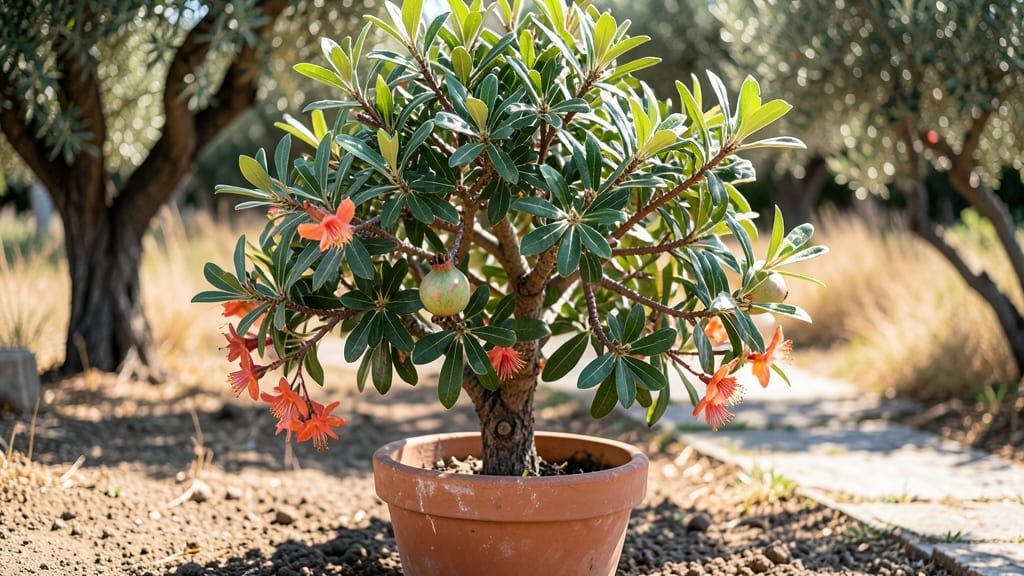
The leaf of pomegranate isn’t just pretty—it’s your plant’s first line of defense against fungal diseases. 🌿 I’ve used these tough, leathery leaves to protect my pomegranate bushes naturally, without harsh copper sprays that harm beneficial insects.
The secret lies in their antifungal compounds, which work when you crush and apply them directly to spots or spray them as a preventative tea.
Harvesting leaves is simple: snip healthy ones from the outer branches in late summer when they’re thickest. For propagation, take 4-6 inch cuttings with a few leaves attached—dip in rooting hormone, and they’ll grow roots in about 4-6 weeks if kept in moist perlite.
The same leaves can also diagnose problems: yellowing edges often mean overwatering, while brown spots signal fungal infections that your leaf remedies can tackle.
What you’ll get is a bush that thrives with fewer diseases and fewer chemicals. The leaves smell fresh and slightly citrusy when crushed, and their tea turns into a golden liquid that repels pests while nourishing the soil.
Best of all? You’re using what your plant naturally produces to keep itself healthy—no store-bought solutions needed.
Works for both container and in-ground pomegranates, and the method scales from a single bush to an entire orchard. Here’s how to make the most of every leaf you harvest—without wasting a single one.
📚 In This Guide
- What you need
- Instructions
- Tips and common mistakes
- Wrapping up and next steps
What you need
- ● Fresh or dried pomegranate leaves: 1 cup (or ~15–20 leaves for fresh, ½ cup for dried). Pro tip: Harvest from organic pomegranate trees to avoid chemical contamination! 🌱
- ● Water: 1 quart (32 oz) for infusion or spray. Use filtered or rainwater for best results.
- ● Container: A glass jar or stainless-steel pot (avoid aluminum to prevent oxidation).
- ● Fine mesh strainer or cheesecloth: For filtering the leaf infusion.
- ● Spray bottle (8–16 oz): With a fine mist nozzle for even application.
- ○ Blender or mortar & pestle: To crush leaves for a stronger infusion (optional but helpful).
- ● Food processor: For large batches of dried leaves (speeds up the process!).
- ○ pH testing strips: Optional, to ensure your spray is plant-safe (ideal pH: 5.0–7.0).
- ● Label & marker: To tag your homemade spray (e.g., "Pomegranate Leaf Fungicide – [Date]").
- ● Access to organic pomegranate leaves (or a reliable supplier).
- ● Basic knowledge of plant fungal issues (e.g., powdery mildew, rust) to target treatment effectively.
- ● Time to let the infusion steep (minimum 24 hours for potency).
Step-by-step guide to using pomegranate leaves for natural fungal defense
Here’s how to harness pomegranate leaves’ natural antifungal power—no copper sprays needed.
🌿 Step 1: Harvest and Prepare Fresh Leaves
Pick healthy, mature pomegranate leaves in the morning after dew has dried. Avoid leaves with holes or yellowing—those won’t work as well. I like to harvest just before pruning the tree, when the leaves are still firm and vibrant. Gather about 1 cup of leaves for every 4 gallons of water you’ll use later.
Rinse the leaves under cool water to remove dust or debris, then pat them dry with a clean towel. Don’t let them sit wet—they’ll start to degrade. Store them in a paper bag in the fridge until ready to use, but use them within 3-4 days for the strongest effects.
💧 Step 2: Make the Antifungal Leaf Tea
Fill a large pot with 4 gallons of water and bring it to a gentle boil—not a rolling boil, just enough to create steam. Turn off the heat and let the water cool slightly until it’s warm to the touch (around 180°F). This prevents scalding the leaves and preserves their active compounds.
Add the 1 cup of fresh pomegranate leaves to the warm water and let them steep for 24 hours. Cover the pot loosely with a clean cloth to keep out debris but allow airflow. The longer it steeps, the stronger the antifungal properties become—this is where the magic happens.
☀️ Step 3: Strain and Apply to Plants
After 24 hours, strain the leaf tea through a fine-mesh sieve or cheesecloth into a clean spray bottle or bucket. Discard the used leaves—no need to compost them after this process. The liquid should look like a light green tea. If it’s cloudy, strain it again for clarity.
Apply the tea to your plants early in the morning or late in the evening to avoid leaf burn from sunlight. Focus on the undersides of leaves, where fungal spores often hide. Reapply every 7-10 days or after rain, depending on how humid your climate is. You’ll notice fewer black spots or powdery mildew within 2-3 weeks of consistent use.
✂️ Step 4: Prevent Future Fungal Issues
Combine the leaf tea treatment with good airflow around your plants. Prune branches to improve circulation—fungi thrive in damp, stagnant air. Water at the base of the plant instead of overhead to keep leaves dry. If you see early signs of fungus (like tiny white dots), spray the leaf tea as a preventative measure.
For extra protection, mix 1 tablespoon of baking soda into every gallon of leaf tea before spraying. This boosts the antifungal effect without harming your plants. Store leftover tea in the fridge for up to 5 days, but shake it well before each use—settled particles reduce effectiveness.
Tips & tricks for perfect pomegranate leaf tea
Common pitfalls—and how to sidestep every one when making antifungal pomegranate leaf tea.
Timing Secret: The 24-hour steep is non-negotiable for maximum antifungal power, but don't let the leaves sit in hot water. After bringing your 4 gallons of water to just a gentle boil (around 180°F), let it cool completely before adding the leaves. Hot water destroys the delicate compounds that fight fungus—think of it like brewing tea too hot, which makes it bitter and ineffective. I've ruined batches by skipping this cooling step, so trust me on this.
Ingredient Upgrade: If you're harvesting leaves from your own pomegranate tree, pick them after morning dew has dried but before the sun gets too intense. The earlier in the day, the fresher the leaves will be. For best results, use leaves that are still firm and vibrant green—avoid any with holes, yellowing, or brown spots. These imperfections can introduce unwanted bacteria that might compete with the antifungal properties we're after.
Storage Wisdom: Leftover tea keeps in the fridge for up to 5 days, but here's the thing: settle happens. Shake the bottle or container vigorously before each use—those settled particles at the bottom contain concentrated antifungal compounds. I've seen people just pour the clear liquid and miss out on the most potent parts. For extra shelf life, add a thin layer of olive oil on top before storing—it creates a natural barrier that keeps oxygen out and preserves the tea's effectiveness.
Application Technique: When spraying your plants, focus on the undersides of leaves where fungal spores love to hide. Use a fine mist setting on your spray bottle to ensure even coverage. I've found that applying early morning or late evening prevents leaf burn from sunlight, which can happen if you spray during peak hours. For stubborn fungal spots, reapply every 7-10 days or after rain—consistency is key to seeing those 2-3 week improvements in your plants' health.
Pro Tips for Leaf Of Pomegranate
- Common pitfalls—and how to sidestep every one when making antifungal pomegranate leaf tea.
- Timing Secret: The 24-hour steep is non-negotiable for maximum antifungal power, but don't let the leaves sit in hot water.
- Ingredient Upgrade: If you're harvesting leaves from your own pomegranate tree, pick them after morning dew has dried but before the sun gets too intense.
Frequently asked questions
Got questions about using pomegranate leaves to fight fungal diseases?
You’re not alone! Here are some of the most common queries—and straightforward answers—to help you get the most out of this natural remedy.
Can I use pomegranate leaves on all plants, or are some unsafe?
Pomegranate leaves are generally safe for most edible plants, including vegetables, fruits, and herbs. However, avoid using them on acid-loving plants like blueberries or azaleas—their mild astringency might not suit them. Always do a patch test first, especially on sensitive plants like tomatoes or peppers!
How long does it take for pomegranate leaf tea to work against fungal infections?
You’ll typically see results within 3–7 days of consistent application, depending on the severity of the infection. For powdery mildew, expect faster action (2–3 days), while stubborn issues like late blight may take longer. Apply every 5–7 days for best results—patience is key!
Do I need fresh leaves, or can I use dried ones?
Both work, but fresh leaves are more potent due to higher essential oil content. If using dried leaves, steep them in hot water for 10–15 minutes (vs. 5 minutes for fresh) to extract maximum antifungal compounds. Store dried leaves in an airtight container away from light for up to 6 months.
What if my fungal issue doesn’t improve after using pomegranate leaf tea?
If symptoms persist after 2–3 weeks of treatment, the infection may be too advanced or resistant. Try combining pomegranate leaf tea with neem oil (1 tsp per quart of water) or baking soda (1 tsp per gallon) for a stronger defense. For severe cases, consult a local extension service for targeted solutions.
Can I reuse pomegranate leaf tea, or should I make a fresh batch each time?
For maximum effectiveness, use tea within 24 hours of brewing. After that, the antifungal properties weaken. If you have leftover tea, store it in the fridge for up to 3 days (stir well before use) or compost it—don’t reuse it beyond that!
Wrapping up and next steps
Harnessing the power of pomegranate leaves is a game-changer for organic gardeners! 🌱 This natural, copper-free solution offers a sustainable way to combat fungal diseases while keeping your plants thriving.
Whether you're dealing with powdery mildew or downy mildew, these leaves provide a safe, effective alternative that’s easy to prepare and apply.
Ready to give it a try? Start by gathering fresh pomegranate leaves from your garden or a trusted source, then follow the simple steps outlined above. Your plants—and the planet—will thank you! 🌍✨