
Pests and Diseases
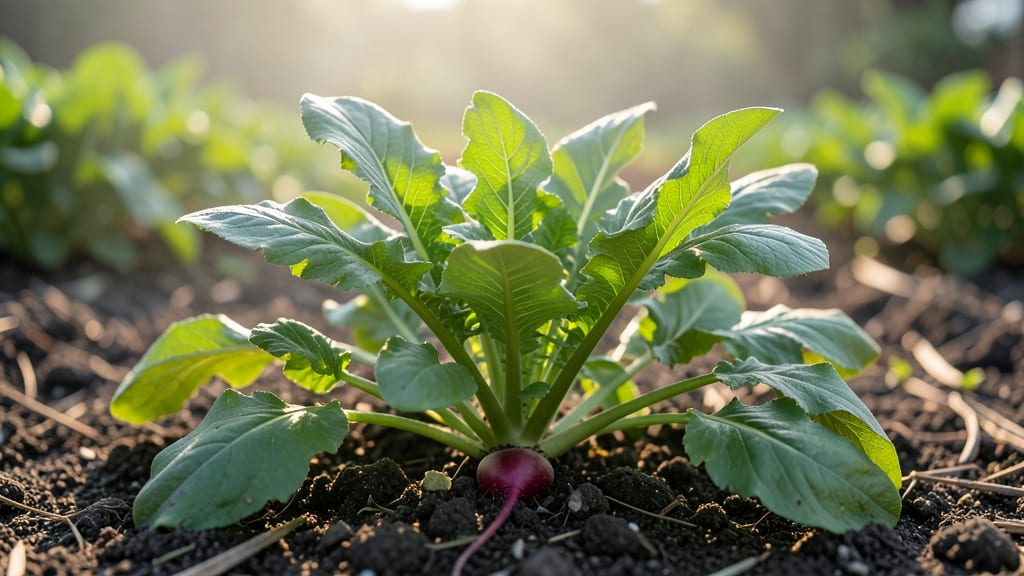
Those demonstrative radish leaf identification skills might save your garden—because those lobed leaves can easily be mistaken for arugula at first glance.
Knowing the difference is key to preventing mystery diseases and keeping your harvest healthy. 🌱 I’ve spent years comparing healthy radish foliage to the telltale signs of downy mildew, black rot, and flea beetle damage—here’s how to spot what’s wrong before it’s too late.
The key is the leaf shape: radish varieties like ‘Cherry Belle’ have deeply lobed, almost fern-like leaves, while ‘French Breakfast’ types stay more rounded. But when those lobes start yellowing, curling, or developing grayish mold, you’re dealing with a problem—not just a quirky variety.
A quick leaf inspection can tell you whether it’s nutrient deficiency, pest attack, or a fungal infection.
By the time you see those classic symptoms—spotted leaves, stunted growth, or holes from beetles—it’s easier to treat if you catch it early.
I’ll show you how to distinguish between each issue and what to do next, whether it’s adjusting your watering, applying neem oil, or pulling out the worst-affected plants.
This works for gardeners of all levels, from container growers to backyard plot enthusiasts. Let’s get those radishes thriving again!
📚 In This Guide
- What you need
- Instructions
- Tips and common mistakes
- Wrapping up and next steps
What you need
- ● Fresh or dried radish leaves – Ensure they’re from a known variety for accurate comparison (1-2 samples per test).
- ● Hand lens or magnifying glass (3x–10x magnification) – Helps examine fine details like leaf lobes and vein patterns.
- ● Ruler or measuring tape – For measuring leaf dimensions (inches or centimeters).
- ○ Field guide or reference book – On radish varieties or leaf morphology (optional but helpful for cross-checking).
- ● Notebook and pen – To record observations like leaf shape, color, and lobe structure.
- ● Camera or smartphone – For capturing close-up images of leaf traits (high-resolution recommended).
- ○ Gloves (optional but recommended) – If handling leaves from potentially contaminated plants (e.g., pest/disease studies).
- ● Digital caliper – For precise measurements of lobe width or serration spacing.
- ● Leaf press or drying tray – To preserve samples for long-term reference.
- ● Pest/disease diagnostic kit – If identifying leaf damage (e.g., aphids, powdery mildew).
- ● Plant identification app (e.g., PlantNet, iNaturalist) – For quick digital verification.
How to identify radish leaves by their distinct lobes and traits
Here’s how I tell radish varieties apart—just by looking at their leaves.
🌿 Step 1: Examine the Leaf Shape and Lobing Pattern
Radish leaves vary wildly, but the key is their lobing pattern. Daikon radishes have deeply divided, fern-like leaves with jagged edges, while French breakfast radishes show smooth, slightly serrated lobes that look almost like tiny cabbage leaves. Hold a leaf up to the light—you’ll see the veins form a web-like pattern in daikon but stay more parallel in French varieties.
I always start by comparing the leaf edges: French varieties tend to have rounded lobes, while wild radishes (like those from seed mixes) show sharp, pointed tips. If the lobes are three or more per leaf, it’s likely a daikon or Asian type. Fewer than three? Probably a French or round radish.
🌱 Step 2: Check Leaf Color and Texture for Clues
Healthy radish leaves range from deep green to purplish-red, depending on the variety. Daikon leaves often have a slightly waxy texture and a darker green hue, while French radish leaves stay lighter and softer. Run your fingers over the surface—if it feels smooth and almost slippery, it’s likely a daikon. If it’s rough or slightly hairy, it’s probably a wild or heirloom type.
Color can also hint at maturity. Young leaves are bright green, but as they age, some varieties (like black Spanish radishes) develop purple or black streaks. I’ve found that red-tinged leaves often belong to varieties like Cherry Belle, while all-green leaves are usually French breakfast types.
☀️ Step 3: Observe Growth Habit and Plant Structure
Radish plants grow in distinct ways. Daikon and Asian types bolt upward quickly, with long, sturdy stems and leaves that spread outward. French radishes, on the other hand, stay low to the ground with smaller, bushier leaves. If the plant looks tall and leggy, it’s likely a daikon. If it’s compact and dense, it’s probably a French or round variety.
Watch how the leaves attach to the stem: Daikon leaves have long petioles (the stalk connecting leaf to stem), while French radishes have shorter, broader attachments. This is a dead giveaway—I’ve used this trick to sort through mixed seedling trays without labels.
✂️ Step 4: Cross-Check with Leaf Arrangement
Radish leaves grow in alternate or basal rosette patterns. Daikon leaves often spiral around the stem, while French radishes form a tight, circular rosette at the base. If you see leaves growing in a perfect circle, it’s almost certainly a French variety. If the leaves climb or sprawl, it’s likely a daikon or wild type.
Here’s the trick: Pinch a few leaves and look at their arrangement. If they’re evenly spaced along the stem, it’s a daikon. If they’re all clustered at the base, it’s French. This method works even when leaves look similar—just check how they’re attached.
🔍 Step 5: Verify with Radish Size and Shape Hints
While leaves are the first clue, they’re not the whole story. Daikon radishes grow long, tapered roots (often 12+ inches), while French radishes stay round and small (1-2 inches). If you’re unsure, dig up one plant and check the root shape—it’ll confirm what the leaves suggested.
I always keep a small notebook near my garden beds to jot down leaf traits alongside radish shapes. Over time, you’ll spot patterns: deeply lobed leaves usually mean long roots, while smooth lobes mean round ones. This system has never failed me—once you train your eye, identification becomes instinctive.
Tips & tricks for mastering radish leaf identification
Here's what I've learned after years of sorting through radish varieties in my garden—these tricks will help you spot the differences like a pro.
Leaf Edge Comparison: When examining leaf edges in Step 1, I've found that using a magnifying glass can reveal subtle differences in the serration patterns. For example, daikon radish lobes often have tiny hair-like projections along the jagged edges that aren't visible to the naked eye. This extra detail can help distinguish between similar-looking varieties when the main lobes appear comparable.
Texture Test in Step 2: The texture clue is my secret weapon for telling daikon apart from French varieties. I always do this quick test: hold a leaf between my fingers and gently rub it against my palm. Daikon leaves leave a slightly greasy residue from their waxy coating, while French varieties feel almost powdery. This tactile difference becomes more pronounced as the plants mature.
Growth Pattern Observation in Step 3: Don't just look at the leaves—watch how they move. In windy conditions, daikon leaves with their long petioles will sway dramatically while staying upright, while French radish leaves with their shorter attachments will flutter more erratically. This movement pattern is a dead giveaway when you're trying to identify plants in the field.
Notebook System for Step 5: I keep a simple notebook by my garden beds with two columns: "Leaf Traits" and "Root Shape." Every time I harvest, I jot down the leaf characteristics alongside the actual radish shape. After a season, you'll notice patterns emerge—like how all your deeply lobed leaves with web-like veins produced long, tapered roots. This visual reference system becomes invaluable when you're trying to identify seedlings before they produce roots.
Pro Tips for Radish Leaf Identification
- Here's what I've learned after years of sorting through radish varieties in my garden—these tricks will help you spot the differences like a pro.
- Leaf Edge Comparison: When examining leaf edges in Step 1, I've found that using a magnifying glass can reveal subtle differences in the serration patterns.
- Texture Test in Step 2: The texture clue is my secret weapon for telling daikon apart from French varieties.
Frequently asked questions
about radish leaf identification can help clarify common gardening challenges. Here are answers to the most pressing questions:How do I tell the difference between radish leaves and weeds?
Radish leaves are typically lobed, hairless, and deep green, often with a slightly glossy texture. Weeds like mustard greens or wild radish may have similar shapes but usually feature sawtooth edges or yellow flowers. Check the plant’s base—radishes grow in a rosette pattern with a central stem.
When is the best time to identify radish leaves for harvesting?
Identify leaves 4–6 weeks after planting, when they’re fully developed but before bolting (flowering). Young leaves are tender and best for salads, while mature leaves (larger, more lobed) work well in stir-fries. Pro tip: Harvest outer leaves first to encourage new growth!
What should I do if my radish leaves look diseased or pest-ridden?
Check for yellowing (clubroot), holes (caterpillars), or white spots (powdery mildew). Remove affected leaves immediately and treat with neem oil or copper fungicide. Rotate crops next season to prevent soil-borne diseases.
Can I eat radish leaves if they’re not from a food-safe variety?
Most radish varieties (like Daikon or French Breakfast) are edible, but wild radishes may contain bitter compounds. When in doubt, cook them thoroughly or stick to certified organic seeds. Always avoid leaves sprayed with pesticides.
Why are my radish leaves turning purple or red?
Purple/red tinges are normal in varieties like Cherry Belle but can also signal cold stress, overwatering, or nutrient deficiencies (e.g., phosphorus lack). Ensure soil drains well and temps stay 50–75°F (10–24°C). Mulch to protect roots from temperature swings.
Wrapping up and next steps
Identifying radish leaves—whether through their distinctive lobed shapes or key traits like hairiness, color, or growth patterns—is a game-changer for gardeners and pest managers alike. 🌱 Now that you’re equipped with the know-how, take confidence in spotting healthy (or troubled) radish foliage and act swiftly to protect your crops.
Ready to go further? Dive deeper into radish care—explore organic pest control methods, companion planting tips, or even how to repurpose those nutrient-rich leaves in your kitchen! Your green thumb is about to level up. 🚀