
Pruning
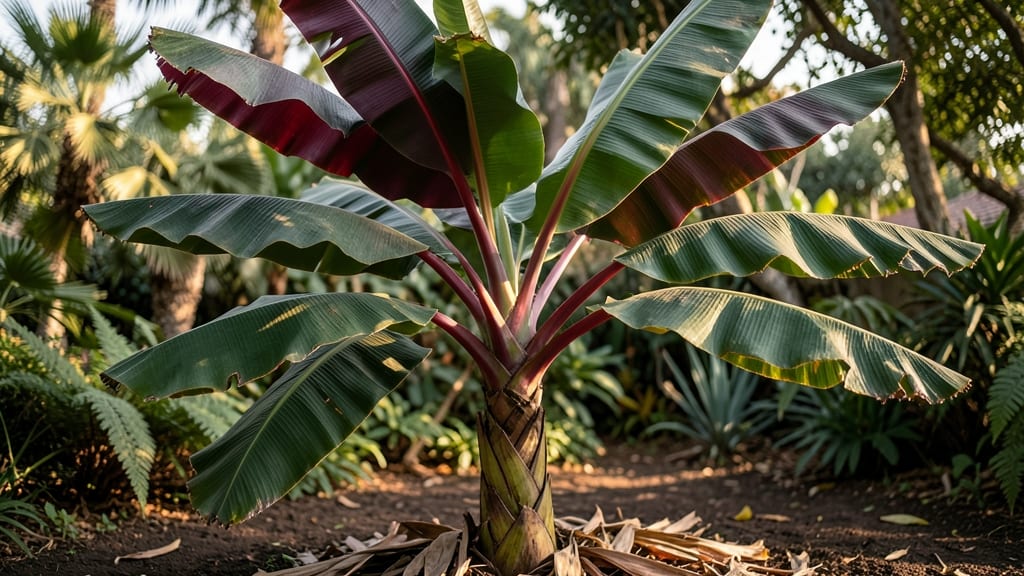
Growing a red banana leaf tree feels like bringing a slice of Hawaii to your backyard—fast. 🌿 These dramatic plants shoot up in just a few seasons, their bold red-and-green foliage casting lush shade that never fades.
I planted mine last spring, and by summer, it was already taller than me, casting dappled shadows that made my patio feel like a tropical retreat.
They’re not picky about soil as long as it drains well, but they’ll reward you with fast growth when you mix in compost for that extra boost.
Morning sun and afternoon shade keep the leaves vibrant, while consistent watering (about 1-2 inches per week) prevents the fronds from turning crispy at the edges.
The real magic happens when you prune—snip off any brown or damaged leaves at the base, and new growth will shoot up within weeks.
By year two, you’ll have a 10-foot-tall shade provider that doubles as a conversation piece. The leaves stay glossy and striking all year, and the occasional banana-like fruit (even if not edible) adds to the exotic appeal.
Just watch for aphids—they love these trees too—and spray with soapy water if you spot them clinging to the undersides.
Perfect for warm climates (zones 10-11) or as a container plant you can winter indoors. Start with one, and you’ll be hooked on how quickly it transforms any space into a tropical oasis.
📚 In This Guide
- What you need
- Instructions
- Tips and common mistakes
- Wrapping up and next steps
What you need
- ● Pruning shears: Bypass pruners (sharp, 6–8" blades) for clean cuts on small branches.
- ● Loppers: 1 pair (18–24" handles) for thicker branches (½"–1.5" diameter).
- ● Pruning saw: 1 (bow or folding) for stubborn, woody stems (>1.5" thick).
- ● Gloves: Heavy-duty, cut-resistant (e.g., Mechanix or Wolverine) to protect from thorns and sap.
- ● Disinfectant: 70% isopropyl alcohol or 10% bleach solution (1 part bleach : 9 parts water) to sterilize tools between cuts.
- ● Rubbing alcohol or hand sanitizer: For quick tool/hand cleanup.
- ○ Pruning sealant: Optional but helpful (e.g., Tanglefoot Tree Wound Pruning Seal) for large cuts to prevent disease.
- ● Ladder or step stool: Sturdy, 12–16' extension ladder (for mature trees) or a 4–6' stool for younger plants.
- ● Heavy-duty trash bags: 3–5 (13-gallon size) for debris disposal.
- ● Safety goggles: 1 pair to shield eyes from sap or debris.
- ● Tree tie or zip ties: For securing branches during heavy pruning.
- ● Hose with nozzle: To rinse tools/sap off hands or tools post-pruning.
- ● Marking spray paint: (e.g., Fluorescent pink) to tag branches for removal.
- ● Compost bin: For repurposing healthy leaf debris.
- ● First-aid kit: In case of sap irritation or minor cuts.
How to grow a red banana leaf tree for fast, lush shade
Here's how I grow these dramatic tropical trees—tall, vibrant, and ready to transform any space within just a few seasons.
🌱 Step 1: Choose the Right Location and Prepare the Soil
Red banana leaf trees thrive in full sun to partial shade—at least 6 hours of sunlight daily for that signature deep red foliage. I always pick a spot where the tree can grow 10-15 feet tall without hitting power lines or roofs. The soil needs to drain well but stay moist, so if your yard is heavy clay, mix in 2-3 inches of compost to loosen it up.
Dig a hole twice as wide as the root ball but only as deep—planting too deep suffocates the roots. I tap the sides of the hole gently to break up compacted soil, then set the tree in so the top of the root ball sits 1 inch below ground level. This slight dip helps retain moisture without drowning the roots.
💧 Step 2: Water Deeply and Mulch to Retain Moisture
Water the tree deeply right after planting—soak the soil until water runs out the bottom of the hole. These tropical trees can't handle dry spells, especially in their first year. I check the soil 2 inches down every 2-3 days in hot weather; if it feels dry, it's time to water again. Overwatering is just as bad, so always let the top inch dry out between drinks.
Spread 3 inches of mulch around the base, keeping it 6 inches away from the trunk to prevent rot. I use shredded bark or pine needles—they break down slowly and keep roots cool. Refresh the mulch every 6 months to maintain that moisture-locking layer.
☀️ Step 3: Fertilize Lightly for Fast, Healthy Growth
Feed your red banana leaf tree once in early spring with a balanced, slow-release fertilizer (10-10-10 ratio). I sprinkle it evenly over the root zone, then water it in deeply. Too much fertilizer burns the roots, so follow the package instructions—usually ½ cup per year for young trees. In the second year, you can fertilize twice a year (spring and summer) for that fast growth you're after.
Watch for new leaves unfurling in 4-6 weeks—that's your sign the fertilizer is working. If the leaves turn yellow, you're overdoing it. Cut back to half the recommended dose next time and water more frequently to flush out excess salts.
✂️ Step 4: Prune Strategically for Shape and Airflow
Prune in late winter or early spring before new growth starts. Remove any dead or crossing branches first—these compete for nutrients and weaken the tree. I use clean, sharp pruners to make cuts just above a leaf node (the bump where leaves grow). Avoid cutting into old wood; new growth comes from the tips.
To encourage a fuller shape, trim back the tallest branches by ⅓ in the first few years. You'll see bushier growth within 3-4 weeks. Never remove more than 25% of the foliage at once—this tropical tree grows fast, but it still needs time to recover.
⏰ Step 5: Protect in Winter and Watch It Thrive
Red banana leaf trees are tender perennials—they can't handle frost. If you're in a cold climate (below 20°F), wrap the trunk in burlap and cover the canopy with frost cloth once temperatures drop below 32°F. I also water deeply before the first freeze to keep roots from drying out. In warmer zones, no extra care is needed—they keep their leaves year-round.
By year three, your tree will be 8-10 feet tall with those striking red leaves. The best part? It grows 2-3 feet per year, so you'll have shade in no time. Just keep the soil moist, fertilize lightly, and prune to shape—and enjoy your tropical oasis.
Tips & tricks for perfect red banana leaf tree growth
Here's what nobody tells you about growing these tropical beauties—lessons I learned after watching my first few trees struggle.
Location is Everything: That 6 hours of sunlight daily is non-negotiable for those signature red leaves. I planted mine near my patio where it gets morning sun and afternoon shade—perfect balance. Watch for yellowing leaves if it's not getting enough light; that's your tree's way of saying "I need more sun!"
Soil Science Matters: The 1-inch dip below ground level when planting creates a moisture reservoir that prevents root rot in our heavy clay soil. I always mix in 2-3 inches of compost to improve drainage while keeping moisture—this tropical tree hates dry roots but can't tolerate soggy soil either. Think of it as creating a spa-like environment for those roots.
Watering Wisdom: Checking soil 2 inches down every 2-3 days in hot weather saves me from both underwatering and overwatering. I use my finger as a moisture gauge—if it feels dry, it's time to water. The 3 inches of mulch keeps moisture in and weeds out, but I always keep it 6 inches away from the trunk to prevent rot. Pro tip: Water deeply in the morning so leaves dry quickly, preventing fungal issues.
Fertilizer Finesse: That ½ cup of 10-10-10 fertilizer once a year for young trees is perfect—any more and you'll burn the roots. I always water it in deeply to wash away any excess salts. The 4-6 week wait for new leaves is worth it; it tells me the fertilizer is working. If you see yellow leaves, cut back to half the dose next time and flush the soil with extra water.
Pro Tips for Red Banana Leaf Tree
- Here's what nobody tells you about growing these tropical beauties—lessons I learned after watching my first few trees struggle.
- Location is Everything: That 6 hours of sunlight daily is non-negotiable for those signature red leaves.
- Soil Science Matters: The 1-inch dip below ground level when planting creates a moisture reservoir that prevents root rot in our heavy clay soil.
Frequently asked questions
Got questions about growing, caring for, or using red banana leaf trees? You’re not alone—this fast-growing tropical beauty is packed with potential but comes with a few quirks. Below, we’ve rounded up the most common queries to help you navigate pruning, placement, and everything in between.
How fast does a red banana leaf tree grow, and how often should I prune it?
A healthy Musa velutina (red banana leaf tree) can shoot up 3–6 feet per year with ideal conditions—think warm climates, rich soil, and plenty of sunlight. Prune once or twice yearly (spring and late summer) to control size, shape, and encourage bushier growth. Focus on removing dead, yellowing, or overly long leaves—never cut more than 1/3 of the foliage at once to avoid stressing the plant.
Can red banana leaf trees survive cold weather, and what’s the lowest temperature they tolerate?
These tropical darlings are not frost-hardy—they’ll start to suffer below 30°F (-1°C). If you live in a colder zone, grow them in containers and move them indoors or to a greenhouse before temperatures dip. For in-ground plants, mulch heavily and wrap the base in burlap for extra insulation. If leaves turn black or wilt, it’s a sign of cold damage—trim affected areas and protect the roots.
What’s the best way to propagate a red banana leaf tree?
Propagation is easiest via division or suckers (shoots that sprout from the base). Here’s how:
- Wait until spring when new growth is active.
- Gently dig around the base to locate healthy suckers (3–6 inches tall).
- Use a sterilized knife to separate the sucker from the mother plant, ensuring it has roots attached.
- Plant in well-draining soil and keep moist until established (4–6 weeks).
Are the leaves of a red banana leaf tree edible, and how can I use them?
While not as commonly eaten as plantain or regular banana leaves, red banana leaves (Musa velutina) are edible and used in some tropical cuisines. They’re milder in flavor but work great for:
- Wrapping tamales, fish, or dumplings (like traditional banana leaf cooking).
- Making infusions (steep dried leaves in hot water for a caffeine-free herbal tea).
- Adding texture to soups or stews (blanched and chopped).
Why are my red banana leaf tree’s leaves turning yellow or brown?
Yellowing or brown leaves usually signal one of three issues:
- Overwatering: Check soil moisture—roots need well-draining soil. Brown tips often mean soggy roots.
- Underwatering: Drooping leaves + crispy edges = thirsty plant. Water deeply 1–2 times per week (more in heatwaves).
- Pests or disease: Inspect for spider mites, aphids, or fungal spots. Treat with neem oil or fungicide if needed.
Wrapping up and next steps
The red banana leaf tree is a stunning, low-maintenance addition to any tropical or subtropical landscape, offering vibrant foliage and year-round shade with minimal effort. Whether you're pruning for aesthetics, health, or growth control, these tips ensure your tree stays lush and thriving—without the stress! 🌿
Ready to transform your outdoor space? Start by gathering your tools and scheduling your first pruning session—your tree (and your neighbors!) will thank you. Happy pruning! 🌟