
Shrubs
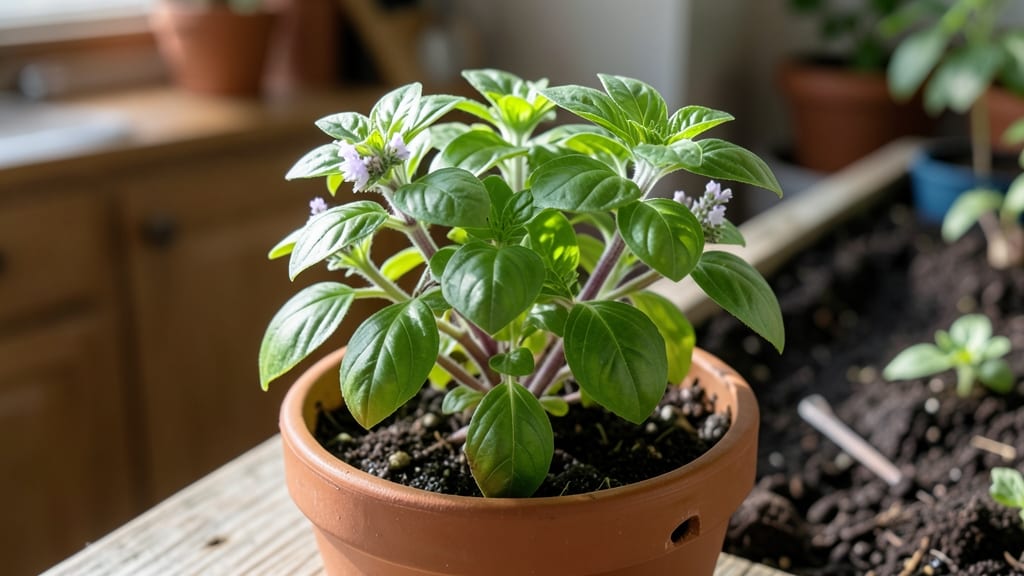
My small leaf basil thrives where big-leaf varieties fail—packing pesto-perfect flavor into tight spaces. 🌿 I've grown it on windowsills, patios, and even balconies, and the secret isn't complicated: it's all about the right light, soil, and pruning rhythm.
This isn't just another herb—it's the backbone of fresh pesto, a pollinator magnet, and a kitchen staple that never wilts. The magic starts with well-draining soil (think 60% potting mix, 30% compost, 10% perlite) and a spot that gets 6-8 hours of sunlight daily.
Overwatering is the real enemy—let the top inch dry between drinks, and you'll avoid the sad, yellow leaves that ruin harvests. Prune regularly to encourage bushy growth, and you'll get continuous harvests from spring through fall (and winter too, with grow lights).
By midsummer, you'll be snipping tender leaves for pesto, garnishes, or salads—three times what you'd get from store-bought. The plants stay compact, resist bolting better than their cousins, and even deter pests naturally. My neighbors now ask for cuttings every year, and I never run out.
Works in pots as small as 6 inches wide, making it perfect for apartments, decks, or even kitchen counters. Let's get you growing!
📚 In This Guide
- What you need
- Instructions
- Tips and common mistakes
- Wrapping up and next steps
What you need
- ● Small leaf basil seeds – 1 packet (approx. 50-100 seeds) or 1-2 seedlings (for faster results).
- ● Containers – 4-6" pots (for seedlings) or a 12"+ container (for direct sowing). Ensure drainage holes are present!
- ● Seed-starting mix – 1 bag (sterilized, peat-free, or coconut coir-based for best results).
- ● Well-draining potting soil – 1 bag (mix with perlite or vermiculite for aeration).
- ● Watering can or spray bottle – With a fine mist nozzle for gentle hydration.
- ● Grow lights or sunny windowsill – 6+ hours of light daily (LED grow lights work great for indoor setups).
- ○ Heat mat (optional) – For indoor starts to maintain 70-80°F soil temps.
- ● Hand trowel or small shovel – For transplanting seedlings.
- ● Pruning shears – Sharp, clean scissors to harvest and pinch stems.
- ○ Fertilizer (optional) – Balanced liquid fertilizer (10-10-10) or compost tea for nutrient boosts.
- ● Warmth – Small leaf basil thrives in 70-85°F temps. Avoid cold drafts!
- ● Sunlight access – Full sun (6+ hours/day) or a grow light alternative.
- ● Patience – Germination takes 7-14 days; consistency is key!
- ● Space – 6-12" apart for outdoor plants or 1 plant per 4" pot indoors.
Step-by-step instructions for growing small leaf basil indoors
Here’s how I grow lush, aromatic small leaf basil year-round—no green thumb required.
🌱 Step 1: Select and Prepare Your Growing Containers
Small leaf basil thrives in 6-inch pots with drainage holes, but it tolerates container life better than its Italian cousin. I use terracotta because it breathes, but any container works as long as it’s at least 4 inches deep. Fill each pot with 2 cups of high-quality potting mix—never garden soil, which compacts and suffocates roots.
Press the soil down gently until it’s firm but not packed. You want it dense enough to support the plant but loose enough for roots to spread. Tap the pot on the table once to settle the soil evenly. This prevents air pockets that could delay germination.
🌿 Step 2: Plant Seeds at the Right Depth and Spacing
Sow 2-3 seeds per pot at a depth of ¼ inch, about the width of the seed itself. Planting too deep slows germination because the seedling must push through more soil. Cover lightly with a sprinkle of additional mix—just enough to hide the seeds.
Mist the soil with a spray bottle until evenly damp. Avoid heavy watering, which can bury seeds too deep or wash them away. I label each pot with the date—small leaf basil grows fast, and you’ll forget which batch you planted first.
☀️ Step 3: Provide Warmth, Light, and Humidity for Germination
Place the pots in a warm spot with 70-75°F soil temperature. A seedling heat mat speeds up germination, but a sunny windowsill works if your home stays warm. Cover the pots with clear plastic wrap or a humidity dome to retain moisture—small leaf basil seeds need consistent dampness to sprout.
Check daily but resist watering until the soil surface feels dry to the touch. Germination takes 7-14 days, depending on your home’s warmth. Once sprouts appear, remove the cover immediately to prevent damping-off, a fungal disease that rots stems overnight.
💧 Step 4: Care for Seedlings and Encourage Bushy Growth
Move seedlings to a spot with 6+ hours of bright, indirect light daily. South-facing windows are ideal, but supplement with a grow light if natural light is weak. You’ll know your basil is happy when it grows compact and dark green—leggy, pale stems mean it’s stretching for light.
Water when the top inch of soil feels dry, using room-temperature water to avoid shocking roots. Pinch off the top set of leaves when the plant reaches 4-6 inches tall to encourage bushier growth. This trick prevents the plant from flowering too soon, which turns leaves bitter.
✂️ Step 5: Harvest and Maintain for Continuous Production
Harvest leaves when they reach 2-3 inches long by snipping just above a leaf node with clean scissors. This encourages new growth and keeps the plant productive. Small leaf basil is more forgiving than Genovese—it regrows quickly if you harvest half the plant at a time.
Fertilize lightly every 4-6 weeks with a balanced liquid fertilizer diluted to half strength. Over-fertilizing leads to salty soil and burned roots. Prune flowers as soon as they appear to redirect energy into leaf production. With this care, you’ll have fresh basil for pesto all year.
Tips & tricks for perfect small leaf basil growth
Here's the secret to turning your kitchen windowsill into a basil powerhouse—no gardening degree required.
Container Selection: While terracotta pots are ideal for their breathability, plastic containers with drainage holes work too—just avoid metal, which can overheat roots. The key is depth: small leaf basil's roots spread horizontally, so 4-6 inches is perfect. If using a tray, elevate it slightly to prevent waterlogging from the bottom.
Germination Game-Changer: The 70-75°F soil temperature range is non-negotiable for speedy germination. If your home runs cooler, place pots on a heating pad set to low or nestle them inside a cardboard box with a lightbulb (60W) underneath. This creates a mini greenhouse effect that mimics spring conditions—when basil seeds would naturally sprout in the ground.
Light Strategy: Those 6+ hours of bright, indirect light don't have to come from a window. A simple LED grow light (10-15W per pot) hung 6-12 inches above will work wonders. Rotate pots daily if using natural light to prevent lopsided growth. You'll notice the difference immediately—plants under artificial light grow just as vigorously but without the risk of sunburn from southern exposures.
Watering Wisdom: The "top inch dry" rule is your best friend, but there's a trick to avoid overwatering: use a moisture meter or stick your finger in the soil. If it feels damp below the first inch, wait another day. Small leaf basil is drought-tolerant once established, and soggy soil is the #1 killer of container-grown herbs. I've lost count of how many basil plants I've drowned trying to keep them "moist enough."
Pro Tips for Small Leaf Basil
- Here's the secret to turning your kitchen windowsill into a basil powerhouse—no gardening degree required.
- Container Selection: While terracotta pots are ideal for their breathability, plastic containers with drainage holes work too—just avoid metal, which can overheat roots.
- Germination Game-Changer: The 70-75°F soil temperature range is non-negotiable for speedy germination.
Frequently asked questions
Got questions about growing and using small leaf basil? You’re not alone! Here are answers to the most common queries to help you cultivate a thriving herb garden and enjoy fresh pesto all year.
How long does it take for small leaf basil to grow from seed?
Small leaf basil typically takes 6–10 weeks to mature from seed, depending on temperature and light. Start indoors 4–6 weeks before the last frost for faster growth, or direct-sow after soil warms to 50°F (10°C). With proper care, you’ll see tender leaves ready for harvest in about 2 months!
Why is my small leaf basil turning yellow or wilting?
Yellowing or wilting basil often signals overwatering, underwatering, or poor drainage. Check soil moisture—it should stay evenly damp but not soggy. Ensure pots have drainage holes and avoid soggy roots. Heat stress or pests (like spider mites) can also cause wilting. Trim affected leaves and adjust care to revive your plant.
Can I grow small leaf basil indoors year-round?
Small leaf basil thrives indoors with 4–6 hours of sunlight daily (a south-facing window or grow lights work best). Use a well-draining pot (6+ inches deep) and fertilize lightly every 4–6 weeks. Watch for leggy growth—rotate the pot regularly to prevent stretching. With the right setup, you’ll enjoy fresh basil winter and summer!
What’s the difference between small leaf and large leaf basil for pesto?
Small leaf basil has a milder, sweeter flavor with tender leaves, making it ideal for pesto (less bitter than Genovese). Large leaf basil has broader leaves and a stronger, more aromatic taste. For pesto, small leaf basil blends smoothly, while large leaf works well but may need more leaves for the same flavor punch. Mix both for depth!
How do I harvest small leaf basil without killing the plant?
Pinch off outer leaves or stems (above a leaf pair) to encourage bushier growth. Avoid cutting more than 1/3 of the plant at once. For continuous harvests, trim regularly every 2–3 weeks. Pro tip: Harvest in the morning for the most potent flavor, and save a few leaves to replant if you accidentally uproot a stem!
Wrapping up and next steps
Growing small leaf basil is a rewarding journey that brings fresh, vibrant flavors straight to your kitchen year-round! With the right care—whether you’re nurturing it in containers, garden beds, or even indoors—you’ll enjoy a bountiful harvest for pesto perfection and beyond. 🌱
Ready to dive in? Start by grabbing your seeds or seedlings, gather your supplies, and follow the steps above to cultivate your thriving basil plants. Soon, you’ll be savoring homegrown basil in everything from sauces to teas—cheers to your green thumb adventures! 🎉
Pro tip: Share your progress with fellow gardeners or tag us—we’d love to see your basil blooms! 📸