
Pruning
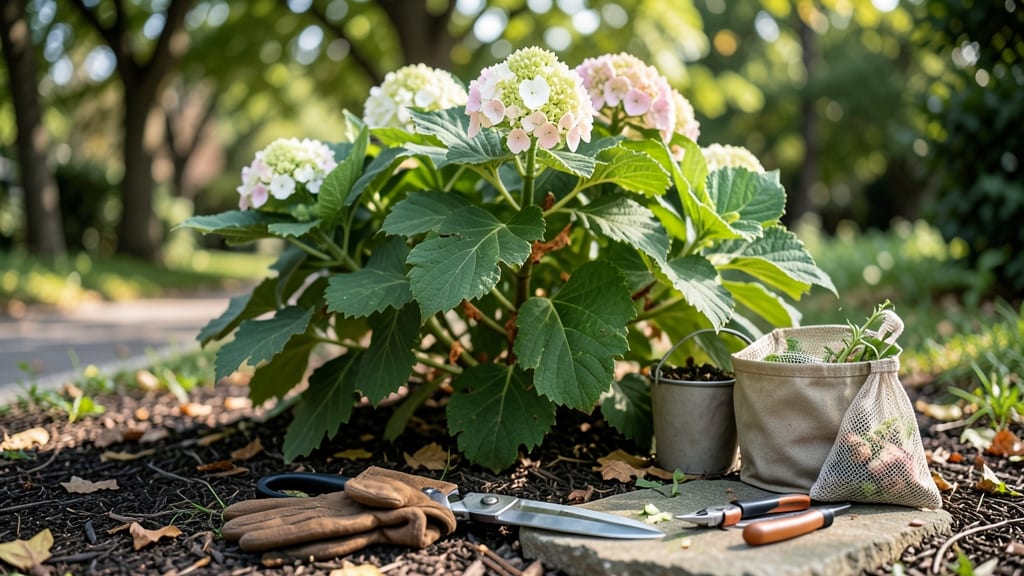
Trimming oak leaf hydrangeas isn't just about cutting back—it's about unlocking their full potential. ✂️ I learned the hard way that aggressive pruning turns lush foliage into a leggy mess, while strategic cuts create a bushier plant with brighter blooms.
The difference between a hydrangea that thrives and one that struggles comes down to timing, technique, and knowing exactly where to make those cuts.
You'll need sharp pruners, a clean workspace, and about 30 minutes of focused time. The best time to trim is right after flowering, when the plant has finished its show for the season.
This gives you a clear view of the structure and lets you shape the plant before new growth starts. Most gardeners skip this step, but it's what transforms a hydrangea from "meh" to "wow" the next year.
What you end up with is a plant that's fuller, more vibrant, and covered in those stunning oak-shaped leaves all season long. The blooms stay brighter because you're encouraging fresh growth, and the plant's energy goes into what matters most—showy foliage and flowers.
My hydrangeas now get compliments every summer, and the secret is in those precise cuts.
Works for both new and established plants, and the technique scales to any size. Here's how to get it right the first time—no guesswork, no regret. Let's make your hydrangea the star of the garden again.
📚 In This Guide
- What you need
- Instructions
- Tips and common mistakes
- Wrapping up and next steps
What you need
- ● Bypass pruners – Sharp, clean, and bypass-style (not anvil) to make precise cuts without crushing stems. (1 pair, 5–7-inch blades recommended)
- ● Loppers – For thicker stems (½ inch or larger). (1 pair, 8–10-inch reach)
- ○ Hand pruners (optional but handy) – For smaller stems or detailed trimming. (1 pair, ergonomic grip preferred)
- ● Disposable gloves – Nitrile or leather to protect hands from thorns and sap. (1–2 pairs)
- ● Rubbing alcohol or bleach – To sterilize tools between cuts and prevent disease. (Small bottle or spray)
- ● Sharpie or permanent marker – For marking stems if you’re unsure about cuts. (1)
- ● Bucket or trash bag – For collecting pruned branches. (1 large container)
- ○ Garden kneeler/pad – For comfort if your hydrangea is large or ground-level. (Optional but recommended)
- ● Ladder or step stool – For tall hydrangeas (6+ feet).
- ● Pruning saw – If you encounter stubborn, thick wood.
- ● Hydrangea bloom booster – Fertilizer with aluminum (if your soil lacks it).
- ● Mulch – To protect roots post-pruning.
Instructions for trimming oak leaf hydrangea
Here’s how to shape your oak leaf hydrangea for fuller growth and vibrant blooms—no guesswork involved.
✂️ Step 1: Time Your Cuts for Maximum Impact
Trim your oak leaf hydrangea in late winter or early spring, just as new growth begins but before buds swell. This timing ensures you’re not cutting off next year’s flowers—oak leaf hydrangeas bloom on new wood, so late cuts won’t sacrifice blooms. Look for tight, dormant buds along the stems; these signal it’s safe to prune.
If you missed the late-winter window, don’t panic—you can still prune in early summer after flowering. Just avoid cutting back into old wood (the brown, woody stems), as this removes potential blooming sites for next year. Focus on shaping rather than heavy pruning.
✂️ Step 2: Remove Dead or Weak Growth First
Start by scanning your hydrangea for dead, diseased, or crossing branches. Dead stems are dry, brittle, and snap easily when bent. Diseased branches may have black spots, mold, or unusual discoloration. Snip these away at the base with clean, sharp pruners—never leave stubs, as they can trap moisture and invite rot.
Next, target weak or spindly growth that’s growing inward or crossing other branches. These compete for energy and weaken the plant’s structure. Cut these back to a strong outward-facing bud or branch junction. You’ll see a noticeable difference in airflow and sunlight penetration after this step.
✂️ Step 3: Shape for Fullness and Airflow
Now for the fun part: shaping! Step back and visualize your hydrangea’s natural form. Aim for a rounded, bushy silhouette—oak leaf hydrangeas thrive when they’re open and airy. Start at the outer edges and cut back one-third of the current season’s growth to encourage branching.
Make cuts just above a leaf node or outward-facing bud at a 45-degree angle. This angle helps water run off the cut and prevents rot. Avoid leaving stubs—always cut back to a clean, defined point. If a branch is too long, you can make two cuts: the first to remove the excess, then a second to shape the remaining stem neatly.
✂️ Step 4: Lighten the Center for Sunlight Access
Oak leaf hydrangeas often grow dense in the center, which can lead to fewer blooms and more pests. Thin out the interior by removing 1-2 older stems from the middle of the plant. These stems are usually thicker and less productive. Cut them back to the base or to a strong side branch if you want to retain some structure.
You’ll know you’ve done enough when you can see light filtering through the center of the plant. This isn’t about turning your hydrangea into a lacy skeleton—just enough space for air and sunlight to circulate. After this step, your plant should look open, balanced, and ready to burst with new growth.
💧 Step 5: Clean Up and Monitor Recovery
After pruning, rake up and dispose of all clippings to reduce the risk of disease. Sharpen your pruners with a pruning saw or file to keep them in top condition for next time. Water your hydrangea deeply to help it recover from the stress of pruning—aim for 1-2 inches of water per week, either from rain or irrigation.
In the weeks following, keep an eye out for new shoots emerging from the pruned areas. These are your signal that the plant is responding well. If you notice any yellowing leaves or wilting, it could mean over-pruning or stress—just give it time and consistent watering. Within a few weeks, you’ll see your hydrangea transforming into a fuller, brighter, and more vigorous bush.
Tips & tricks for pruning oak leaf hydrangeas
These precision-focused tips will help you transform your oak leaf hydrangea into a lush, blooming powerhouse without sacrificing next year's flowers.
The Timing Secret: In late winter or early spring, look for those tight, dormant buds—they're your green light to prune. If you missed this window, early summer works too, but avoid cutting into old wood (those brown, woody stems) as they hold next year's blooms. I always check for these buds first—it's the single most important visual cue for successful pruning.
Tool Prep Matters: Clean, sharp pruners are non-negotiable. I learned this the hard way after struggling with dull shears that crushed stems instead of making clean cuts. Before you start, wipe your pruners with rubbing alcohol to sterilize them—this prevents spreading disease between cuts. A quick sharpening with a pruning saw ensures clean cuts that heal properly.
Shape with Purpose: When cutting back one-third of current growth in Step 3, think about creating an open center. This isn't about making your hydrangea look like a topiary—it's about airflow and sunlight penetration. I visualize an upside-down cone shape: wider at the bottom, narrower at the top. This natural form helps prevent fungal issues while encouraging bushier growth at the base.
Recovery Check: After pruning, monitor for new shoots emerging from the pruned areas within 2-3 weeks. These are your plant's way of saying "thank you" for the fresh cuts. If you notice yellowing leaves instead, it might mean you removed too much foliage. In that case, don't panic—just give it consistent watering (1-2 inches per week) and watch as it recovers its vigor.
Pro Tips for Trimming Oak Leaf Hydrangea
- These precision-focused tips will help you transform your oak leaf hydrangea into a lush, blooming powerhouse without sacrificing next year's flowers.
- The Timing Secret: In late winter or early spring, look for those tight, dormant buds—they're your green light to prune.
- Tool Prep Matters: Clean, sharp pruners are non-negotiable.
Frequently asked questions
Got questions about keeping your oak leaf hydrangea (Hydrangea quercifolia) thriving with the perfect trim? You’re not alone! Here are answers to the most common concerns—from timing to troubleshooting—so you can confidently shape your plant for stunning blooms.
When is the best time to trim oak leaf hydrangea?
Trim your oak leaf hydrangea right after flowering in late summer or early fall (August–October). Unlike other hydrangeas, it blooms on old wood, so avoid pruning in late winter or early spring—you’ll risk cutting off next year’s flowers! Light shaping in late winter (if needed) is fine, but keep it minimal.
How much can I cut back without harming the plant?
For oak leaf hydrangea, never remove more than 1/3 of the plant’s height in a single pruning. Focus on dead, diseased, or crossing branches first, then lightly shape the outer growth. Over-pruning can stress the plant and reduce blooms. Think of it as a haircut—not a buzz cut!
Will trimming make my hydrangea bloom more?
Yes—but only if done correctly! Trimming encourages bushier growth and larger blooms by removing congested branches and improving air circulation. Just avoid heavy cuts in late winter (which target old wood blooms). For the best results, prune after flowering and avoid cutting back into last year’s stems.
What if I accidentally pruned at the wrong time?
Don’t panic! If you pruned too late (spring) or too aggressively, your hydrangea may still recover. Focus on watering deeply and fertilizing lightly to support regrowth. Next year, prune after blooms fade to avoid repeating the mistake. Oak leaf hydrangeas are forgiving—just give them time!
Are there alternatives to traditional pruning?
Try these low-maintenance options:
- Thinning cuts: Remove select branches at the base to open up the center.
- Deadheading: Snip spent blooms to redirect energy to new growth.
- Natural shaping: Let it grow wild for a textured, woodland look—just remove dead wood.
Wrapping up and next steps
Trimming your oak leaf hydrangea doesn’t have to be intimidating—with the right tools, timing, and technique, you’ll reward yourself with lush, vibrant blooms year after year! Remember, the key is patience and precision: focus on removing dead wood, shaping for airflow, and encouraging new growth while avoiding over-pruning.
Your garden will thank you with bold, healthy foliage and a stunning display of color.
Ready to give your hydrangea the TLC it deserves? Grab your pruners and head outside! Start small—even a few strategic cuts can make a world of difference. Happy pruning! 🌿✂️