
Plants
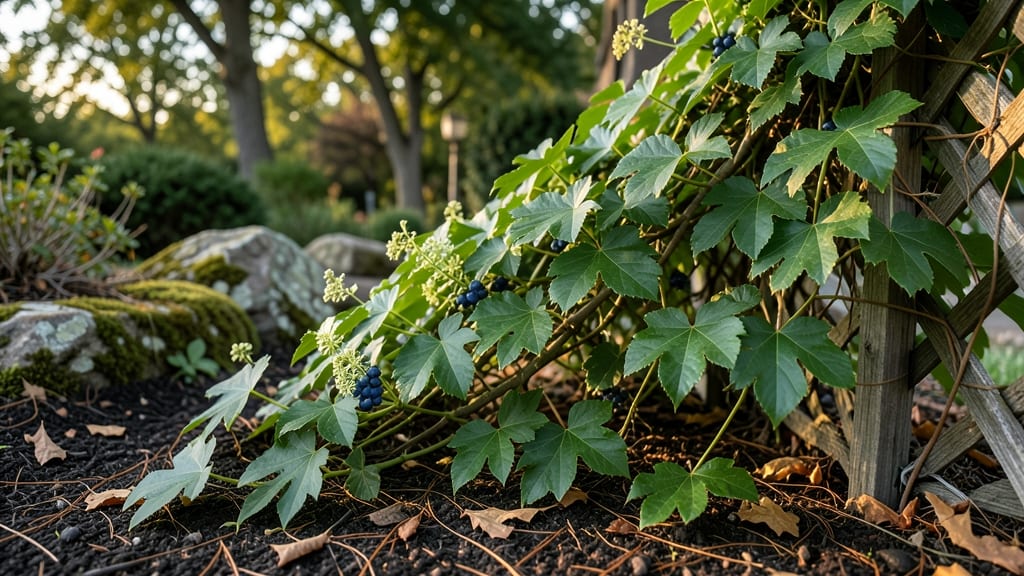
Growing the five-leaf vine in Ohio means five-leaflet vines that thrive where most plants struggle—deep shade and cold winters. 🌿 I’ve watched this native beauty climb fences and cover slopes with glossy leaves that turn fiery red in fall, even in my Zone 6 backyard.
Ohio’s climate is perfect for it: drought-tolerant once established, deer-resistant (unlike many natives), and happy in partial to full shade. Plant in spring or fall, spacing vines 6–10 feet apart for that lush, natural privacy hedge without the fuss of constant pruning.
The care is minimal: water occasionally until roots settle, prune only to shape, and forget about winter prep—it handles Ohio’s freezes like a champ. Bonus? Birds and butterflies adore its berries, and it’s a powerhouse for erosion control on slopes.
Whether you want a living fence, ground cover, or a shady corner showstopper, this vine delivers. Let’s get yours planted!
Root Causes Of Leaf Loss
If your Parthenocissus quinquefolia—the beloved five-leaf vine—is struggling in Ohio’s climate, understanding the underlying reasons can help you address the issue before it worsens. This hardy but sensitive plant may drop leaves due to a mix of environmental, biological, or cultural factors.
Let’s break down the most common culprits and why they trigger stress or decline.
The five-leaf vine thrives in Ohio’s zones 3-9, but sudden temperature swings—especially early frost or late-season heatwaves—can shock the plant. Here’s why it happens:
- Cold Stress: While cold-hardy, prolonged exposure below 10°F (-12°C) can damage leaves, causing them to blacken and fall. Ohio’s unpredictable winters may bring late freezes, catching the vine off guard.
- Heat Stress: Summer temperatures above 90°F (32°C), combined with dry air, can scorch leaves. The vine may drop foliage to conserve water, especially if roots aren’t adequately hydrated.
- Transplant Shock: If planted in fall, young vines may not establish roots before winter, making them vulnerable to freezing soil.
Actionable Fix:
- Mulch heavily (3-4 inches of shredded bark or leaves) to insulate roots.
- Water deeply before the first frost to protect against desiccation.
- Avoid planting in exposed, windy areas—use a frost cloth for young vines in high-risk zones.
Five-leaf vines are drought-tolerant once established, but overwatering or underwatering can lead to leaf drop. Here’s the science behind it:
- Root Rot: Overwatering or poor drainage causes Phytophthora fungi to thrive, suffocating roots. The vine responds by shedding leaves to reduce water loss.
- Drought Stress: While resilient, prolonged dry spells (especially in sandy Ohio soils) force the vine to drop leaves as a survival mechanism.
- Osmotic Shock: Sudden changes in soil moisture (e.g., heavy rain after drought) can disrupt nutrient uptake, leading to wilting and leaf abscission.
Actionable Fix:
- Test soil drainage—amend clay soils with compost or sand.
- Water deeply but infrequently (1-2 inches per week), focusing on root zones.
- Use drip irrigation to avoid wetting foliage, reducing fungal risks.
Ohio’s humid summers create ideal conditions for pests and pathogens that target five-leaf vines. Common offenders include:
| Pest/Disease | Why It Causes Leaf Drop | Signs to Watch For |
|---|---|---|
| Japanese Beetles | These voracious insects skeletonize leaves, forcing the vine to shed damaged foliage as a defense. | Holes in leaves, yellowing, and black excrement on surfaces. |
| Spider Mites | They pierce cells to feed, causing stippling and leaf desiccation. Severe infestations lead to premature drop. | Fine webbing on undersides, bronzing of leaves. |
| Powdery Mildew | A fungal infection that clogs stomata (leaf pores), blocking gas exchange and triggering leaf abscission. | White, talcum-powder-like coating on upper leaf surfaces. |
| Vine Borers | Larvae tunnel into stems, disrupting nutrient transport, leading to wilting and defoliation. | Sawdust-like frass at stem bases, oozing sap. |
Actionable Fix:
- Apply neem oil or insecticidal soap for beetles/mites (reapply every 7-10 days).
- Prune and dispose of infected leaves to prevent powdery mildew spread.
- Use row covers early in the season to block beetles.
- Inspect stems for borers in late spring—handpick larvae if found.
The five-leaf vine is adaptable, but poor soil health can lead to leaf loss. Key issues include:
- Nitrogen Deficiency: Leaves turn yellow between veins (chlorosis) and drop as the vine prioritizes root growth over foliage.
- Potassium Deficiency: Leaves develop brown edges (scorch) and fall prematurely, especially under stress.
- Soil pH Imbalances: Ohio’s slightly acidic to neutral soils (pH 6.0-7.5) are ideal, but alkaline soils (pH >7.5) lock out micronutrients like iron, causing yellowing.
- Herbicide Drift: Glyphosate or pre-emergent herbicides can kill vines if applied nearby, leading to sudden leaf drop.
Actionable Fix:
- Test soil with a home kit—amend with compost or sulfur if pH is off.
- Fertilize in early spring with a balanced 10-10-10 formula.
- Avoid planting near lawns treated with herbicides.
Five-leaf vines thrive in partial shade to full sun, but Ohio’s microclimates can create challenges:
- Too Much Sun: In hot, exposed sites (e.g., south-facing walls), leaves scorch, leading to drop.
- Too Much Shade: Deep shade (e.g., under dense evergreens) starves the vine of light, causing thin, pale leaves that fall easily.
- Root Competition: Aggressive roots from trees (e.g., maples or walnuts) steal water and nutrients, weakening the vine.
- Wind Exposure: Constant wind desiccates leaves, especially in urban areas with dry air.
Actionable Fix:
- Plant in morning sun + afternoon shade for ideal conditions.
- Avoid planting near competitive tree roots—keep at least 10 feet away.
- Use a windbreak (e.g., lattice or trellis) to
Practical fixes for 5-Leaf vine
If your five-leaf vine (or Parthenocissus quinquefolia) isn’t thriving in Ohio’s shady spots, don’t worry—most issues have simple, actionable solutions. Below, we’ve mapped common problems to easy fixes, plus prevention tips to keep your vine lush and healthy year-round.
Cause: Limited space, poor soil, or competition from other plants. Fix:
- 🔥 Prune strategically – Trim back leggy vines in early spring (before new growth) to encourage bushier growth. Use clean, sharp pruners and cut at a 45° angle just above a leaf node.
- 🌱 Improve soil aeration – If roots are bound, gently loosen the soil around the base with a garden fork. Mix in compost or aged manure (1-2 inches) to boost nutrients.
- 📏 Provide support – Install a trellis, arbor, or fence to give vines something to climb. Without support, they sprawl and compete for light.
💡 Prevention Tip: Plant your five-leaf vine 10–15 feet away from structures (like houses or fences) to avoid overcrowding later. If space is tight, opt for dwarf varieties like ‘Engelmannii’.
Cause: Overwatering, underwatering, nutrient deficiency, or fungal issues. Fix:
- 💧 Check moisture levels – Press your finger 1–2 inches into the soil. If it’s soggy, reduce watering; if dry, water deeply 1–2 times per week (adjust for rain).
- 🌿 Test for nutrients – Yellowing between veins often signals iron or nitrogen deficiency. Apply a balanced fertilizer (10-10-10) in spring and a chelated iron supplement if needed.
- 🍄 Treat fungal issues – If leaves have brown spots or powdery mildew, spray with neem oil or copper fungicide every 7–10 days until symptoms fade.
💡 Prevention Tip: Mulch around the base with 2–3 inches of organic mulch (like shredded bark) to retain moisture and deter fungal spores. Avoid wetting leaves when watering.
Cause: Ohio’s cold snaps, frost heave, or improper mulching. Fix:
- 🔥 Protect young vines – Wrap the base in burlap or frost cloth in late fall, especially for newly planted vines. Older vines are hardy but may need extra care in harsh winters.
- 🌡️ Monitor soil temp – If ground freezes and thaws repeatedly, pile mulch higher (4–6 inches) to insulate roots. Use straw or leaves for extra protection.
- 🪴 Prune dead wood – In late winter (after the last frost), remove blackened or brittle stems to encourage new growth. Avoid heavy pruning—just clean up the damage.
💡 Prevention Tip: Plant five-leaf vine in well-draining soil to prevent frost heave. If your yard has heavy clay, amend with sand or perlite before planting.
Cause: Soft-bodied pests thrive on new growth, sucking sap and leaving sticky residue. Fix:
- 🚰 Blast off pests – Spray vines with a strong stream of water to dislodge aphids or spider mites. Do this in the early morning for best results.
- 🍃 Use insecticidal soap – Mix 1–2 tbsp of mild soap (like Castile) with 1 quart of water and spray affected areas. Reapply every 5–7 days.
- 🐛 Introduce beneficial insects – Ladybugs and lacewings eat aphids naturally. Buy them online or attract them with neighborhood-friendly plants like dill or marigolds.
💡 Prevention Tip: Encourage bird activity in your garden—robins and wrens love snacking on pests! Install a bird feeder or bath nearby to keep your vine pest-free.
Cause: Root rot, transplant shock, or extreme environmental stress. Fix: - 🛑 Stop watering immediately – If soil is waterlogged, let it dry out before watering again. Root rot spreads fast in soggy conditions. - 🌱 Root check – Gently dig around the base to inspect roots.
If they’re black and mushy, trim away the rot with sterilized pruners and repot in fresh soil. - 💧 Rehydrate carefully – If the vine is drought-stressed, water slowly and deeply over 2–3 days to avoid shocking the roots.
💡 Prevention Tip: If transplanting, water deeply the day before moving to reduce shock. Use a root stimulator (like Mycorrhizal fungi) to help establish new roots faster.
Five-leaf vines are forgiving, but they communicate their needs through leaves. Yellow? Check water/nutrients. Brown spots? Fungal issue. No new growth? Prune or fertilize. Adjust your care based on what you see—your vine will thank you with vibrant foliage and climbing charm all season long!
Frequently asked questions
What's the best way to identify Virginia Creeper in Ohio?
Look for its signature five leaflets per leaf (hence the name!) arranged like fingers on a hand. The leaves are deep green, glossy, and turn brilliant red in fall. Unlike poison ivy (which has three leaflets), Virginia Creeper's leaves are palmate with smooth edges. Check for tiny blue-black berries in late summer too!
Can I grow Virginia Creeper against my brick house?
Yes! It's perfect for covering brick, stone, or wood surfaces. Use landscape fabric first to protect siding, then attach the vine with plastic-coated wire or hooks. Space plants 6-10 feet apart for full coverage. Just avoid planting too close to foundations—keep 2 feet clear to prevent moisture buildup.
Why does my Virginia Creeper lose leaves in late summer?
This is normal! The vine often drops leaves in hot, dry spells (especially in Ohio's summer heat) as a survival tactic. Water deeply 1-2 times per week during droughts, then it should regrow. If leaves turn yellow first, check for iron deficiency—apply chelated iron fertilizer to help.
How fast will my Virginia Creeper grow in Ohio?
Expect 10-15 feet per year when established! In ideal conditions (partial shade, moist soil), it can climb 30-50 feet over a trellis. Young plants grow slower—give them 2-3 years to really take off. Prune in late winter to control growth and encourage bushier foliage.
Are the berries safe for birds but toxic to pets?
Yes! The blue-black berries are a bird magnet but can be toxic if eaten in large quantities by dogs or cats. While not deadly, they may cause vomiting. Keep pets away from heavy berry clusters. The leaves and stems are non-toxic, so the vine is generally pet-safe otherwise.