
Pests and Diseases
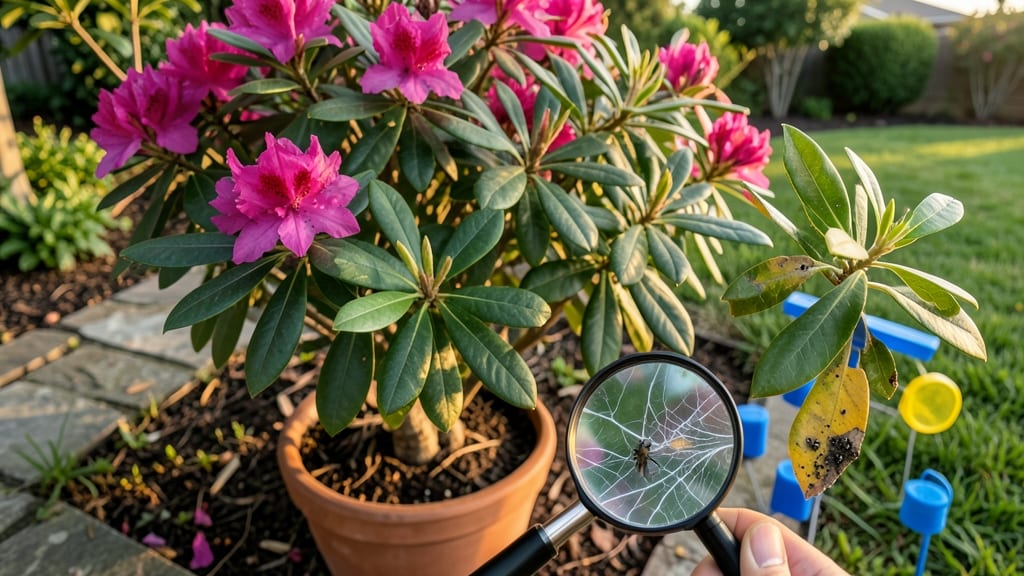
The azalea leaf miner turns your vibrant blooms into skeleton leaves—fast. 🌿 I’ve battled these tiny white larvae myself, and I’ll show you how to stop them in their tracks without harsh chemicals. The key is acting quickly before the damage spreads to every leaf.
You’ll need neem oil, insecticidal soap, and a spray bottle—simple tools that pack a punch. First, prune heavily damaged leaves to starve the larvae of food, then apply your organic spray at dawn or dusk when pests are most active.
Within 7-10 days, you’ll see new growth pushing through, and the miners will retreat.
This method works because it disrupts their life cycle while keeping your azaleas healthy. No more brown, papery leaves—just lush foliage that stays disease-resistant and full of life. The best part? You’ll prevent future infestations by monitoring regularly and encouraging ladybugs to patrol your shrubs.
Even if your azaleas look hopeless now, this protocol brings them back to life. The secret is consistency—spray weekly until the larvae disappear, then maintain a preventive routine. Your azaleas will thank you with bold blooms next season.
📚 In This Guide
- What you need
- Instructions
- Tips and common mistakes
- Wrapping up and next steps
What you need
- ● Neem oil (100% cold-pressed, organic): 1–2 tablespoons (mix with water for spray)
- ● Insecticidal soap (potassium salt-based, OMRI-listed): 1–2 teaspoons per quart of water
- ● Spinosad (organic, derived from soil bacteria): 1 teaspoon per gallon of water (follow label rates)
- ● Horticultural oil (refined, summer-grade): 1 tablespoon per quart of water (for smothering larvae)
- ● Fine-mist sprayer (1–2 gallons capacity): Look for a handheld or backpack model with adjustable nozzles
- ● Pruning shears (sterilized): For removing heavily infested leaves or stems
- ● Gloves (nitrile or rubber): To protect your hands from oils and sap
- ● Plastic sheeting or drop cloth: 3x3 ft (to cover work surfaces and prevent runoff)
- ● Sturdy trash bags (heavy-duty): For disposing of pruned infested parts
- ○ Watering can (optional, for rinsing): To flush out debris post-treatment
- ● Diatomaceous earth (food-grade): Lightly dust undersides of leaves (reapply after rain)
- ● Beneficial nematodes (Steinernema feltiae): Target larvae in soil (follow package instructions)
- ● Blue tack or sticky traps: Place near plants to monitor adult fly activity
- ● pH test kit: Ensure your spray mix is neutral (pH 6.5–7.5) for effectiveness
- ● Label markers: To tag treated plants and track application dates
Step-by-Step instructions for azalea leaf miner control
Here's the organic spray protocol I've used to eliminate leaf miners in just a few weeks.
🌿 Step 1: Identify and Isolate Infested Leaves
Start by examining your azaleas closely. Leaf miners create serpentine trails or blisters on leaves—these are their feeding tunnels. Gently shake leaves over a bucket to check for tiny, white, worm-like larvae. Remove and destroy all heavily infested leaves immediately by sealing them in a plastic bag and discarding them in the trash.
Don't skip this step. The larvae will pupate in the soil or leaf litter, and you'll need to break their life cycle completely. Focus on the worst leaves first—they're the main source of new miners. Healthy leaves can still be saved with proper treatment.
💧 Step 2: Prepare the Organic Spray Solution
Mix 1 tablespoon of neem oil with 1 teaspoon of insecticidal soap in 1 quart of water. Add ½ teaspoon of horticultural oil to help the solution cling to leaves. Shake well before each use—these ingredients don't mix naturally. I like to prepare this in a 1-gallon spray bottle for easy application.
This combination smothers miners on contact while disrupting their feeding habits. Neem oil interferes with their growth, and insecticidal soap breaks down their protective waxy coating. Spray in the early morning or late evening to avoid burning leaves in direct sunlight.
✂️ Step 3: Apply the Spray Thoroughly and Repeatedly
Spray the top and bottom of every leaf until they glisten with moisture. Pay special attention to new growth, as miners often target tender leaves. Reapply every 5-7 days for at least 3 weeks—this breaks the miners' life cycle before they can mature. I've found that consistency is key; missing even one application gives them a chance to rebound.
After spraying, monitor your azaleas daily. You should see a noticeable reduction in new damage within 10-14 days. If you spot fresh trails after treatment, the miners may have developed resistance—switch to a spinosad-based spray for the next application.
☀️ Step 4: Maintain Plant Health to Prevent Reinfection
Keep your azaleas well-watered but not soggy—miners thrive in stressed plants. Water at the base rather than overhead to avoid spreading larvae. Apply a 2-inch layer of organic mulch around the base to retain moisture and discourage miner pupation in dry soil.
Prune away any new leaves showing miner damage immediately. Healthy azaleas recover faster, and removing infested growth prevents the problem from spreading. I also recommend fertilizing with an acid-loving plant formula to strengthen their defenses—miners target weak plants first.
🪴 Step 5: Prevent Future Infestations
Once your azaleas are miner-free, continue spraying with neem oil alone every 2 weeks during the growing season as a preventative measure. Keep the area under your azaleas free of fallen leaves and debris—these provide shelter for pupating miners. I also recommend introducing beneficial nematodes to the soil annually to target larvae before they emerge.
This protocol works best when started early. If you catch miners in their early stages, you'll see dramatic improvement within 2-3 weeks. Patience is key—don't expect overnight results, but with consistent care, your azaleas will stay healthy and vibrant.
Tips & tricks for effective azalea leaf miner eradication
Here's what nobody tells you about making this protocol work faster—lessons I learned after seeing too many azaleas suffer.
Larvae Detection Trick: In Step 1, when checking for larvae, hold a white piece of paper or towel beneath the leaves as you shake them. The larvae will show up as tiny white specks against the light background, making them much easier to spot than against green leaves. This helps you identify the worst infestations so you can focus your treatment where it matters most.
Solution Mixing Secret: When preparing the spray in Step 2, add the horticultural oil to the neem oil first, then mix with water. This creates a more stable emulsion that clings better to leaves. I also recommend using a small whisk or fork to break up any oil clumps before adding water—this ensures even distribution. Shake the bottle vigorously for at least 30 seconds before each use to maintain effectiveness.
Application Timing: The 5-7 day reapplication schedule in Step 3 is critical, but timing matters just as much. Apply your first treatment immediately after identifying larvae, then stick to the schedule religiously. I've found that early morning applications (before 9 AM) work best because the leaves are dry and the solution has time to dry completely before evening humidity sets in. This maximizes contact time with the miners.
Resistance Watch: If you notice new miner activity after 2-3 weeks despite following the protocol, switch to a spinosad-based spray as mentioned in Step 3. But here's the thing: resistance often develops when treatments are inconsistent. Keep a spray log to track applications—if you miss even one week, miners can rebound quickly. I've had to switch sprays twice in severe cases, but catching it early makes all the difference.
Pro Tips for Azalea Leaf Miner
- Here's what nobody tells you about making this protocol work faster—lessons I learned after seeing too many azaleas suffer.
- Larvae Detection Trick: In Step 1, when checking for larvae, hold a white piece of paper or towel beneath the leaves as you shake them.
- Solution Mixing Secret: When preparing the spray in Step 2, add the horticultural oil to the neem oil first, then mix with water.
Frequently asked questions
Got questions about azalea leaf miners? You’re not alone!
Here are answers to the most common concerns—from identification to organic solutions—so you can tackle this pesky pest with confidence.
What do azalea leaf miners look like, and how do I confirm they’re the problem?
Azalea leaf miners are tiny, yellowish-white larvae (1/8-inch long) that tunnel between leaf layers, creating visible blotchy, brown trails. Check for serrated, wavy mines and frass (black fecal pellets) inside. Adult moths are small, grayish, and resemble tiny butterflies—often spotted in spring.
When is the best time to treat azalea leaf miners?
Act early! Treat in late winter to early spring (before larvae hatch) or summer (when mines are visible). Repeat every 2–3 weeks for 3–4 months to break their life cycle. Pro tip: Monitor plants weekly in spring/summer for fresh mines.
Are there organic sprays that actually work against leaf miners?
Yes! A homemade neem oil spray (2 tsp neem oil + 1 tsp mild soap per quart of water) or kaolin clay (1 tbsp per gallon) disrupts larvae and deters adults. For faster results, combine with horticultural oil (applied at 50°F+) or Bt (Bacillus thuringiensis), a natural bacteria toxic to larvae. Spray both sides of leaves thoroughly.
Why do my azaleas keep getting leaf miners even after spraying?
Leaf miners are persistent! Common reasons for failure:
- Inconsistent spraying: Missed applications or poor coverage (focus on new growth).
- Timing issues: Treating too late in the season (larvae pupate by fall).
- Resistant strains: Rotate sprays (e.g., neem + kaolin clay weekly).
- Overcrowded plants: Thin foliage to improve airflow and spray penetration.
Will pruning help control azalea leaf miners?
Pruning infested leaves (especially in late fall/winter) removes overwintering pupae and reduces next year’s damage. Do this:
- Cut 1 inch below mines to ensure larvae are gone.
- Dispose of clippings in a sealed bag (don’t compost!).
- Avoid heavy pruning in spring/summer—it stresses plants and attracts more pests.
Wrapping up and next steps
Dealing with azalea leaf miner doesn’t have to be overwhelming—with the right organic spray protocol, you can protect your plants and restore their beauty in no time! 🌿 By following these steps, you’ve learned how to identify, prevent, and treat infestations naturally, ensuring your azaleas thrive without harsh chemicals.
Now that you’re armed with knowledge, take action! Start by inspecting your plants weekly and apply your organic spray at the first sign of trouble. Your azaleas will thank you!