
Lawn
Virginia lawns face constant battles with invasive broadleaf weeds that steal nutrients and ruin curb appeal. This guide identifies the 10 most common broadleaf weeds in Virginia and provides targeted removal strategies to reclaim your yard's health and beauty.
Dandelion Identification and Control

If you’ve ever spotted bright yellow blooms popping up in your Virginia lawn—especially after a dry spell—you’re likely dealing with dandelions, the state’s most stubborn broadleaf weed. Their deep taproots thrive in compacted soil, making them a perfect test subject for mastering manual removal before tackling tougher weeds.
Identify them by their saw-toothed leaves, hollow stems, and iconic puffball seed heads. For removal, pull when soil is moist (after rain or watering) to avoid breaking the root—grab the base firmly and wiggle until resistance gives way. Repeat weekly for new sprouts, as dandelions spread rapidly via wind-dispersed seeds. This hands-on method builds confidence for beginners while keeping your lawn weed-free organically.
Dandelions are nature’s barometer for soil health—if they’re thriving, your lawn may need aeration or overseeding. Perfect for urban gardeners and first-time weed warriors, this weed teaches patience and precision. 💪
Clover Identification and Natural Removal

If your lawn has patches of tiny white flowers and trifoliate leaves, you're likely dealing with clover—a weed that's actually a soil superhero. While it competes with grass, clover's ability to fix nitrogen makes it a boon for organic gardeners who want to boost soil fertility without synthetic fertilizers.
To identify it, look for three heart-shaped leaves growing close to the ground and small white flower clusters in spring. For natural removal, try mowing frequently to prevent seed spread, or hand-pull when soil is moist. Corn gluten meal (applied pre-emergence) can also suppress new growth while letting existing clover die back naturally over time.
This dual-edged weed is perfect for organic gardeners who want to maintain soil health while eliminating it—just time your removal carefully to avoid losing its nitrogen benefits too soon. 🌿
Plantain Weed Identification and Extraction

If you’ve ever pulled a weed only to watch it regrow from a stubborn root, you’ve likely encountered broadleaf plantain—Virginia’s toughest sidewalk invader. Unlike shallow-rooted weeds, plantain sends deep, fibrous roots that make it nearly impossible to remove with a quick tug.
This perennial weed thrives in high-traffic areas like driveways, sidewalks, and garden paths, where its thick, ribbed leaves form dense mats. The key to extraction is persistence: use a dandelion digger or garden fork to pry out the entire root system, including lateral roots that can fragment. For organic gardeners, vinegar or boiling water applied directly to the leaves can weaken the plant before digging. Repeat treatments may be needed, as even small root fragments can regrow.
Plantain is a prime example of why deep-rooted weeds require patience—don’t let its unassuming appearance fool you. Urban gardeners and homeowners with cracked concrete or gravel paths will find this weed particularly persistent, making mastering its removal a valuable skill for long-term lawn health. 💪
Chickweed Elimination Techniques

When your Virginia lawn transforms from a lush green carpet to a sea of tiny green chickweed by early spring, you’re not just dealing with a weed—you’re witnessing nature’s reminder that cool-season weeds thrive when grass is still dormant. This delicate-looking invader spreads like wildfire through mats of stems, choking out young grass and flowers before summer even arrives.
To combat it, start with manual removal when soil is moist (spring or fall)—grab the weed at the base and pull firmly to avoid leaving root fragments. For larger infestations, a corn gluten meal pre-emergent (applied in late winter) disrupts chickweed seed germination. In established lawns, overseeding with cool-season grasses like ryegrass outcompetes chickweed before it takes hold.
This weed’s seasonal dominance makes it a key player in Virginia’s weed cycle—understanding its life cycle helps you time interventions. Gardeners in shaded or high-moisture areas will see the most success with these targeted approaches. 🌱
Pennywort Identification and Spot Treatment

If your damp garden beds or shady corners are suddenly covered in tiny, round, jelly-like leaves, you're likely dealing with pennywort—a moisture-loving weed that thrives where water pools or soil stays soggy. Unlike other broadleaf weeds, pennywort spreads through horizontal runners rather than seeds, making it a sneaky invader in Virginia's humid climate.
To identify it, look for its smooth, circular leaves (about 1/2 inch wide) growing in dense mats, often with small white flowers in spring. The best spot treatment? Hand-pulling when soil is moist—grab the entire plant (including roots) to prevent regrowth. For stubborn patches, apply a vinegar-based herbicide (20-30% acetic acid) directly to the foliage on a dry day, avoiding desirable plants.
This weed is a red flag for overwatered areas—fixing drainage issues will help prevent its return. Gardeners with rain gardens, bogs, or poorly draining soil should prioritize this one for long-term control. 💚
Lambsquarters Control Methods

Ever pulled up what looked like spinach from your garden, only to realize it was a fast-spreading lambsquarters? This edible yet invasive annual thrives in Virginia’s warm months, mimicking desirable greens while crowding out your intended crops.
To control it, start by hand-pulling young plants before they bolt, focusing on garden edges and disturbed soil. For mature plants, cut stems at ground level to prevent reseeding, then mulch heavily to block light. In vegetable beds, use a pre-emergent herbicide like corn gluten meal in early spring to prevent germination. Remember—young leaves are edible, but only harvest from pesticide-free areas.
This distinction between edible and invasive is especially useful for home gardeners who want to keep their beds productive while avoiding chemical overuse. 🌱
Henbit Weed Identification and Prevention

If you’ve ever spotted tiny purple flowers popping up in your lawn as winter loosens its grip, you’re likely dealing with henbit—a cold-season weed that thrives in Virginia’s early spring. Unlike summer weeds, henbit emerges when grass is still dormant, making it a sneaky competitor for sunlight and nutrients.
This purple-flowered annual (scientifically known as Lamium amplexicaule) spreads rapidly through seed production, forming dense mats that smother lawns. Its square stems and jagged leaves help distinguish it from clover or chickweed. To prevent it, focus on late-fall or early-spring pre-emergent applications—just as henbit seeds germinate. For organic control, hand-pull young plants before they set seed, or mulch garden beds to block light.
Virginia gardeners who tackle henbit early will see fewer problems later in the season. It’s a reminder that cold-season weeds demand attention before warm-season grasses take over. 🌿
Smartweed Recognition and Chemical Control

If you've ever spotted a lush, green carpet along Virginia's streams and ponds, you might be looking at smartweed—a fast-spreading, water-loving weed that thrives in wetland areas. Unlike typical lawn weeds, smartweed spreads rapidly through rhizomes and seeds, making it a persistent challenge for property owners near waterways.
Recognize it by its arrowhead-shaped leaves and clusters of small, pink flowers. For chemical control, use glyphosate-based herbicides (like Roundup) during active growth, or triclopyr for tougher infestations. Always apply in early summer when the plant is most vulnerable, and follow label instructions to protect nearby water sources. For organic approaches, hand-pulling works best in small, contained areas.
This weed is especially problematic for homeowners with wetland borders or stream-side properties, where traditional lawn treatments fail. Understanding smartweed’s behavior helps you protect native plant ecosystems while keeping your property manageable. 🌿
Wild Violet Management Strategies

Those delicate wild violets with their cheerful purple blooms might look charming, but their underground runners make them one of Virginia's most persistent perennial weeds. Unlike annuals that die back each year, violets spread aggressively through rhizomes, creating dense mats that choke out grass and garden plants.
For effective control, focus on early spring when new shoots emerge. Hand-pulling works best when the soil is moist, but be sure to remove the entire root system—even small fragments will regrow. A vinegar-based herbicide (20-30% acetic acid) applied directly to the leaves can also weaken the plant over time, though repeated treatments may be needed. Mulching with thick layers of newspaper or cardboard can eventually smother violets in garden beds.
This strategy is ideal for gardeners dealing with shady, wooded areas where violets thrive. While they're beautiful, their persistence makes them a perfect case study for managing any stubborn perennial weed. 💚
Spotted Knapweed Eradication Techniques

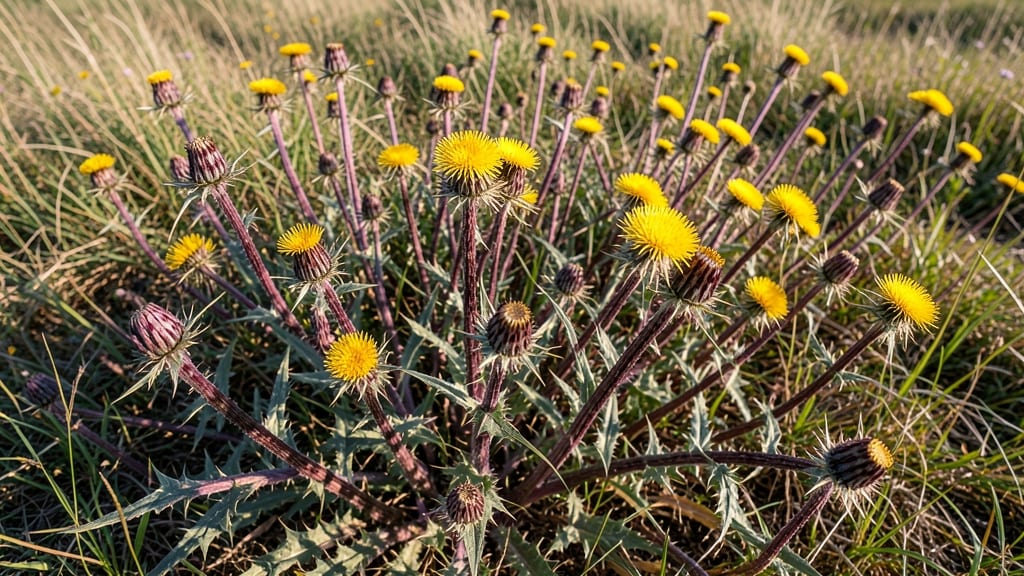
If you’ve spotted a weed with striking purple-spotted stems and yellow, thistle-like flowers crowding your Virginia meadow, you’re likely dealing with spotted knapweed—a highly invasive species that outcompetes native plants. Unlike common lawn weeds, this noxious invader spreads aggressively through deep roots and seed production, making early intervention critical.
For eradication, focus on mechanical removal during the dormant season (late fall or early spring) when the plant stores less energy. Use a shovel or weed wrench to dig out the entire root system—even small fragments can regrow. Follow up with solarization (covering the area with clear plastic for 4-6 weeks in summer) to kill remaining roots. For larger infestations, herbicide applications (like triclopyr) are most effective when applied directly to the foliage during active growth.
Land managers, native plant enthusiasts, and rural property owners in Virginia should prioritize spotted knapweed control to protect biodiversity. Early action prevents it from becoming entrenched in pastures and wild areas. 💪